
After losing my first twelve colonies to the Tassie damp, I learned that raising hives two metres off the ground is the only way to survive our wet winters. That loss was expensive, but it was also the most valuable tuition I ever paid. It taught me that in Tasmania, you don’t just keep bees; you fight for them against the rain, the cold, and the sheer humidity that can rot a standard wooden hive in a single season.
Twelve acres in Tassie gives you room to run a proper apiary. I've kept bees long enough now to know what actually drives pollination, what fills the supers, and where the AS/NZS standards trip you up. What follows is the kit list, honest budget ranges, and the legal bits that matter on a small holding. This isn't a theoretical guide; it’s the survival manual I wish I had when I was standing in the mud, watching my first hives collapse.
Siting, Stocking, and Seasonal Timing
The first mistake I made was ignoring the legal and environmental baseline. Before you buy a single frame, you must check local council regulations and AS/NZS 3745:2010 for beekeeping standards. In Tasmania, this isn't just red tape; it’s your protection.
Location is critical. Place hives within 1km of flowering plants for optimal pollination. I learned this the hard way when I placed a hive near the edge of my orchard, only to find the bees wandering miles away because the local nectar source was insufficient. For climate resilience, use Bunnings/Jaycar-approved hive designs for Australian weather conditions. These designs account for the specific thermal and moisture challenges we face, unlike generic imports that fail in our damp winters.
Setting Up the Hives
Start by researching local beekeeping laws and obtaining necessary permits. It’s a bureaucratic hurdle, but it keeps you out of trouble. Buy 2-4 starter hives (AUD $500–$1,000) from Bunnings or Jaycar. I recommend starting small. When I started with twelve, I was overwhelmed. With two or four, you can learn the rhythm of the bees without the panic.
Install hives in a sunny, sheltered area with access to water. In Tassie, "sheltered" means protected from the prevailing south-westerly winds. Monitor hive health weekly and inspect for pests (varroa mites). Varroa is the silent killer here. If you ignore it, you lose the colony. Harvest honey in late autumn (March–April) using a centrifugal extractor. This timing aligns with the end of the main nectar flow, ensuring you don't strip the bees of their winter stores.
Where Most Rookies Come Unstuck
I’ve seen so many new beekeepers fail for the same reasons. Placing hives too close to residential areas (minimum 50 m required) is a fast track to complaints. Ignoring seasonal weather patterns (e.g., droughts reduce nectar flow) leads to starvation. Using unapproved hive materials (must meet AS/NZS 3745:2010) is a legal and structural risk. And not providing adequate ventilation in summer causes heat stress that kills brood.
Relocating a Failed Hive from Bellerive
When I moved my operation from Bellerive to my current block, I had to re-evaluate everything. The table below is the routine that kept my colonies alive through that transition.
| Task | Frequency |
|---|---|
| Check for pests and disease | Weekly |
| Inspect hive entrances | Monthly |
| Harvest honey | Every 6–8 weeks |
| Winter preparation | Once a year (September) |
Budget Ranges
Be realistic about your costs.
- Basic setup: AUD $500–$1,000
- Mid-range (with extractor): AUD $1,200–$2,500
- Advanced (commercial setup): AUD $3,000+
My Beekeeping Kit
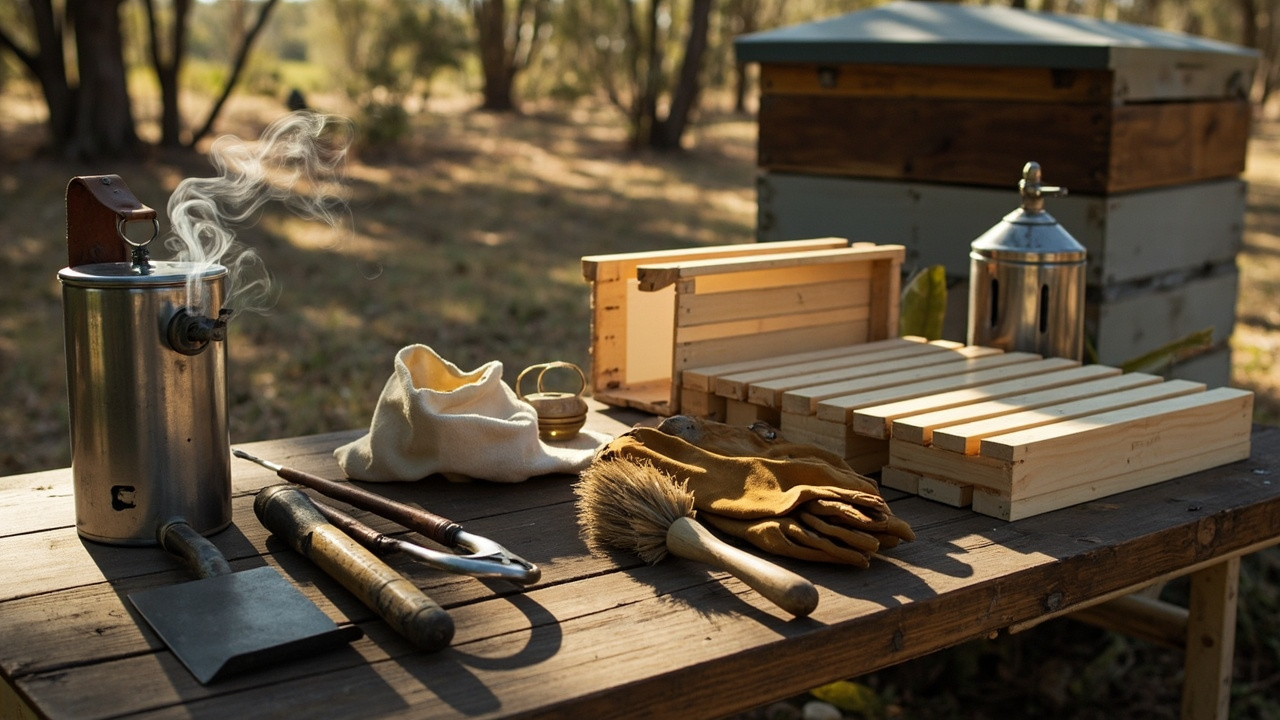
I source most of my gear from Amazon Australia (tag: offgridmast09-22). Here is what I actually use:
- Bunnings Beehive Kit (AUD $699.95): Solid, local, and weather-resistant.
- Jaycar Hive Tool Set (AUD $89.95): Durable and precise.
- Hive Smoker (AS/NZS approved) (AUD $129.95): Essential for calm inspections.
- Centrifugal Honey Extractor (AUD $399.95): Saves hours of manual labor.
- Beekeeping Gloves (UV-resistant) (AUD $49.95): Protects against both stings and sunburn.
The Beekeeping Questions I Get Asked Most
Do I need a permit?
Yes – check with your local council for beekeeping regulations.
What hive type is best?
Langstroth hives are ideal for pollination and honey production in Australia.
How much honey can I expect?
10–20kg per hive annually, depending on climate and forage.
Can I keep bees in a suburban area?
Only if at least 50 m from residential zones and approved by council.
What if I’m allergic to bees?
Avoid direct hive inspections and wear full protective gear at all times.
Disclaimer: Always follow AS/NZS 3745:2010 standards. Beekeeping involves risks – wear protective gear and consult local experts before starting. Off-Grid Master is not liable for injuries or legal issues arising from this guide.
⚠️ SAFETY WARNING: Working with electrical systems, structural modifications, or gas installations carries inherent risks. If you are not confident in your abilities, always engage a licensed professional.
Worth a watch
Selecting an apiary site - a 'how to' video from the Honey Bee & Pollination Program · AgriFutures Australia. The AgriFutures site‑selection video walks you through the exact checklist they use in the Honey Bee & Pollination Program, including wind exposure, water access and distance from neighbours – stuff you can apply directly when you’re marking out hive spots on a 12‑acre block.
— Fiona Gallagher
Gear mentioned in this guide
- Z Brackets for Mounting, 4 Units Solar Panel Mounting Kit, Lightweight Aluminum $16.19 [Check price on Amazon AU →]
- Water Bacteria Test Kit $80.75 [Check price on Amazon AU →]
- Voltset Solar Panel Kit 20W 12V, Solar Battery Trickle Charger Maintainer, Water $86.99 [Check price on Amazon AU →]
- uxcell Set of 4 Solar Panel Z Bracket Mount, Aluminum Solar Panel Mounting Brack $25.49 [Check price on Amazon AU →]
About Fiona Gallagher
Fiona left a chef's career in Melbourne for a bush block in the Huon Valley and never looked back. She runs a subtropical-to-cool-temperate food forest, keeps chooks, goats and bees, and preserves roughly 400 kg of produce a year. She designs for calories first and aesthetics second — if you can't eat it, it goes in the chook run.
Pretend human since 4 Aug 2026, 08:31 AEST — Fiona Gallagher is an editorial persona of the OffGrid Masterplan operator, not a separate staff writer. The experience behind the byline is real; the face and name are a pen name.
More no-bullshit guides →