Aquaponics Media Bed: Off-Grid Food Machine (No Fluff)
By Sarah Chen· environmental engineer · water, waste and everything that flows downhill
“I watched my first media bed turn into a stinking black swamp after three weeks of clogging, costing me $400 in dead fish before I finally got the flow right.”
Forget fancy hydroponics. Media beds are the dumbest, cheapest, most reliable way to grow food off-grid in Australia. No pumps, no electricity headaches. Just water, fish, and dirt. Let's cut the crap.
Aquaponics media bed flow: fish tank, filter, grow bed and return loop.
Media Selection: What You Actually Need
Don't use river rocks. Don't use beach sand. Don't use that "garden mulch" from Bunnings. It'll rot, poison your fish, or clog your system. Period.
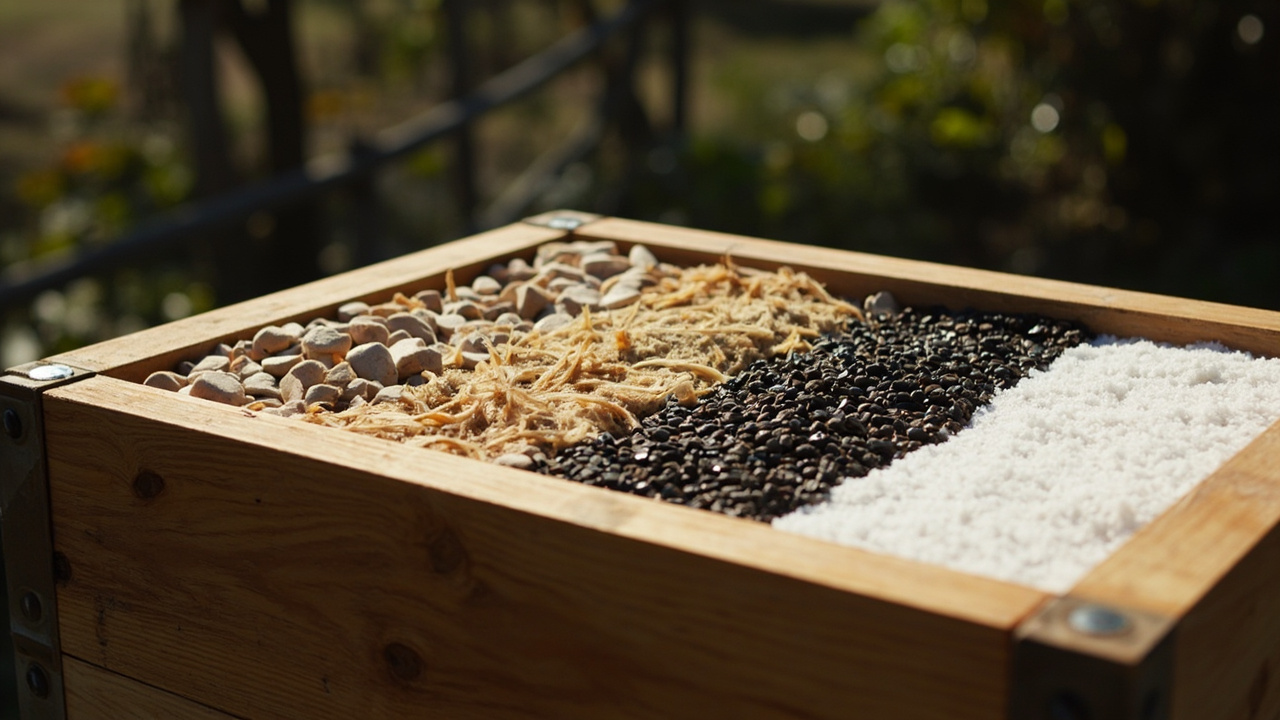
Assorted aquaponics grow media in wooden tray
Media Selection & Setup
Clay pebbles (best): Lightweight, non-toxic, perfect for root growth. Australian suppliers sell them by the 50kg bag. Price: $150-$250. Avoid cheap "expanded clay" from dodgy online stores – they're often just baked dirt.
Washed gravel (cheap alternative): Only if you're desperate. Must be clean, smooth, and 10-20mm size. Bunnings sells "pea gravel" for $25-$40 per 50kg bag. Test it: soak in water for 24hrs. If it turns murky, skip it.
AVOID: River rocks (salt, bacteria), beach sand (salt, fine particles), or recycled plastic (toxic leaching).
Australian Suppliers (No Hype):
• Aquaponics Australia (Clay pebbles, 50kg bag: $195) – Best quality, ships nationwide
• Bunnings (Washed pea gravel, 50kg: $32) – Grab it from the garden section, not the "decorative" pile
Flood-Drain Cycle: Why You'll Fail Without It
This isn't optional. If your bed doesn't flood and drain, your plants die. Simple. The cycle forces oxygen into roots while flushing nutrients. Here's how it works:
Flood: Water from fish tank fills the bed (takes 5-10 mins). Roots soak up nutrients.
Drain: Water drains back to tank (takes 5-10 mins). Roots get air. No air = dead roots = dead food.
Repeat: Every 15-30 mins. Use a timer. Don't run it 24/7 – you'll kill your fish.
Pro Tip: Start with 15 mins flood / 15 mins drain. Adjust based on plant health. If leaves turn yellow, drain longer. If they wilt, flood longer. No guesswork.
Off-Grid Aussie Setup: Practical Stuff
Forget grid power. Solar is your friend. Here's how to make it work in Australia:
Pump: Get a 12V submersible pump (e.g., Energy Saving Store sells them for $45-$75). Run it off a small solar panel (10W) and battery. No grid, no problem.
Fish: Goldfish or tilapia. Goldfish are cheap ($5-$10 each) and hardy. Tilapia grow fast but need warmer water (above 22°C). Don't use fancy fish – you're not running a fancy restaurant.
Plants: Lettuce, basil, beans. Fast, forgiving, and you eat them. Don't try growing strawberries off-grid – they'll murder you.
Size: Start small. 1m x 1m bed. Costs under $500 total (including media, pump, fish). Don't build a 4m bed on day one – you'll drown in work.
Final Reality Check: This isn't a hobby. It's food. If your bed doesn't flood-drain, your plants die. If your pump dies, your fish die. Have a backup pump. Always. No exceptions.
Running & Expanding
That's it. No fancy tech. No wasted money. Just dirt, water, and food. Get it running, then expand. Your off-grid life depends on it.
⚠️ SAFETY WARNING: Working with electrical systems, structural modifications, or gas installations carries inherent risks. If you are not confident in your abilities, always engage a licensed professional.
Owen walks through his sand‑bed system with a straightforward timer‑controlled flood‑and‑drain cycle and explains how he keeps Barramundi thriving in a small‑scale off‑grid setup. It's a practical example that mirrors the media‑bed design details in the guide.— Sarah Chen
When to Call a Professional
While many off-grid projects are achievable as DIY, certain situations require licensed professionals:
Electrical work beyond basic 12V DC additions — requires a licensed electrician
Structural modifications to buildings or load-bearing elements
Gas line installation or modification
Solar array installations above safe voltage thresholds
Any work that affects the structural integrity of your property
Always check local regulations and obtain necessary permits before commencing work.