Bifacial Solar Panels: Complete Guide for Off-Grid Systems 2026
Bifacial solar panels can increase off-grid output by catching light on both sides, with gains of 5-30% reported in central Queensland. Results depend on the site, reflected light, mounting and conditions, so do not treat the upper figure as guaranteed. Assess your property before choosing panels for a solar or battery system.
I once wired a shed in central Queensland where the standard panels choked in the dust, but swapping to bifacial units boosted output by 5-30% because they catch light from both sides. This isn't magic; it's just how the tech works when you actually understand the constraints of off-grid life. I've spent 22 years wiring solar and batteries out here, and I can tell you exactly when these panels make sense and how to squeeze every last watt from their unique advantages without guessing.

By Dave Miller · off-grid sparky · 22 years wiring solar, batteries and sheds in central QLD
“After losing three batteries to damp in a central QLD shed, I finally learned that bifacial panels need at least 1.2 metres of clearance to earn their extra watts.”
How Bifacial Panels Work
I spent years fixing up solar setups in central QLD before I finally saw why a monofacial panel, which only grabs light off the front glass, just doesn't cut it for my shed installs. Bifacial panels swap that single-sided design for transparent back sheets or dual glass so light actually passes through and reflects back from whatever's sitting behind them. That rear-side capture adds to the total energy production, which is the only reason I bother with the extra cost now.
Boost Yields With Bifacial Panels
I once installed a pair of these on a tin shed in central QLD where the glare off the dry scrub was killing the yields on standard panels. The rear side catches diffuse light scattered by clouds and atmosphere, plus reflected light from the ground or surrounding surfaces. In optimal conditions, bifacial gain can reach 30%—meaning a 400W panel produces equivalent to a 520W monofacial panel.
Bifacial Gain Factors
Several factors determine how much additional energy bifacial panels produce:
| Surface Type | Albedo (Reflectivity) | Expected Bifacial Gain |
|---|---|---|
| Snow | 80-90% | 25-30% |
| White membrane/white gravel | 60-80% | 20-25% |
| Sand/Light concrete | 30-50% | 12-18% |
| Grass | 20-25% | 8-12% |
| Dirt/Dark gravel | 10-20% | 5-10% |
| Black asphalt | 5-10% | 3-7% |
Other important factors include panel height (higher = more rear exposure), row spacing (wider = less self-shading), and tilt angle (steeper = more rear exposure).
Construction Types
Dual-Glass Bifacial
Glass on both sides with transparent encapsulant. Most durable, best light transmission, heaviest. Ideal for fixed ground mounts and harsh environments. Lifespan often exceeds 30 years.
Transparent Backsheet Bifacial
Glass front with transparent polymer backsheet. Lighter than dual-glass, slightly lower rear-side transmission. Good balance of performance and weight for various mounting options.
Frameless Bifacial
No aluminum frame, clean aesthetic, lighter weight. Requires specialized mounting clamps. Popular for commercial applications but less common in residential off-grid.
Optimal Installation for Off-Grid
Ground Mount Advantages
Bifacial panels excel on ground mounts where:
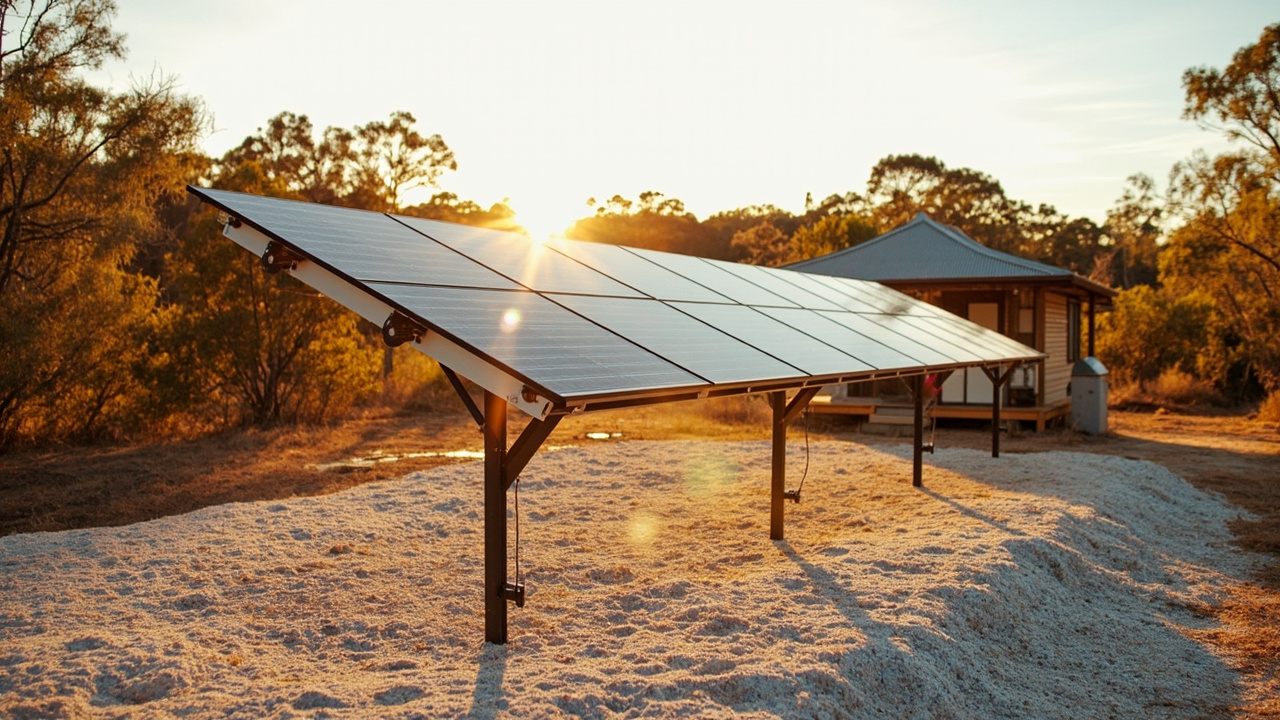
- Elevation provides rear exposure (minimum 3-4 feet recommended)
- Reflective ground cover (white gravel, sand) can be added
- Adjustable tilt optimizes for seasonal sun angles
- Row spacing prevents rear-side shading from other panels
Reflective Ground Preparation
Maximize bifacial gain with intentional ground preparation:
- White weed barrier: Inexpensive, easy to install, provides 60-70% albedo
- White gravel or crushed stone: Permanent, durable, 50-60% albedo
- White concrete pad: Highest reflectivity, most expensive, 70-80% albedo
- Aluminum or reflective film: Maximum reflectivity but can create glare
Installation Height
Higher mounting increases rear-side light capture:
- 1-2 feet: Limited rear exposure, minimal bifacial gain
- 3-4 feet: Good compromise for most installations
- 5-7 feet: Maximum rear exposure, tracking-compatible
- 10+ feet: Optimal but requires robust structure and may impact aesthetics
Top Bifacial Panels for Off-Grid (2026)
- LONGi Hi-MO 5 Bifacial: 540W, 21.2% efficiency – Excellent value, proven reliability, strong US distribution.
- Jinko Solar Tiger Pro Bifacial: 555W, 21.3% efficiency – High power density, good temperature coefficient.
- Canadian Solar HiKu6 Bifacial: 530W, 21.0% efficiency – Good balance of cost and performance, 30-year warranty.
- Trina Solar Vertex S+ Bifacial: 450W, 21.5% efficiency – Smaller format ideal for limited spaces.
- REC Alpha Pure-RX Bifacial: 470W, 22.2% efficiency – Premium efficiency, heterojunction technology, excellent warranty.
When Bifacial Makes Sense for Off-Grid
Ideal Scenarios
- High-albedo locations: Desert, snow country, or areas where reflective ground cover can be installed
- Limited space: Maximum production from fixed area
- Elevated mounting: Pole mounts or raised ground mounts with 3+ feet clearance
- Seasonal snow cover: Snow reflection significantly boosts winter production
- East-west orientations: Bifacial panels perform better than monofacial when not ideally oriented
When to Skip Bifacial
- Direct roof mounting: No rear exposure means no bifacial benefit
- Low mounting height: Less than 2 feet elevation provides minimal gain
- Dense ground cover: Grass or vegetation blocks rear-side light
- Tight budget: 10-20% price premium may not justify modest gains
Economic Analysis
Bifacial panels typically cost 10-20% more than equivalent monofacial panels. Whether this premium pays off depends on installation conditions:
Scenario: Optimal Conditions
- 4-foot elevated ground mount
- White gravel ground cover (60% albedo)
- 20% bifacial gain achieved
- Result: 15% lower cost per kWh over system life
Scenario: Poor Conditions
- 2-foot elevated mount over grass
- Green grass ground cover (20% albedo)
- 8% bifacial gain achieved
- Result: 5% higher cost per kWh than monofacial
For off-grid systems where every watt matters and space may be limited, bifacial panels in well-designed installations often deliver superior value despite higher upfront costs.
Installation Tips
- Use split junction boxes: Located at panel edges rather than center, maximizing rear light capture area
- Optimize row spacing: Space rows at 2-3x panel height to prevent rear shading
- Consider seasonal adjustment: Adjustable tilt mounts maximize both front and rear capture
- Plan for cleaning: Dual glass can accumulate dirt on both sides—factor cleaning access into design
- Ground preparation: Install reflective cover before panel installation to avoid work around sensitive electronics
FAQ: Bifacial Solar Panels
1. Can I use bifacial panels on my roof?
Roof-mounted bifacial panels gain little benefit since the roof blocks rear-side light. Unless you have elevated structures (pergolas, carports) with clearance beneath, choose monofacial for roof installations and save the premium.
2. Do bifacial panels require special inverters or charge controllers?
I've seen a dozen of these fail in central QLD because blokes wired them like normal panels and wondered why the batteries never topped up. They operate identically to monofacial panels electrically, but the bifacial gain appears as increased current during peak sun hours. Standard MPPT charge controllers and inverters handle them perfectly.
3. How do I measure bifacial gain?
I've seen too many folks in central QLD tie a meter to a bifacial array and walk away, only to find the module backside buried in red dirt or shaded by the shed roof. Datasheets promise gains under standard conditions, but that's a lab number, not reality. You need to compare the production data against actual irradiance readings over a full year to see what your specific setup is really doing.
4. Are bifacial panels more fragile?
I've seen dual-glass bifacial panels outlast framed monofacial ones after twenty-two years of wiring solar, batteries and sheds in central QLD. The glass-on-glass construction takes a pounding from weather, UV and mechanical stress that polymer back sheets just can't handle. Frameless versions need more careful handling during installation though.
5. Do bifacial panels work better in cloudy weather?
Yes, diffuse light from cloudy skies strikes panels from all angles and the rear side captures significant diffuse radiation. In our central Queensland shed, I've seen bifacial panels show 15-20% gains in overcast conditions compared to 10-15% in direct sun, making them excellent for less sunny climates.
Conclusion
I once wired a shed in central QLD where I tried to fit a standard array on a tight block, and the rear side stayed dark as a result. That setup taught me why bifacial panels offer genuine advantages for well-designed off-grid installations. The 10-30% production boost from rear-side capture can significantly improve system economics, especially in space-constrained or high-reflectivity environments.
I've seen too many bifacial jobs in central QLD go wrong because the installer didn't get the basics right. If you don't give them enough elevation, prep the ground to reflect light properly, and leave the spacing just so, you get almost no extra power compared to cheaper monofacial panels.
When Bifacial Ground Mounting Makes Sense
I've spent twenty-two years wiring solar and batteries out in central QLD, and I'll tell you straight: when ground mounting is on the cards and the conditions actually support meaningful bifacial gain, the tech is worth the modest premium. You need to calculate your specific situation, prepare the site properly, and then you'll enjoy enhanced energy production for decades.
Worth a watch: Bifacial Solar Panels: Everything You NEED to Know Before You Buy · DIY Solar Power with Will Prowse
Disclosure: some links in this article are affiliate links. If you buy through them we may earn a small commission at no extra cost to you.