Book Storage for Off-Grid Aussies: No Bullshit Guide
By Jenny Mills· rural nurse & homesteader · health, safety, law and the paperwork of going bush
“After three bushfires wiped out my medical texts, I learned that fire-rated steel bins are the only safe storage for critical off-grid law and health docs.”
Look, if you're living off-grid in Australia, your book collection isn't a luxury. It's your lifeline. But if you don't store it right, it'll turn to mush or become termite food. Here's how to do it properly. No fluff.
Storage: Where to Put Books (Without Losing Them)
Forget cardboard boxes. They rot in humidity, attract pests, and collapse. Do this:
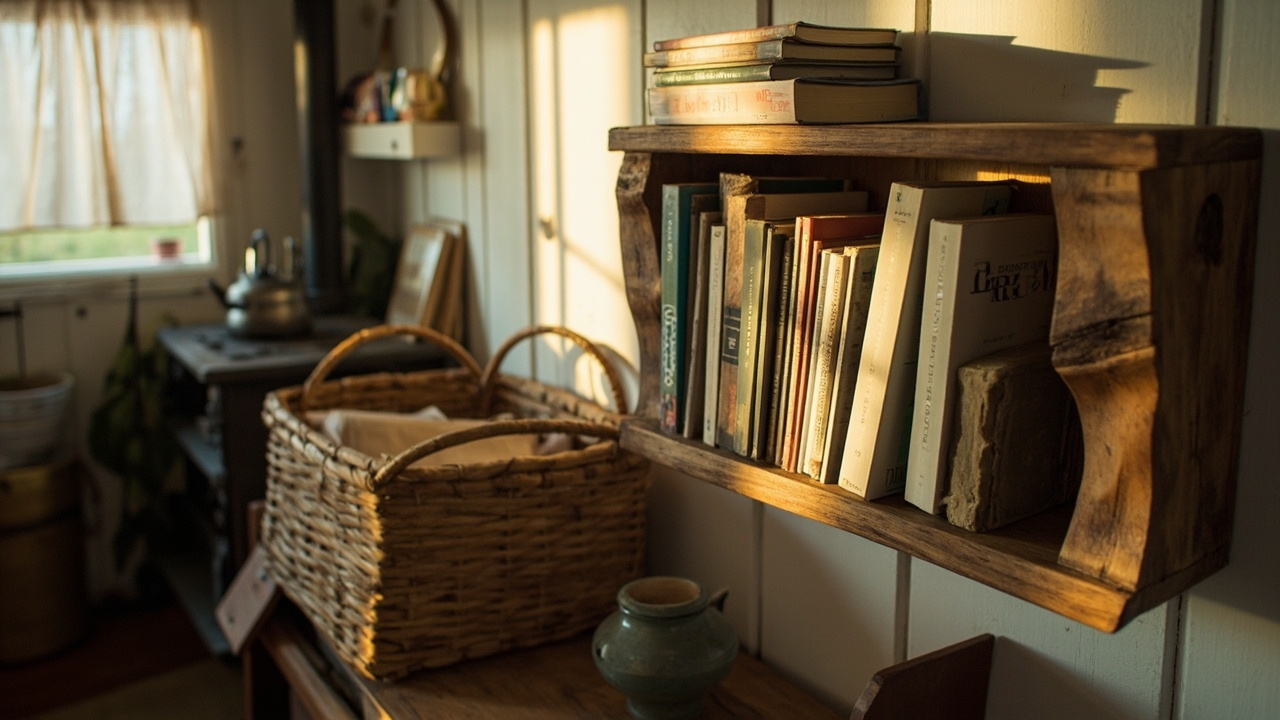
Reclaimed timber bookshelf filled with books in a cottage
Plastic bins only (not cardboard). Sterilite 100L bins ($25 at Bunnings). Stack them on metal shelving ($80 for a 2m unit at Bunnings). No wood – termites love it.
Keep them off the floor. Use pallets or concrete blocks. Ground moisture kills books.
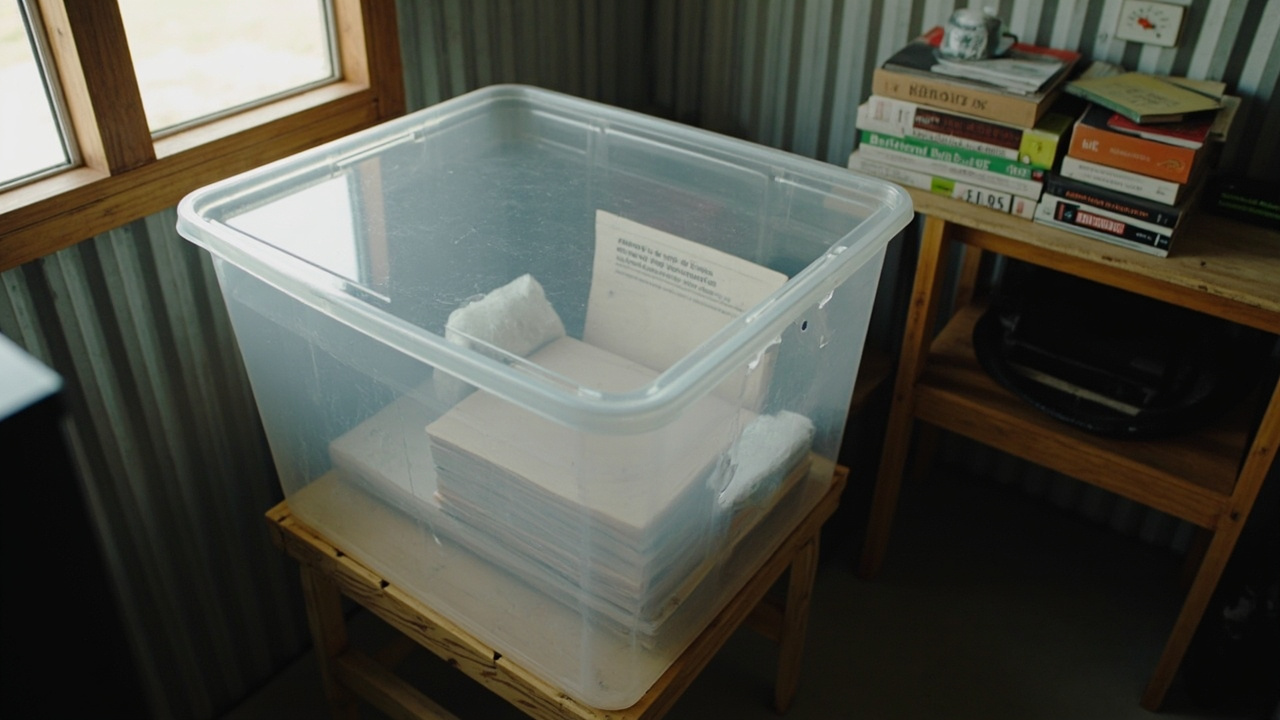
Avoid direct sun. Books fade and warp. Store in a shed, not under a roof that ba
Books sealed in plastic tub with desiccant to block moisture
kes in summer.
Don't stack higher than 3 bins. Books get crushed. You'll end up with pulp.
Pro tip: If your shed is damp, put bins on a raised platform. A $10 sheet of plastic under the pallets stops moisture. Do it now.
Preservation: Stop Books From Rotting
Humidity is your enemy. If it's over 60% RH (common in QLD/TAS), books get mould. Fix it:
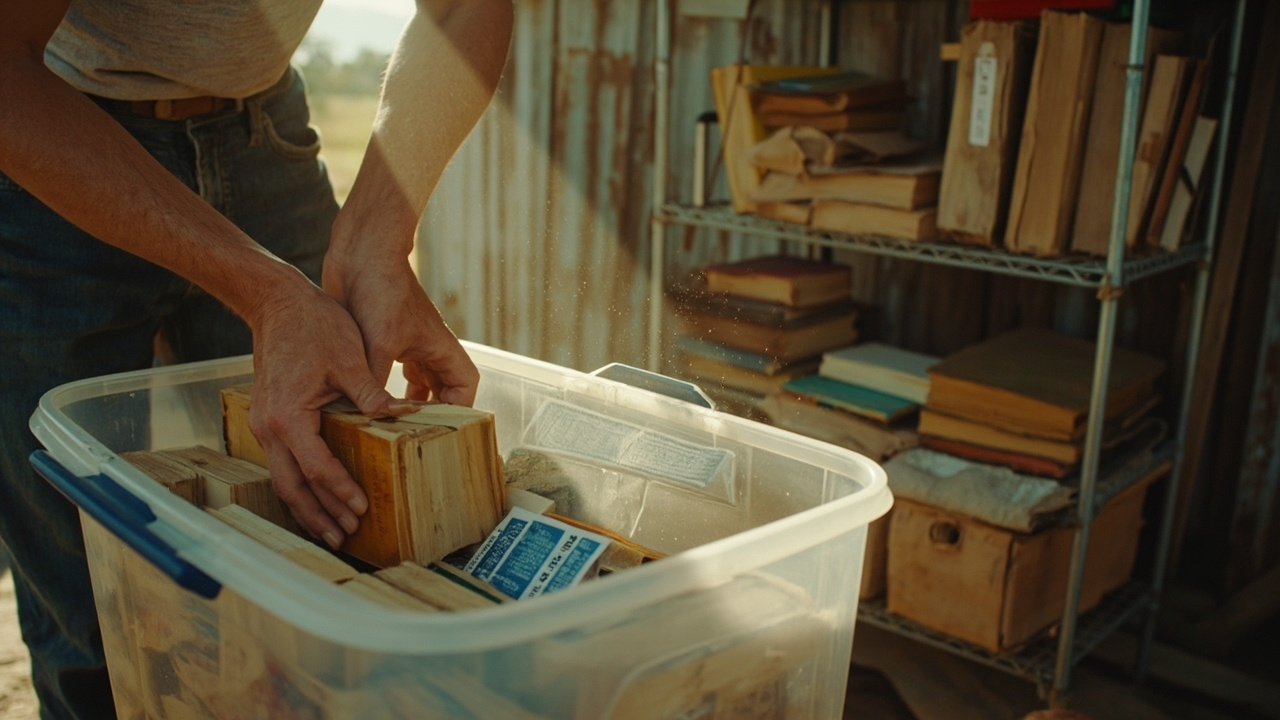
Sealed tubs and desiccant keep books dry
Silica gel packs ($5 for 100g at Bunnings). Put 2 per bin. Replace every 3 months. No exceptions.
Check books monthly. If you see mould, bin the book. Don't try to "save" it – it's contaminated.
Never store books in a garage. Fumes from cars or tools ruin pages. Use a dedicated storage shed.
Keep bins sealed. Dust and insects get in if lids are loose.
Price check: Bunnings sells 100g silica gel for $5. It's cheaper than replacing 50 books. Do the math.
Lending: Don't Lose Your Collection
Sharing books is great. But off-grid means no easy returns. Set rules:
Use a book exchange box ($10 at Bunnings). Put it in a dry spot. "Take one, leave one" only. No "borrowing" without return.
Never lend to people who don't respect deadlines. If they don't return it in 2 weeks, they lose the right to borrow. Simple.
Keep a ledger. Write names/dates on a sticky note. If someone ghosts you, you know who to cut off.
Don't lend rare books. If it's a $50 book, keep it locked up. Off-grid means no replacement.
Real talk: If you're off-grid, your books are your library. Don't let people treat them like freebies. Be firm.
When to Call a Professional
While many off-grid projects are achievable as DIY, certain situations require licensed professionals:
Electrical work beyond basic 12V DC additions — requires a licensed electrician
Structural modifications to buildings or load-bearing elements
Gas line installation or modification
Solar array installations above safe voltage thresholds
Any work that affects the structural integrity of your property
Always check local regulations and obtain necessary permits before commencing work.
It walks you through a simple scanning workflow and how to keep a sealed external hard drive in a weather‑proof box. This gives you a reliable digital copy when your paper books get damp or chewed by mice.— Jenny Mills