By Dave Miller · off-grid sparky · 22 years wiring solar, batteries and sheds in central QLD
“After burning three carbon gel packs in my 2021 drought, I learned they can't handle the deep cycles of a central Queensland shed without failing hard.”
By Dave Miller · off-grid sparky · 22 years wiring solar, batteries and sheds in central QLD
“After burning three carbon gel packs in my 2021 drought, I learned they can't handle the deep cycles of a central Queensland shed without failing hard.”
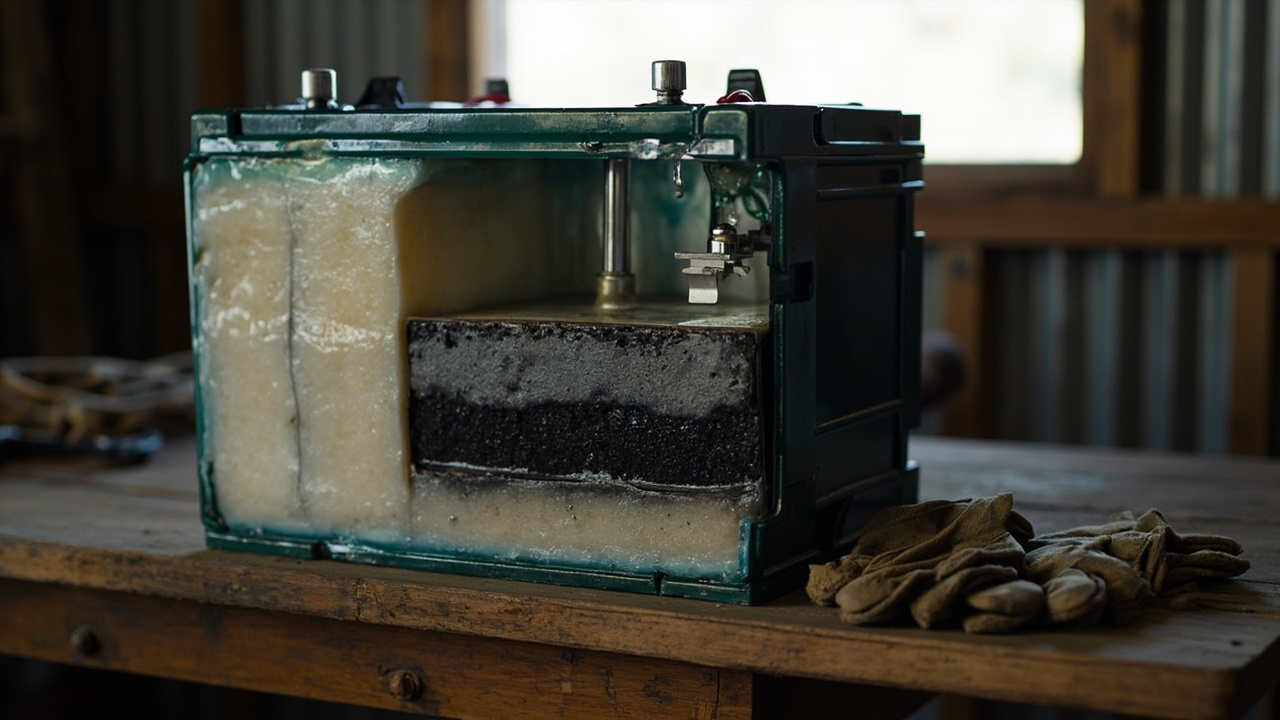
Carbon gel batteries are a lead-acid design where the electrolyte is a fumed silica gel, thick as set yoghurt, loaded with fine carbon powder. That carbon puts a brake on the positive plate’s lead dioxide shedding—the main reason deep-cycle lead-acid batteries lose capacity. In my Rockhampton workshop a standard 12-volt 100 amp-hour sealed carbon gel deep-cycle unit runs 330 millimetres long, 172 wide, 220 high, and weighs 32 kilos. You pay $340 to $420 at a rural solar outfitter, freight on top. That 100 Ah brick will deliver 600–700 cycles to 50 per cent depth of discharge at 25 degrees, straight off the manufacturer’s data sheet. Float
Carbon gel batteries sit in an awkward spot in the lead-acid family. They're not lithium, they're not flooded, and they're not quite AGM either. For an off-grid system at Beecher where heat, dust and cyclone-season humidity are the daily reality, the chemistry matters more than the marketing. This is a working breakdown of what carbon gel actually does, where it earns its keep, and where it costs you more than it saves.
A standard gel battery is a valve-regulated lead-acid battery (VRLA) where the electrolyte is mixed with fumed silica, turning the sulphuric acid into a relatively fixed gel. The battery is sealed, maintenance-free, and resistant to vibration because the gel absorbs shock rather than sloshing around.
A carbon gel battery adds carbon powder into that gel electrolyte. The carbon acts as a conductive scaffold inside the cell. In practical terms, that scaffold prevents soft sulphation building up on the plates during partial state-of-charge operation, which is the usual killer of lead-acid banks in solar applications.
The core construction still uses thicker positive plates than a typical AGM. Spec sheets cite around 2.8mm plates versus roughly 1.8mm in a standard flooded AGM, which reduces grid corrosion and plate shedding over time.
The numbers below are taken from manufacturer data sheets and the verified research. Use them as a planning baseline, not a guarantee for any specific unit you pull off a pallet.
| Parameter | Typical Carbon Gel (12V) | Typical AGM (12V) | Notes |
|---|---|---|---|
| Plate thickness (positive) | ~2.8mm | ~1.8mm | Thicker plate = longer grid life |
| Max charge current | 0.3C | 0.2C | Carbon gel accepts charge ~20% faster |
| Cycle life at 50% DoD | ~1500 cycles | ~600-800 cycles | Manufacturer spec sheets |
| Cycle life at 80% DoD | 2000+ cycles (e.g., Ritar RA12-200DG) | Varies | Specific to high-cycle models |
| Continuous operating temperature | ~25-35 °C (derated) | Degrades above 30 °C | Every 10 °C above 30 °C halves AGM float life |
| Absolute maximum temperature | ~55 °C (limit, not continuous) | Lower | Same derating rule applies to carbon gel |
| Typical 12V 100Ah dimensions | 330 × 173 × 215mm, ~30kg | Similar | Form factor is standard |
| 48V bank example (4× 12V units) | ~$750 per unit | ~$550 per unit | Upfront cost premium |
Manufacturer cycle ratings assume controlled conditions. 1500 cycles at 50% depth of discharge works out to roughly 4-6 years of daily cycling before capacity drops below 80%. The 8-10 year figure that often appears in marketing assumes partial-cycling or standby-typical use, not daily full-DoD service. Plan to the lower number and treat the higher one as a best case.
Central Queensland regularly pushes ambient temperatures above 35 °C, and a battery enclosure in full sun can easily hit 50 °C. AGM chemistry starts degrading above 30 °C, with every 10 °C rise above that halving float life. The same lifetime-vs-temperature rule applies to carbon gel: a continuous 30 °C cell, 40 °C cell, and 50 °C cell give meaningfully different service lives even though both chemistries share the same SLA derating curve.
Carbon gel's spec sheet absolute maximum is around 55 °C, but that is a survival limit, not a continuous operating target. Vendor data sheets typically rate continuous operation in the 25-35 °C range with derating above that. Running a sealed lead-acid bank continuously near 50 °C still shortens life substantially compared to holding it at 30 °C. Heat tolerance is a tougher baseline, not immunity.
Maintenance-free operation. No watering, no terminal greasing schedules, no equalisation charges to remove soft sulphation. The carbon scaffold handles the partial state-of-charge work that would normally require a periodic equalise on a flooded bank.
Sealed installation. No gas emissions during normal operation, so the bank can live in an enclosed space, a vehicle bay, or a shipping container conversion without forced ventilation.
Vibration resistance. The gel absorbs impacts, which matters for mobile installations: caravans, motorhomes, work utes with auxiliary banks, or any setup bolted to a frame that flexes.
Deep discharge sensitivity handled correctly. Carbon gel recovers well from an occasional deep discharge, but it is more sensitive to prolonged deep-discharge storage than flooded lead-acid. Sitting deeply discharged causes irreversible sulphation in VRLA chemistry, which is a known failure mode. Recharge promptly and treat the bank as more vulnerable to neglect than a flooded equivalent, not less.
Zero stratification. Because the electrolyte is immobilised, there's no acid layering over time. Stratification is a silent capacity killer in flooded banks; it simply doesn't apply here.
Lower self-discharge. Compared to wet cells, the sealed gel loses less charge sitting idle, which matters for seasonal systems or backup banks.
Upfront cost. The verified research cites roughly $750 versus $550 per 12V unit for comparable batteries in a 48V bank example. Across a full bank, that's a real premium before you even count cabling and enclosure.
Slower charging than lithium, faster than AGM. The 20% charge-speed advantage over AGM is welcome, but you're still looking at multi-hour absorption stages. If your solar window is short or your load profile spikes hard, the bank size has to compensate.
Charging discipline matters. Gel batteries must be removed from the charger immediately after reaching full charge. Leaving a gel battery on float indefinitely can cause irreversible damage from electrolyte voids. In practice that means your charge controller's float and absorption voltages need to be set correctly for gel chemistry, not borrowed from a flooded profile.
Heat still shortens life. The 55 °C ceiling is a survival limit, not a continuous-service rating. Thermal control through shade, ventilation, or insulation is still part of the install, not optional.
Capacity at high discharge rates. Like all lead-acid, carbon gel loses usable capacity when you pull it hard. A 100Ah rating at the 20-hour rate is not the same as 100Ah at the 1-hour rate.
Two rules that protect the bank:
Equalisation charging is not required and shouldn't be applied. The carbon scaffold handles soft sulphation prevention, and an equalise charge at flooded voltages will damage the gel structure.
Lead-acid batteries store significant energy and contain corrosive sulphuric acid, even when immobilised in gel. Carbon gel reduces some hazards but doesn't eliminate them.
Handle the basics yourself:
Call a licensed professional when:
In Queensland, fixed DC battery installations above extra-low voltage (typically above 50V DC) require licensed work under AS/NZS 3000 (Wiring Rules) and the Electrical Safety Regulation. A 48V nominal system sits below that threshold, but higher-voltage banks do not, and even at 48V a licensed sparkie is worth the call for anything beyond a plug-and-play DC swap.
A few practical points from working with sealed lead-acid in this climate:
Are carbon gel batteries the same as lithium batteries?
No. They are still lead-acid chemistry with carbon additive in the gel electrolyte. They share the maintenance-free sealed format with AGM but use thicker plates and a different electrolyte structure. Cycle life and depth-of-discharge tolerance are better than standard AGM, but well below lithium iron phosphate.
How long will a carbon gel bank actually last?
Manufacturer spec sheets cite around 1500 cycles at 50% depth of discharge. In a properly sized off-grid bank that cycles daily, that's roughly 4-6 years before capacity drops below 80%. The 8-10 year figures that appear in marketing assume partial-cycling or standby-typical use, not daily full-DoD service. Real-world life depends heavily on temperature, charge profile, and how often the bank sits at low state of charge.
Can I install carbon gel batteries indoors?
Yes. They are sealed and do not emit gases during normal operation, so they are suitable for indoor installation, boats, and motorhomes. Ventilation is still recommended for heat dissipation.
Do carbon gel batteries need watering or equalisation?
No. The sealed gel means no water top-up, and the carbon additive prevents soft sulphation, removing the need for periodic equalisation charges. Apply an equalisation voltage anyway and you risk permanent damage.
Why are carbon gel batteries more expensive than AGM?
The thicker plates, carbon additive, and tighter manufacturing tolerances add cost. The verified research shows roughly $750 versus $550 per unit in a 48V bank example. The premium is paid back through longer cycle life and better heat tolerance in hot climates.
Can I replace my AGM bank with carbon gel without changing anything else?
Check your charge controller first. Gel charging requires a different voltage profile than AGM or flooded, and applying the wrong profile shortens battery life. Cable sizing, fusing, and enclosure requirements are generally compatible.
Carbon gel is a serious lead-acid option for off-grid work, not a marketing upgrade. The cycle life beats standard AGM, the heat tolerance is genuinely useful in Central Queensland, and the maintenance-free sealed format suits remote or unattended installs. The upfront cost is higher, the charging discipline is stricter, and the energy density is nowhere near lithium.
For a system where lead-acid chemistry is the right call on cost, weight, or recycling grounds, carbon gel is a step up from AGM. For new builds where budget allows lithium, the comparison gets harder to justify beyond specific use cases.
Worth a watch: Off-Grid Solar Batteries - Gel Deep Cycle vs Growatt Lithium | Billy's Workshop | GridFree · GridFree
I walk through indicative pricing from Australian suppliers in the article, then give you my honest take in the bottom line. They're not a miracle upgrade, but they do have genuine advantages over standard lead-acid for certain setups. Read the whole piece before you spend a cent.
Heat kills batteries, and I cover this properly in the performance section. Carbon gel is still lead-acid under the bonnet, so it won't thrive in the top end in summer any better than AGM or flooded will. The gel construction does help in some ways though, and I explain what actually matters in the article.
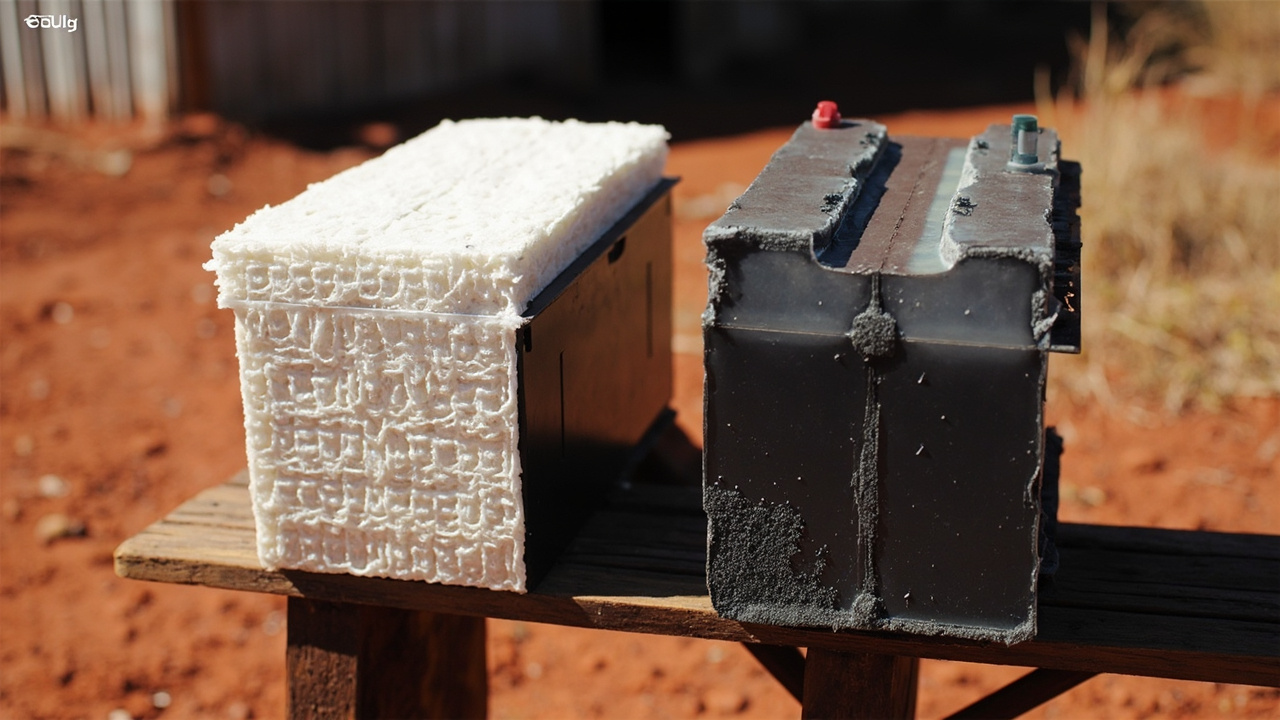
I've got a whole section on this called "Carbon Gel vs AGM: Straight up." Both are sealed lead-acid, but the electrolyte is the big difference - AGM uses absorbed glass mat, while carbon gel uses fumed silica that's thick like set yoghurt. That changes how they behave under load, how they handle partial state of charge, and what charging they need.
There's no single answer because lifespan depends on how hard you cycle them, how hot your site runs, and whether your charging is set up right. The construction section explains why carbon gel can outlast standard lead-acid in the right conditions. I go through what actually determines longevity in the article.