By Fiona Gallagher· permaculture designer · food, animals and preservation on 12 acres in Tassie
“After losing my first batch of farmhouse cheddar to Tasmanian humidity, I learned that a dehumidifier and a 24-hour warm-up period are non-negotiable for off-grid success.”
Look, if you're living off-grid in Australia, you don't need a fancy dairy. You need practical, cheap, and reliable. This is how we do it.
Look, if you're living off-grid in Australia, you don't need a fancy dairy. You need practical, cheap, and reliable. This is how we do it.
Essential Equipment (No Bullshit)
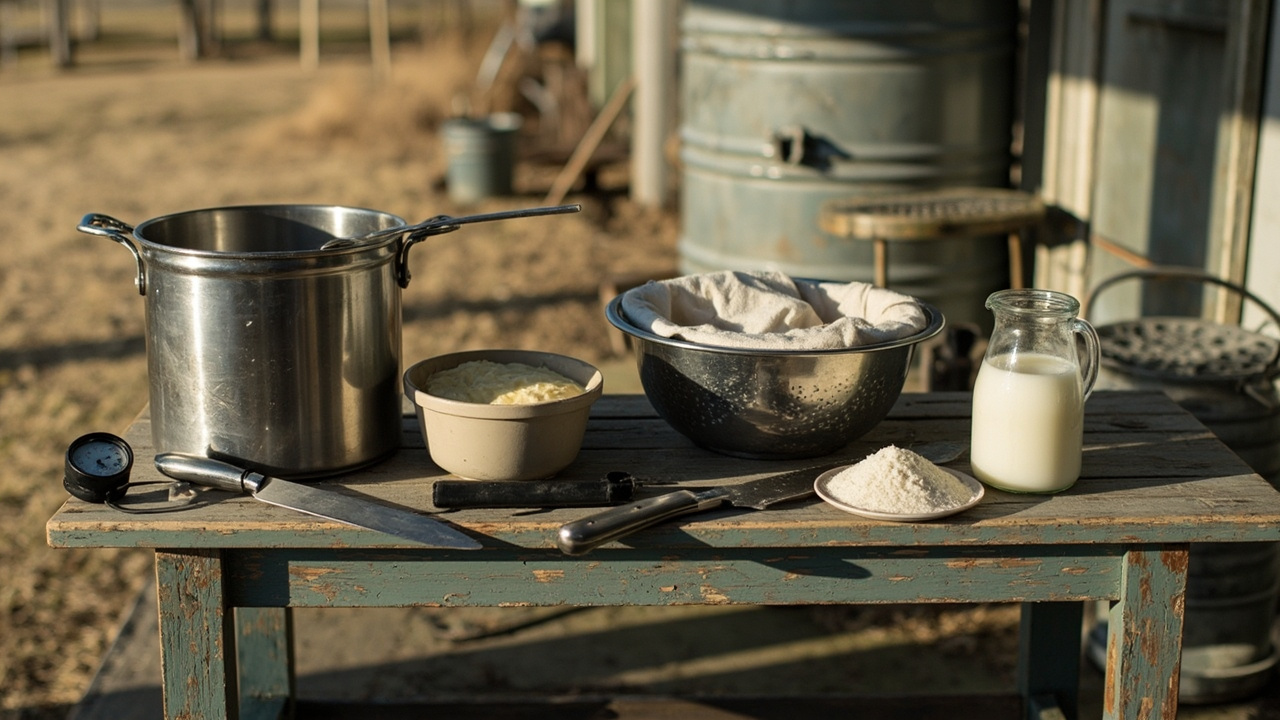
Forget the $300 cheese presses. Start simple:
The basic kit: nothing fancy required
Metal pot (5L+): $15-25 at Kmart. Stainless steel only. No plastic.
Thermometer: Instant-read digital. $12 at Bunnings. Must go to 100°C.
Slotted spoon: $3 at Woolworths. Not a ladle.
Colander: $5 at Op Shops. Wire, not plastic.
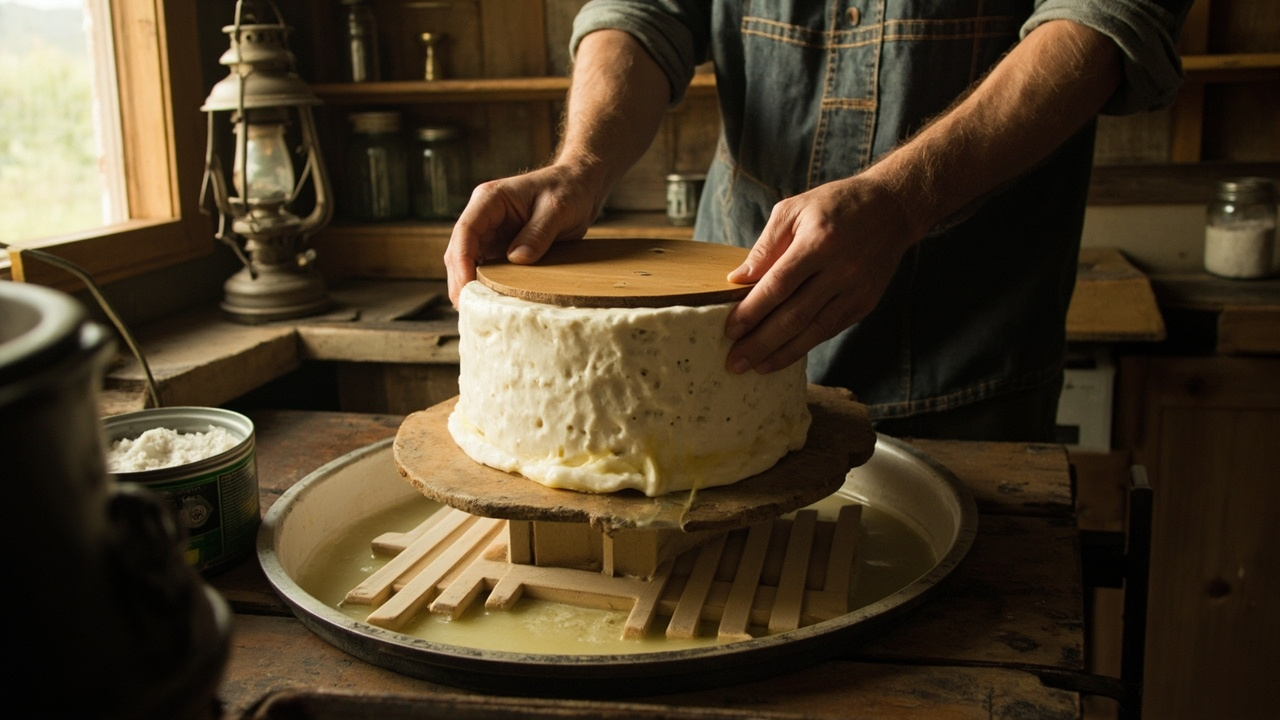
Press: DIY it. Use a wine bottle filled with water on top of your cheese. Weights: bricks or rocks. No need for $200 presses.
Pro Tip: Sterilise everything in boiling water for 10 mins. No rinsing. Air dry. If it's not hot, it's not clean.
Cultures: Don't Waste Money
Most Aussie off-gridders use mesophilic cultures. They're cheap and work in cool temps (no fridge needed for most).
Where to Buy (Aussie Suppliers):
Microbe Men: $12 for 100g. Best for beginners. microbemen.com.au
Improvised press: weights do the work
i>Woolworths: $8 for a small pack of "cheese culture" in the dairy aisle. Works for soft cheeses.
Don't bother with thermophilic cultures unless you're making mozzarella. They need constant heat. Off-grid? Skip it.
Pressing: No Fancy Gear Needed
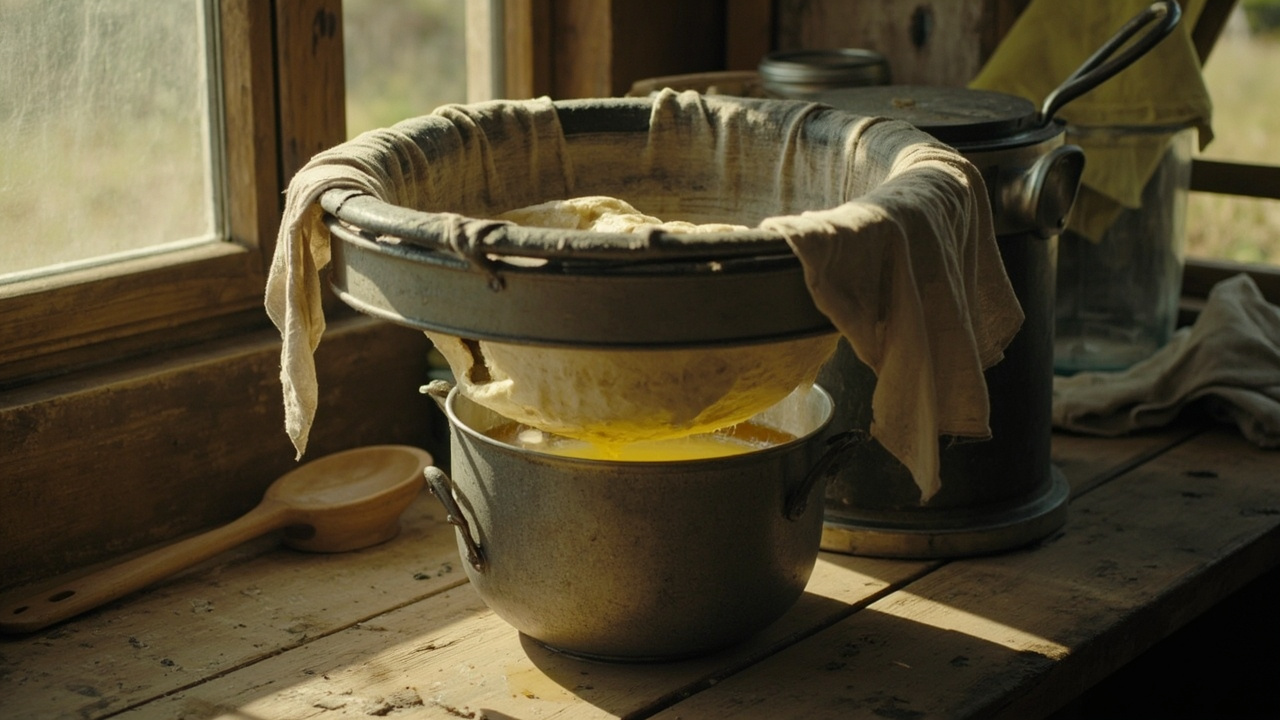
After curds form (15-30 mins), pour into a lined cloth. Fold corners, then:
A household colander and heavy pot pressing fresh curd
Place on a flat board.
Put a wine bottle (filled with water) on top.
Add a 2kg brick on the bottle.
Leave for 12 hours. That's it.
Supplier Note: Microbe Men sells cheese cloth for $4.50. Use it, don't use tea towels. Tea towels have lint. Lint = ruined cheese.
Aging: Off-Grid Style
Forget the $500 cheese cave. You need:
Dark, cool spot: Under the house, in a shed, or a cool cupboard. 10-15°C is ideal.
Humidity: Wrap cheese in wax paper (not plastic). Place in a sealed container with a damp cloth. Check weekly.
Time: Soft cheese: 2 weeks. Hard cheese: 4-8 weeks. No rush.
Off-Grid Hack: Use an old fridge with the light off. It's the only thing that'll keep humidity stable. If you don't have one, a root cellar works. If you don't have that? Just keep it in a dark corner and check it often.
Final Word
Start with ricotta. It's the easiest. $10 for milk, 2 hours, done. No cultures, no pressing. Just heat milk, add vinegar, strain. Done. Once you've made that, you'll know if cheese making's for you.
Don't overcomplicate it. Get the basics right. Then you'll be eating cheese from your own off-grid farm. No fancy gear. Just bloody good cheese.
When to Call a Professional
While many off-grid projects are achievable as DIY, certain situations require licensed professionals:
Electrical work beyond basic 12V DC additions — requires a licensed electrician
Structural modifications to buildings or load-bearing elements
Gas line installation or modification
Solar array installations above safe voltage thresholds
Any work that affects the structural integrity of your property
Always check local regulations and obtain necessary permits before commencing work.
It walks through a hard cheddar recipe using only basic gear you can scrounge on a remote property, showing the exact steps for rennet dosing and pressing that the guide touches on.— Fiona Gallagher