Chicken Keeping and Coop Design for Off-Grid Properties
Keeping chickens is one of the most rewarding first steps for new off-grid property owners, providing a constant supply of fresh eggs, natural pest control, and excellent fertilizer for gardens. A well-designed coop tailored to Australian conditions will keep your flock healthy, safe from predators, and productive year-round.

By Fiona Gallagher · permaculture designer · food, animals and preservation on 12 acres in Tassie
“After losing my first twenty chickens to a fox that slipped through a three-centimetre gap, I learned that wire mesh must be buried at least half a metre deep.”
Introduction
Few off-grid additions deliver returns as quickly or as reliably as a small flock of chickens. A productive hen lays 200–300 eggs per year depending on breed, and two or three birds will comfortably supply a small family with eggs year-round. Beyond eggs, chickens aerate and fertilise garden beds, consume kitchen scraps that would otherwise need composting attention, and provide natural pest control by scratching through soil and eating slugs, snails, and insects. We learned this the hard way after the dingo tore through our old run in northern Tasmania last winter, dragging off three birds before we could even grab the pitchforks, forcing us to rebuild the coop with deeper footings and stronger mesh that actually held.
Chickens Offer Self-Sufficiency Until Foxes
For off-grid spots, chickens fit the self-sufficiency ethos. They need minimal infrastructure, produce high-quality protein without energy-intensive feedlot systems, and their manure is an invaluable soil amendment when composted correctly. Starting a flock is inexpensive, and chickens are forgiving of beginner mistakes, which made them ideal for me until the foxes from down the road tore through the single-layer wire mesh I'd rigged up at my 12 acres in Tassie last winter, costing me two hens and a few hundred dollars in repairs before I finally secured the run with heavy-duty hardware cloth.
Key Considerations
Breed Selection for Australian Climate
Australian summers are brutal for heavy-bodied chickens, and breed selection directly affects egg production, heat tolerance, and temperament. Heat stress is a serious concern — chickens pant and are susceptible to death when temperatures exceed 38°C, particularly at night when humidity rises. I lost three Australorps last summer in Tasmania when the coop design failed; the ventilation was so poor the heat built up overnight and the birds died, proving that generic advice doesn't work when you're running an off-grid operation on twelve acres.
- Isa Browns: The commercial hybrid standard in Australia. Exceptional egg production (300+ eggs per year), calm temperament, and good heat tolerance. Ideal for beginners. Light brown shavers, they handle Australian summers better than heavy European breeds.
- Australorps: An Australian breed developed from Black Orpingtons. Excellent egg layers (250–300 eggs per year), heat tolerant, and calm. Their dark feathers absorb more heat, so provide plenty of shade in summer.
- Leghorns: White egg layers, highly active foragers, excellent heat tolerance, and feed-efficient. They can be flighty and are better suited to properties with higher fencing or enclosed runs.
- Silkies: Not prolific layers (approximately 100–150 eggs per year), but exceptional broodies and wonderful for families with children. Their feathered feet and fluffy plumage require attention during wet, cold periods.
- Plymouth Rocks / Barred Rocks: Dual-purpose breed, decent layers (200–250 eggs per year), hardy and good foragers. Their size makes them less prone to predation than smaller breeds.
For most off-grid properties, a flock of 4–6 Isa Browns or Australorps provides the best balance of egg production, temperament, and climate resilience.
Predator-Proofing
Australia hits you with predator pressure unlike anywhere else on earth. Foxes are everywhere on the mainland, dingoes and their crosses threaten rural properties, raptors like wedge-tailed eagles and goshawks take chickens, and carpet snakes swallow adult hens whole. I learned this the hard way on my 12 acres in Tasmania when a fox breaching a flimsy wire door wiped out three hens in a single night. A coop that isn't predator-proof will result in losing birds, often wiping out an entire flock in a single night.
Essential predator-proofing measures include:
- Fully enclosed coop and run: Hardware cloth (not chicken wire, which predators tear through easily) on all sides, top, and floor. Use 12–19mm galvanised mesh for the run floor to prevent foxes and dingoes from digging under.
- Buried perimeter: Dig the mesh at least 30–40cm into the ground around the coop perimeter, angling outward (J-ledge or L-length) to prevent predators from digging under.
- Raptor netting over the run: Wedge-tailed eagles are bold and will take chickens from open runs. Cover runs with bird netting or chain-link mesh.
- Solid nest boxes: Nest boxes should be enclosed and dark, preventing snakes and goannas from accessing eggs. Check nest boxes daily during summer when snakes are most active.
- Automatic coop door: A solar or battery-powered automatic door that closes at dusk eliminates the risk of forgetting to lock up — the single biggest cause of preventable chicken losses on off-grid properties.
Ventilation
Proper ventilation keeps my birds breathing and laying; ammonia from the manure rots their lungs and kills the egg count if it stagnates. In a Tasmanian summer, the air gets thick with body heat from the flock, and without a draft, they fry. I learned this the hard way when a fox tore through the mesh on the north run last January, forcing me to strip the whole coop down because the original design left a gap too high for the birds but just right for a predator to squeeze through and drag off three pullets in one night.
Design High Ventilation To Prevent Chills
Design coops with ventilation high on the walls, above roost level so drafts don't chill the birds; we learned this the hard way after a fox ripped the mesh off our side walls in Tassie, leaving a dozen hens dead. Mesh rather than solid walls accomplish this naturally in most designs. The rule of thumb is a minimum of 0.1 square metres of ventilation opening per square metre of coop floor area.
Space Requirements
Chickens need less room to sleep and lay, but more space for actual wellbeing and egg quality. Overcrowding brings feather pecking, stress, disease and drops in egg production. I learned this the hard way in Tasmania when my old coop design failed during a fox attack; three of my best layers vanished overnight from a hole I'd overlooked in the wire mesh, costing me a fortune in replacements and leaving the rest of the flock skittish for weeks. Recommended minimums:
- Insidecoop: 0.3–0.4 square metres per bird for bantams, 0.4–0.5 square metres per bird for standard breeds
- Outdoor run: 1–2 square metres per bird minimum; more is always better
- Roosting perch: 20–25cm of perch space per standard bird; chickens sleep on perches, not nest boxes
- Nest boxes: One nest box per 4–5 hens; 30x30x40cm dimensions for standard breeds
Getting Started
Building or Buying a Coop
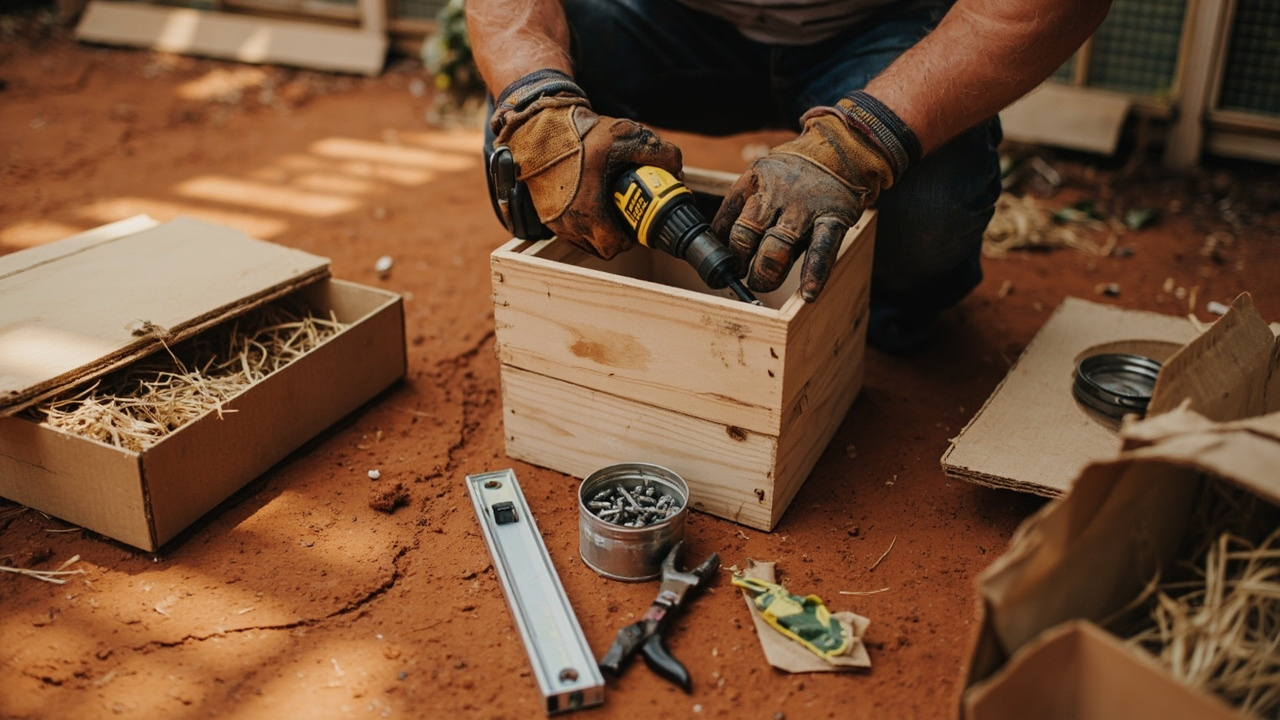
DIY coops are often the most cost-effective and predator-proof option for off-grid properties. A simple design using hardwood framing and hardware cloth on a raised base can be built for $200–$500 in materials. Key design principles: easy access for cleaning (chicken coops need regular attention), predator-proof from the ground up, elevated roosting area, and nest boxes accessible from outside for easy egg collection.
Commercial Coop Options And Costs
Commercial coops are available from Chicken Coops Australia, Rent a Coop, and major hardware retailers, but I learned the hard way that the $300 small ark-style units are barely adequate for our 12 acres in Tasmania, while the large walk-in designs sit at $1,500+. The pre-made boxes sold at the big hardware stores in the state are not predator-proof as supplied, a fact that cost me three pullets when a fox slipped through the flimsy mesh during a raid last winter. Before we could even settle the flock, we had to strip the original wire and bolt on heavy-duty hardware cloth to the frame, because without those upgrades, rural fox-prone areas remain an open invitation for disaster.
Chick Rearing
Point-of-Lay Pullets
Starting with point-of-lay pullets (16–20 week old hens ready to start laying) is the easiest approach for beginners — you skip the delicate chick-rearing phase and start getting eggs within 2–4 weeks. I bought mine from a local Tasmanian breeder after the foxes took my first flock through a flimsy mesh door left open by a previous owner. Purchase from reputable poultry suppliers or local breeders. Expect to pay $15–$30 per pullet depending on breed.
Brooder Setup And Temperature
If you're raising chicks, you need a brooder box with a heat source like a heat plate or brooder lamp, chick starter feed with 18–20% protein crumbles, and clean waterers. Chicks need 32–35°C for the first week, reducing by approximately 3°C per week until fully feathered at 6–8 weeks. Off-grid properties can use radiant heat plates rather than heat lamps, which are fire risks in wooden structures. I learned this the hard way after a fox breached a flimsy wire design on my 12 acres in Tassie, costing me a dozen birds and leaving a bloody mess where the heat lamp had burned a hole in the roof.
Feeding
Layer pellets or mash (16–18% protein) should be the foundation of a laying hen's diet and costs approximately $15–$25 for a 20kg bag. After the magpies ripped the mesh on our new run in Tasmania last summer, I learned that free-ranging chickens will supplement their diet significantly with insects, grass, and kitchen scraps, though a well-managed flock can reduce feed costs by 30–50%. Key feeding principles:
- Never feed raw potato peels, avocado, chocolate, onion, or garlic — these are toxic to chickens
- Shell grit or crushed oyster grit is essential for calcium and digestion, especially for laying hens
- Cooked eggs (ironically) make excellent emergency treats for sick birds
- Feed in a covered, rodent-proof feeder to prevent wild birds and mice accessing the feed
Water Systems
Consistent clean water is non-negotiable for egg production; a hen drinks approximately 200–300ml per day, more in summer heat. We lost three hens in a heatwave last January in Tasmania when a fount-style drinker evaporated overnight, proving you can die within hours in extreme heat without water. Nipple drinkers mounted on a header tank provide the cleanest water and can be plumbed to larger storage for off-grid convenience, but for smaller flocks, a 5–10 litre fount-style drinker refilled daily works well. In summer, check water supplies twice daily.
Costs and Considerations
Starting a backyard chicken flock on an off-grid property involves the following costs:
- Coop (DIY): AUD $200–$600 for materials to build a predator-proof coop for 4–8 birds
- Coop (commercial): AUD $300–$1,500 depending on size and quality
- Point-of-lay pullets: AUD $15–$30 per bird; 4–6 birds recommended for a small family
- Feed: AUD $15–$25 per 20kg bag; approximately 1 bag per month for 6 birds
- Automatic door: AUD $80–$200 for solar-powered models
- Waterer and feeder: AUD $30–$80
My first chicken coop cost me AUD $400 to build, a flimsy structure that collapsed the moment a fox dragged my Isa Brown through the mesh. That lesson cost me more than the initial spend, but I've since stuck to the rough math: a DIY setup for 4 to 6 birds runs AUD $400 to $800, while a commercial coop with the same flock size sits between $600 and $2,000. You're looking at AUD $400 to $700 a year for feed, bedding, and fixing the holes predators find. In return, six productive Isa Browns will lay roughly 1,500 to 1,800 eggs per year, which is worth $600 to $900 at retail egg prices.
Recommended Products
Quality chicken-keeping equipment available through Amazon includes:
- Coop: Omlet Eglu Cube (premium, predator-proof, easy-clean) or similar modular designs
- Automatic door: Pawgate Solar Powered Chicken Door, Brinsea PopHole Automatic Coop Door
- Feeders: Grandpa's Feeders Superior Poultry Feeder (rodent-proof), Little Farmer Chicken Feeder
- Waterers: Grandpa's Feeders Poultry Drinker, Little Farmer Chicken Waterer withnipple system
- Nest boxes: Wooden next boxes with rollaway design (prevents egg eating and keeps eggs clean)
- Health: Calciboost or similar calcium supplement for laying hens, Poultry Multivitamin
Shop on Amazon: View on Amazon
Conclusion
Chickens are the perfect entry point for off-grid living on my 12 acres in Tassie, forgiving of mistakes and immediately productive. I started with four birds in a coop designed after the night my local ferrets tore through a flimsy mesh door in Hobart, proving that predator-proofing is non-negotiable. Isa Browns or Australorps give the best egg returns for our conditions, and I treat an automatic coop door as the single best investment for flock security. With basic care, feeding, and predator prevention, a small flock provides eggs, garden benefits, and genuine satisfaction for years.
Disclosure: some links in this article are affiliate links. If you buy through them we may earn a small commission at no extra cost to you.
Worth a watch: Off Grid Chicken Coop Tour | Chicken Compost · Simply Off Grid - Australia
Frequently asked questions
Are chickens a good first animal for an off-grid property?
Absolutely — they're one of the most rewarding first steps you can take on a new block. You get a constant supply of eggs and they'll happily turn your kitchen scraps into something useful. The article walks through everything from getting started to long-term costs.
Can I feed my chickens kitchen scraps?
Yep, that's half the point really. My rule is simple: if you can't eat it, it goes to the chooks. They handle most scraps well, though you'll still want a proper layer feed to keep them laying consistently.
How much does it cost to set up a chicken coop in Australia?
It depends on whether you build it yourself, repurpose something on the property, or buy a kit. The article has a whole section on costs and considerations to help you plan it out. You can always start small with a few birds and build up over time.
When should I call a professional about my chickens?
Most everyday chook issues you'll sort out yourself, but there are times when you want an expert involved. The article includes a 'When to Call a Professional' section that covers this. If a bird seems off and you're not sure why, get advice sooner rather than later.