Off-Grid Cutting Propagation: Rooting Hormone, Medium & Environment
By Jenny Mills· rural nurse & homesteader · health, safety, law and the paperwork of going bush
“After my first twenty cuttings rotted in damp soil, I learned that sterile sand and dry heat are the only things that keep propagation alive in our bush.”
Stop wasting time on cuttings that never root. Here's the raw deal on rooting hormone, medium, and environment for off-grid survival. No fancy gear. Just what works.
Rooting Hormone: Skip the Bullshit
Rooting hormone isn't magic. It's a cheap nudge to get cuttings to root faster. You don't need it for every plant, but for off-grid survival? Use it. Saves time, saves water, saves your sanity.
What to use:
Bunnings or Mitre 10: "Rooting Powder" ($5-$8 for 10g). Works fine. Avoid the $20 "organic" stuff.
Free alternative: Willow water. Chop 5 willow branches (common in Aussie rivers), soak in water for 24hrs. Dip cuttings in this. Works for most plants. Zero cost.
Pro tip: Don't drown cuttings in hormone. Dip the base for 5 seconds. Too much = root burn. You're not a scientist, just get it done.
Medium: Don't Use Garden Soil
Garden soil = death for cuttings. It's packed with microbes that rot your cuttings. Off-grid means you can't afford to lose plants. Use this:
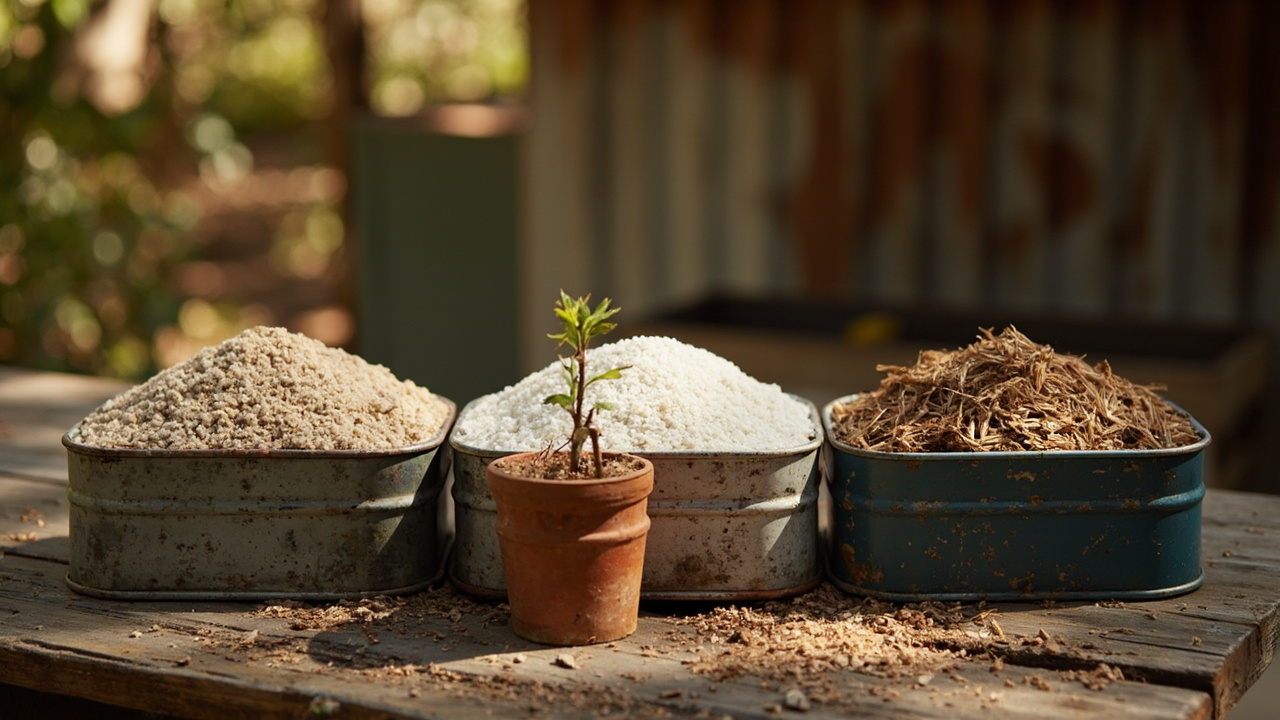
Three propagation mediums displayed in rustic tins
Perlite + sand (1:1): Bunnings sells perlite ($5-$8 for 10L). Mix with clean sand (from the beach, not garden). Drainage is key. No waterlogging.
Coconut coir: $6-$10 for 10L bag at Bunnings. Holds moisture without rotting. Best for humid areas.
Avoid: Potting mix, garden soil, or "organic" compost. They're death traps for cuttings.
Environment: Keep It Simple
Off-grid means no greenhouse. Here's what actually works:
Light: Bright, indirect light. No harsh sun. A north-facing window or under a shade cloth (50% shade) is perfect. Direct sun = crispy cuttings.
Humidity: Cover cuttings with a clear plastic bag or jar. Ventilate daily. No humidity = dry cuttings. Too much = mould. Aim for 70% humidity.
Temperature: 18-25°C. If it's below 15°C, forget it. Wait for summer. Off-grid means no heat mats. Be patient.
Real talk: If your cuttings are in a cold shed or under a hot roof, they'll die. Pick a spot that's not freezing or baking. That's it.
Off-Grid Survival Checklist
Before you start, check these:
Use willow water or $8 Bunnings powder (no fancy stuff).
Medium = perlite + sand or coconut coir (no garden soil).
Location = bright but not hot, covered for humidity.
Water = only when medium is dry. Overwatering kills faster than drought.
That's all. Cut, dip, stick in medium, cover, wait. If it doesn't root in 4 weeks, try again. Off-grid living isn't about perfect. It's about getting it done. Now go grow some food.
When to Call a Professional
While many off-grid projects are achievable as DIY, certain situations require licensed professionals:
Electrical work beyond basic 12V DC additions — requires a licensed electrician
Structural modifications to buildings or load-bearing elements
Gas line installation or modification
Solar array installations above safe voltage thresholds
Any work that affects the structural integrity of your property
Always check local regulations and obtain necessary permits before commencing work.
The video walks through a cheap soda‑bottle mist rig and a simple timer, showing exactly how long to keep the cuttings under mist for reliable rooting. It also covers the difference between soft‑ and hardwood cuttings, which helps you match technique to the plants you’re propagating on your place.— Jenny Mills