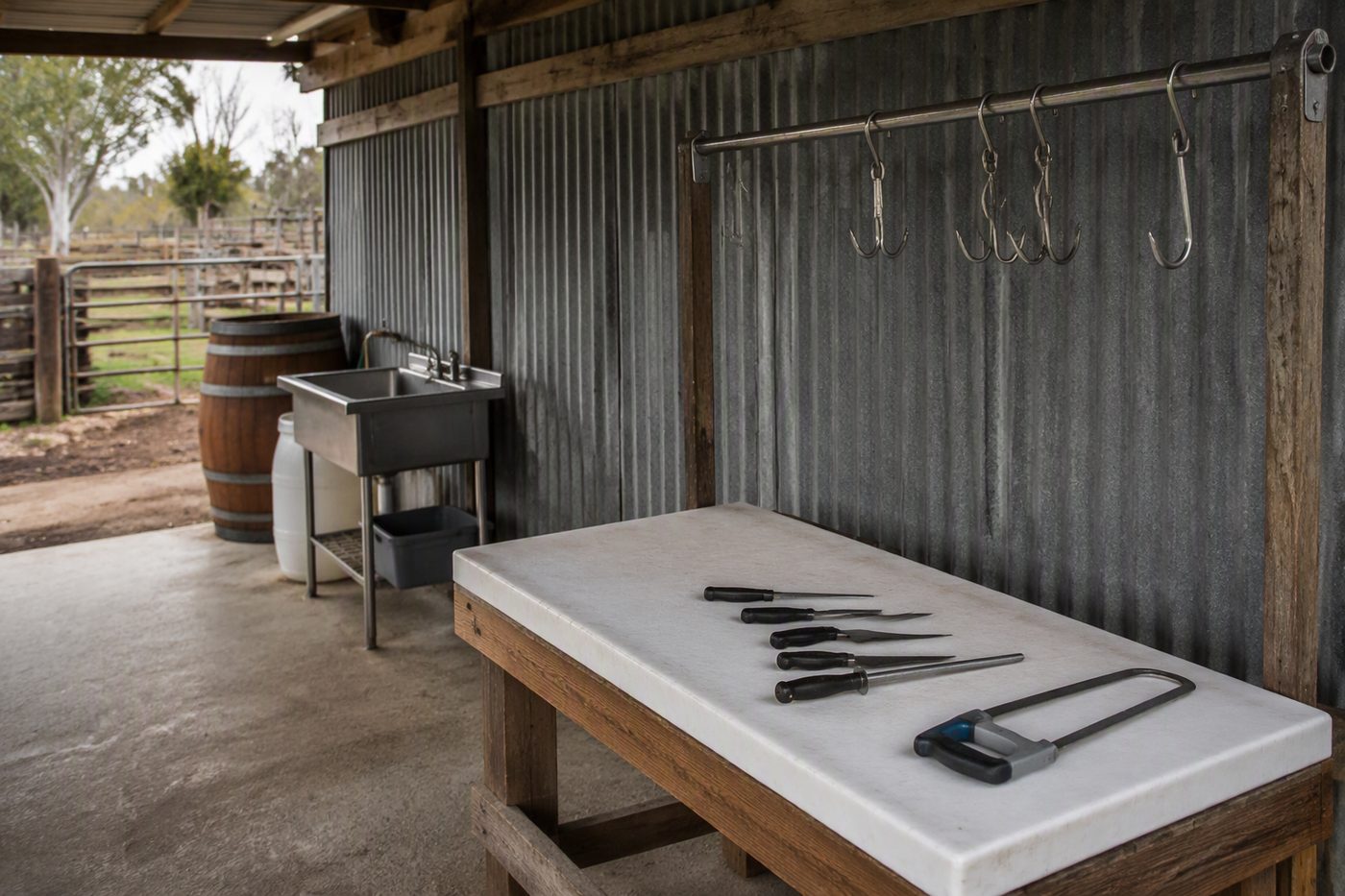
Don't wait. If you're not in a hurry, you're already too late. The clock starts ticking the second the animal drops.
Make a clean cut through the belly, not the gut. Aim for the sternum down to the pubic bone. No sawing through fur.
Grab the intestines and pull them out in one go. Don't rip them—this spreads bacteria. If you're squeamish, get over it. You're off-grid, not at a fancy restaurant.
Remove the heart and liver immediately. They're prime for eating. Leave the lungs and kidneys—they're useless for you.
Wipe the cavity with clean leaves or a cloth. No need for fancy sanitiser. Just get it done.
Pro Tip: If it's hot (above 25°C), field dress within 30 minutes. If it's cold, you've got 2 hours. Don't gamble.
Hanging: Don't Just Toss It on the Ground
Hang it right or the meat turns to dog food. This isn't a backyard barbecue.
Use a strong branch or a dedicated game hanger (Bunnings sells them for $25-$40). Hang the animal by the hind legs, head down. Gravity works for you.
Keep it away from flies. A simple tarp over the hanging spot cuts fly attack by 70%. Don't be lazy.
Leave it hanging for 24-48 hours. This ages the meat, making it tender. Skip this and you'll be chewing on rubber.
Australian Supplier: Bunnings Warehouse. Get a $32 "Game Hanger Kit" (includes rope, hooks, and a tarp). Or DIY with a $10 rope and a strong branch.
Butchering: Break It Down Properly
Time to turn that hanging animal into actual food. No fancy cuts—just practical, edible pieces.
Start with the hind leg. Cut through the hip joint. This gives you the "leg" (great for stew) and the "saddle" (the best cuts).
Remove the saddle. It's the meaty strip along the spine. Slice it into steaks (2-3cm thick) for frying or grilling.
Use a sharp knife (not your kitchen knife). A $60 Australian-made Bushman knife (available at bushman.com.au) is worth every cent. Cheaper knives just slip and cut you.
Save the fat. Render it into tallow for candles or cooking. It's gold in the bush.
Pro Tip: If you're butchering a kangaroo, skip the "chump" (the tail). It's all sinew. Focus on the leg and saddle.
Australian Supplier: Bushman Knives. "Bush Tracker" knife ($62) – Australian-made, won't rust in the outback. Available at Bunnings or online. $62.
What Not to Do
Common mistakes that ruin your meat:
Don't use a dull knife. It tears the meat and makes it tough. Sharpen it before you start.
Don't leave the animal in the sun. It'll spoil in 2 hours. Hang it in the shade.
Don't throw away the offal. The liver and heart are protein bombs. Cook them with the meat.
⚠️ SAFETY WARNING: Working with electrical systems, structural modifications, or gas installations carries inherent risks. If you are not confident in your abilities, always engage a licensed professional.
It covers the step-by-step field dressing and hanging of a sambar, with tips on keeping the carcass cool in warm Aussie conditions. That directly applies to off-grid processing when you can't rely on refrigeration.— Jenny Mills
When to Call a Professional
While many off-grid projects are achievable as DIY, certain situations require licensed professionals:
Electrical work beyond basic 12V DC additions — requires a licensed electrician
Structural modifications to buildings or load-bearing elements
Gas line installation or modification
Solar array installations above safe voltage thresholds
Any work that affects the structural integrity of your property
Always check local regulations and obtain necessary permits before commencing work.