By Dave Miller· off-grid sparky · 22 years wiring solar, batteries and sheds in central QLD
“After blowing a $300 inverter in year one by oversizing my battery bank, I learned that matching your charger to your actual load, not your dreams, is the only way to survive central QLD's heat.”
Inverter Charger Setup: Off-Grid Aussie Style
Forget the fluff. You want your off-grid system to run when the sun's not shining and the grid's available. This is how you do it right.
Forget the fluff. You want your off-grid system to run when the sun's not shining and the grid's available. This is how you do it right.
Flow diagram of an off-grid inverter charger system with solar, genset, battery and loads.
What the Hell is an Inverter Charger?
It's not just an inverter. It's a beast that:
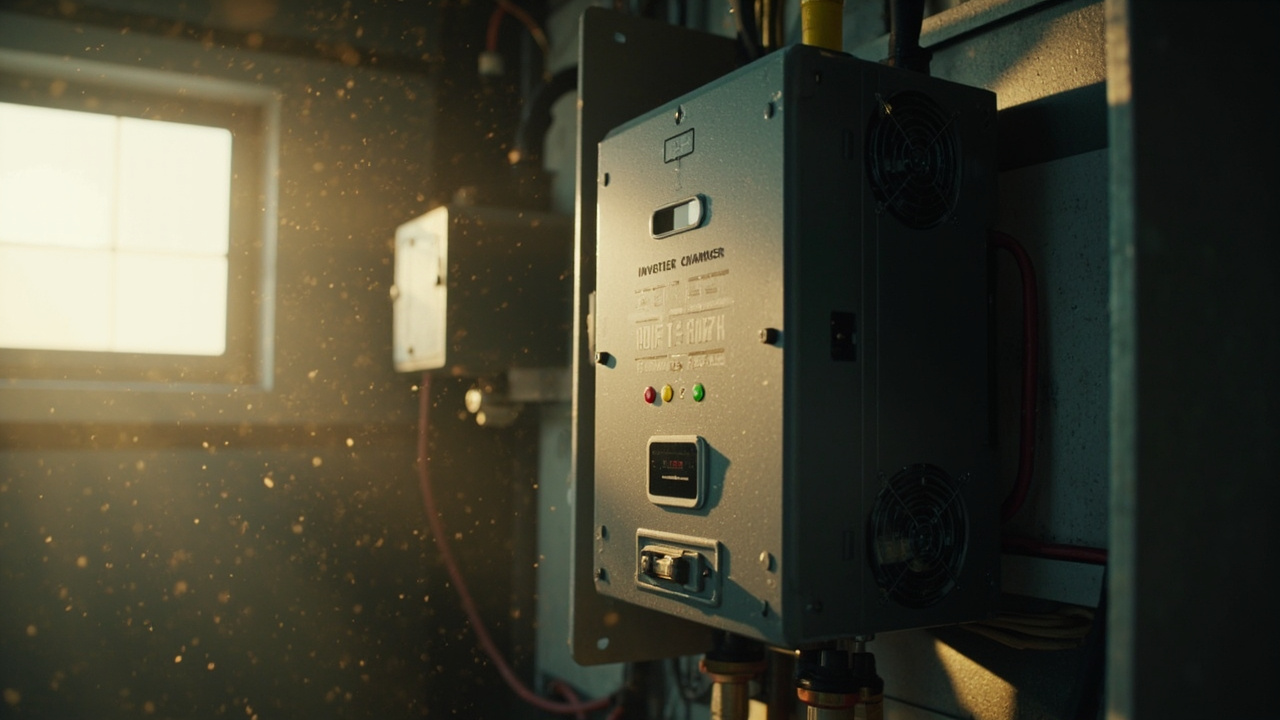
Inverter charger unit mounted in rural switchboard
Turns DC (batteries) to AC (your fridge, lights)
Charges your batteries from the grid (when it's on)
Doesn't need a separate charger. One unit, all jobs.
Don't buy a basic inverter. You'll regret it when the grid comes back on and your batteries don't charge.
Shore Power Integration: The Grid Connection
Shore power = grid connection. You plug into the grid when it's available. Here's the no-nonsense setup:
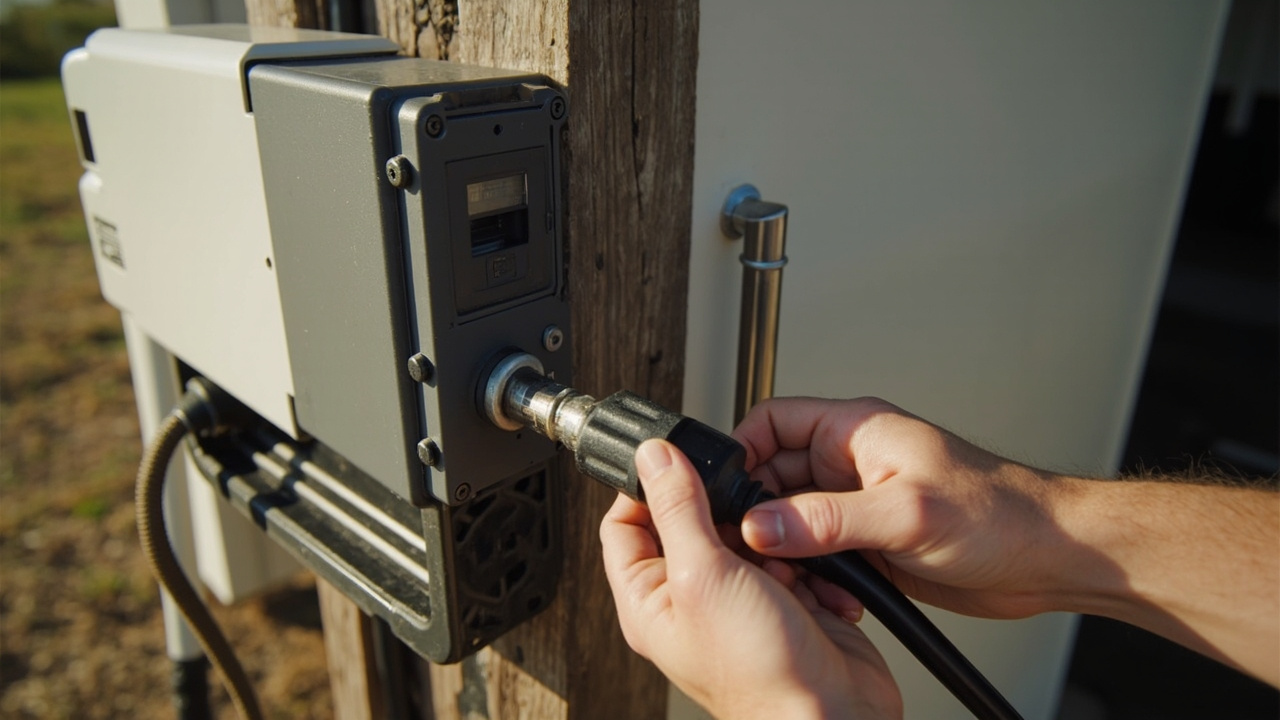
Shore power pedestal with inverter charger connection
NEVER connect shore power directly to your battery bank. You'll fry everything.
Use your inverter charger's built-in AC input. It handles the grid connection safely.
Run s
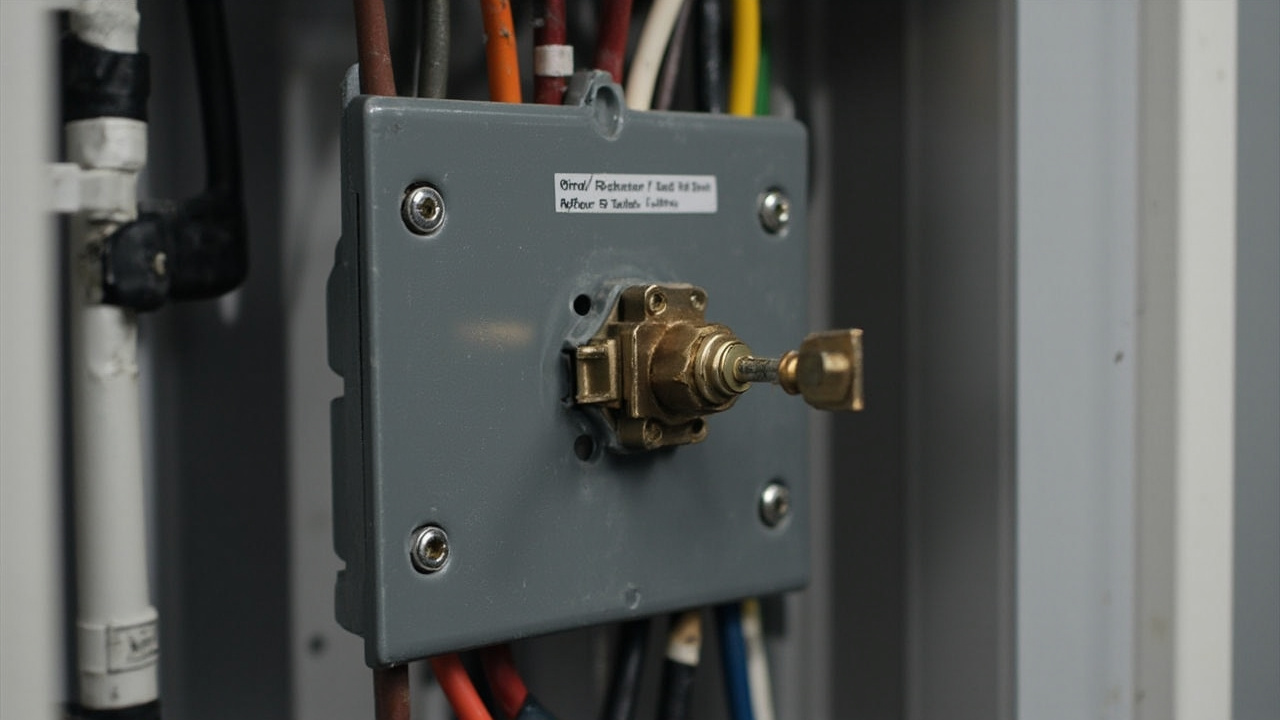
Manual transfer switch in off-grid electrical setup
hore power through a dedicated circuit from your main switchboard. Not a random extension cord.
Price check: A decent inverter charger (like the Victron MultiPlus-II) starts at $1,800. Don't cheap out. It's the heart of your system.
Transfer Switches: Why You Need One (And What Not To Do)
Here's the brutal truth: You must have a transfer switch. Not optional. Not "maybe".
Why? If you plug shore power into your inverter while the grid is live, you'll backfeed power into the grid. That's illegal, dangerous, and will get you fined.
What NOT to do: Don't use a manual switch. If you forget to flip it, you're risking your life and your gear.
What TO do: Use an automatic transfer switch (ATS). It senses grid power and switches to it automatically. No thinking required.
Supplier tip: Victron makes a reliable ATS ($450). Or get a EnerPlex model ($320). Both work. Don't buy a $50 "switch" from eBay. It'll fail when you need it most.
Real Talk: If your inverter charger doesn't have a built-in transfer switch (most don't), you MUST buy a separate ATS. It's non-negotiable. Your insurance won't cover you if you skip this.
Practical Setup Tips (No BS)
Step 1: Install your inverter charger in a dry, ventilated spot (not in the shed with the tools). Heat kills batteries.
Step 2: Wire shore power to the ATS first. Then from ATS to inverter charger. Then inverter to batteries. Not shore power → inverter → batteries.
Step 3: Set your inverter charger to "grid priority". It'll use shore power first, then batteries. Saves your batteries from constant charging.
Price reality: A full setup (inverter charger + ATS + wiring) costs $2,500–$4,000. It's not cheap, but it's cheaper than replacing a burnt-out system.
Australian Suppliers & Pricing (indicative prices)
Stick to these. They know Australian grids and regulations:
Victron Energy (via victronenergy.com.au): MultiPlus-II 24V $1,850. ATS $450. (Prices include GST)
EnerPlex (via enerplex.com.au): Inverter chargers from $1,200. ATS from $320.
Renewable Energy Solutions (Sydney): Full installs from $3,500. (Get quotes from 3 places)
Don't buy from Amazon. They don't do Australian compliance. You'll get a fine, not a working system.
The Bottom Line
Get a proper inverter charger. Get an automatic transfer switch. Wire it right. Don't cut corners. Your off-grid life depends on it. If you're not sure, pay a qualified solar electrician $200 to check your setup. It's cheaper than a fire.
⚠️ SAFETY WARNING: Working with electrical systems, structural modifications, or gas installations carries inherent risks. If you are not confident in your abilities, always engage a licensed professional.
Joondalup Electrical Services walks through a Victron MultiPlus inverter‑charger wired with Power Plus batteries in a modular tiny home, showing the busbar layout and parameter settings needed for reliable off‑grid operation in Queensland. It’s the kind of hands‑on detail that complements the step‑by‑step inverter‑charger mounting I cover in the guide.— Dave Miller
When to Call a Professional
While many off-grid projects are achievable as DIY, certain situations require licensed professionals:
Electrical work beyond basic 12V DC additions — requires a licensed electrician
Structural modifications to buildings or load-bearing elements
Gas line installation or modification
Solar array installations above safe voltage thresholds
Any work that affects the structural integrity of your property
Always check local regulations and obtain necessary permits before commencing work.