By Sarah Chen· environmental engineer · water, waste and everything that flows downhill
“After losing 40,000 litres of rainwater to runoff on my New South Wales block, I finally understood why keyline subsoiling is the only way to save our dryland farms.”
Keyline Subsoiling: Off-Grid Water Hack You're Missing
Look, if you're off-grid in Australia and your dam's dry by Christmas, you're doing it wrong. Keyline subsoiling isn't fancy – it's the only way to make your soil hold water like a sponge. No fluff. Just results.
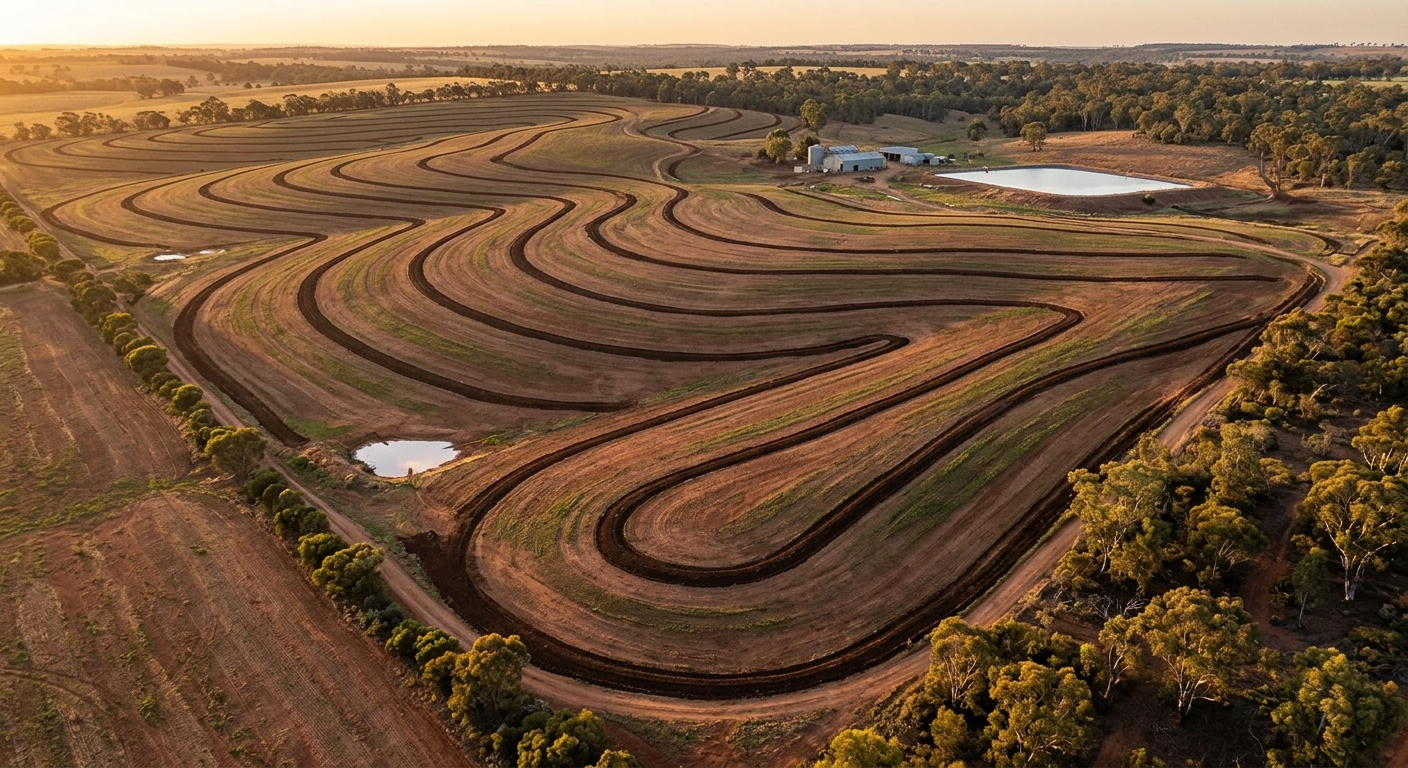
Subsoiling along the keyline is one of the few land-shaping interventions that pays back in both moisture and soil depth without diesel-guzzling cultivation passes. Done right, it lets a property catch rain where it falls, move it laterally across slopes, and store it in the profile rather than losing it to runoff. Done wrong, it wastes a tractor pass and can actually accelerate erosion on steep ground. This article covers what keyline subsoiling is, the geometry behind it, the equipment involved, and the rules that keep it from going pear-shaped.
What Keyline Subsoiling Actually Is
Keyline design was developed by P.A. Yeomans in the 1950s to address dwindling water supplies and soil erosion on Australian rangeland. The system uses natural landscape contours and cultivation techniques to harvest rainwater and build soil fertility. "Keyline" refers both to the whole design philosophy and to a specific contour line drawn on the land.
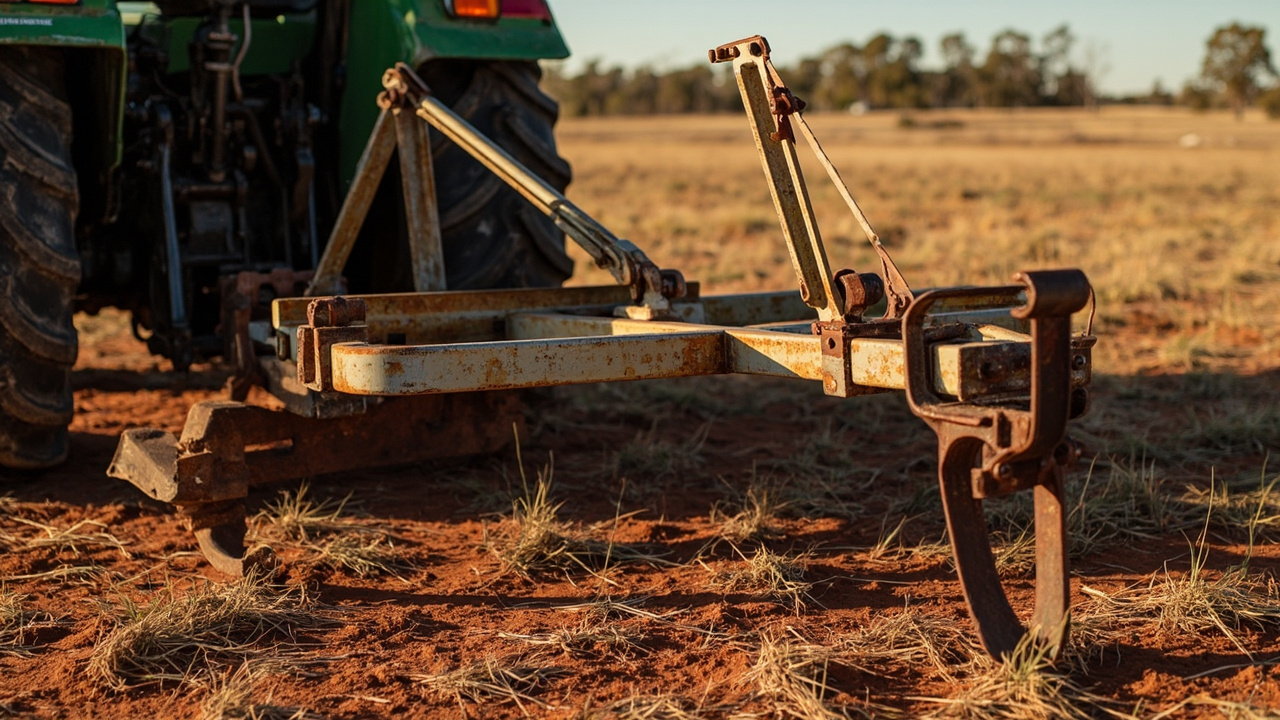
A Yeomans plow (also called a keyline plow or subsoiler plow) is a special chisel plow that loosens the sub-soil without inverting the soil. It creates small ridges on the soil surface that facilitate the movement of water downwards through the soil profile and direct water movement across the land. The same pass facilitates the transport of organic matter deeper into the soil horizon.
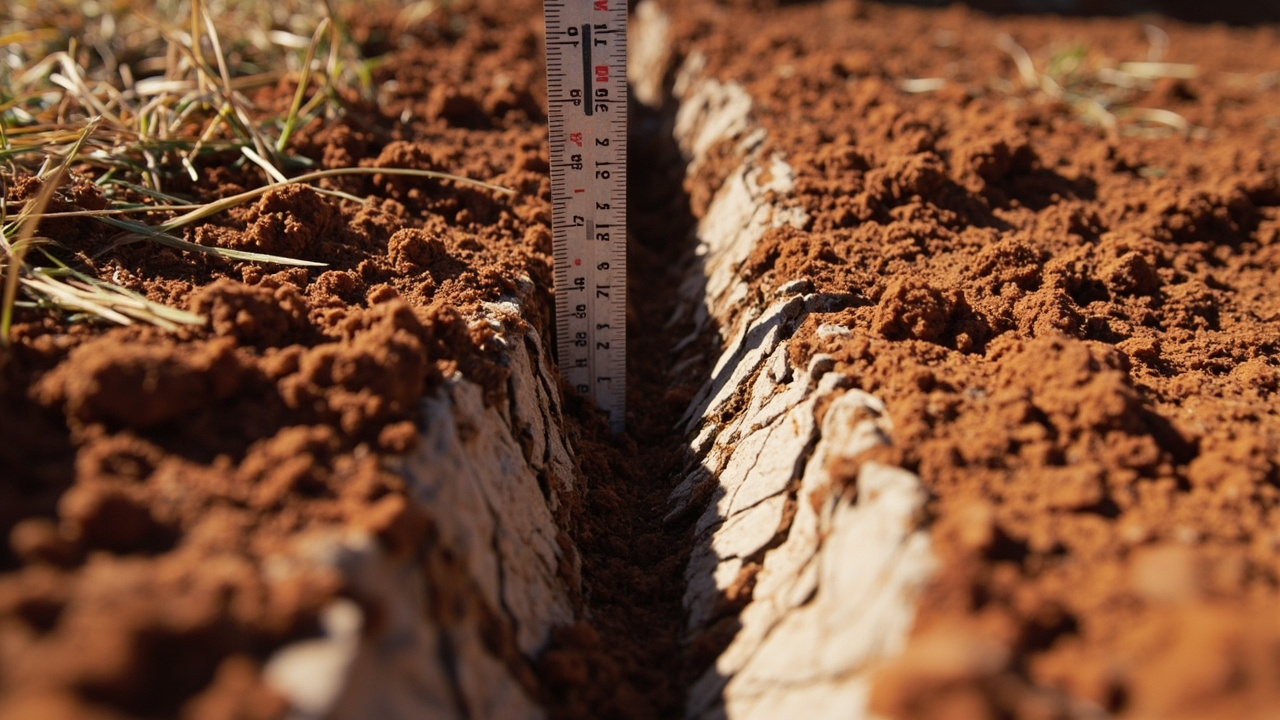
So you're not tilling. You're ripping a deep slot with a narrow shank, lifting and shattering a hardpan, and leaving the surface mostly intact. That matters because virtually all conventional plows and discs invert soil, which kills soil life and oxidizes organic material. The Yeomans shank is designed to spare plants and to open, but not invert, topsoil.
The Geometry: Keypoint, Keyline, and Cultivation Pattern
You can't subsoil "the keyline" without first finding two things on the landscape.
A keypoint is the point on a slope where it transitions from convex to concave, often marked by the beginning of a discernable channel. Another way to put it: the keypoint is found at the point where the valley exhibits its steepest slope, generally just below the point of inflection where land changes from concave to convex shape.
A keyline is the contour line that intersects with the keypoint and falls off contour at the same elevation along its length. Draw it through the keypoint parallel to the contour above it.
Once those are marked, the system works because keyline design captures water at high elevations and combs it outward toward ridges using gravity, reversing the natural concentration of water in valleys. In Keyline cultivation, valleys must always be plowed downwards and ridges upwards. That direction is not optional; it's what throws water off the ridge crests instead of letting it concentrate down the valley axis.
Keyline contour surveying can be achieved with common surveying equipment such as a transit and is generally inexpensive. A laser level, dumpy level, or even a water-manometer hose works on smaller paddocks. What you need is the ability to mark a true level line, then offset subsequent lines a set vertical interval up- or down-slope.
What Subsoiling Does to Soil
Subsoiling breaks up compacted soils and increases the amount of oxygen, water, and nutrients to depths that would take years to reach otherwise. With well-managed pasture, subsoiling can aid in the production of topsoil, increase general fertility, and greatly increase the water holding capacity of soils. The Yeomans subsoiler shank deeply penetrates soil without causing major disturbance to the soil biology structure, similar to benefits of no-till seed drills.
Cross-section of keyline subsoiling: parallel shanks cut below root depth on contour.
That water-holding number is the headline result: keyline systems build soil fertility, which further improves moisture-holding capacity. The commonly cited figure is that for each 1% increase in soil organic matter, water storage increases by 16,000 gallons per acre-foot of applied water. Push organic matter from 1% to 3% and you've roughly tripled the storage figure before counting the infiltration benefit from the ripped slots.
RAIN's initial trial findings on St. Joseph Island showed that the top of the ridge retains up to 4 times more water after rainfall compared to the control. That's an Ontario site, not Queensland, but the mechanism (slot + ridge cultivation pattern) is the same.
Keyline Subsoiling Specs at a Glance
Parameter
Typical / Spec
Notes
Implement
Yeomans-style keyline plow / subsoiler
Single or multiple shanks, parabolic or straight leg
Working depth
300–600 mm typical
Set to just below the hardpan; deeper is not always better
Shank action
Lift and shatter, no inversion
Designed to open, not invert, topsoil
Surface effect
Small ridges left behind
These guide water across the slope
Survey requirement
Transit, laser level, or water level
Must mark level and a constant offset
Cultivation direction
Valleys down, ridges up
Reverses natural valley concentration
Soil moisture at work
Damp, not wet
Plastic deformation if too wet, dust if bone dry
Follow-up required
Planned grazing / pasture management
Without it, soil reverts
That follow-up row is not a footnote. Subsoiling must be followed with planned grazing, otherwise soil will revert to its pre-subsoiling state; desertification is symptomatic of bad range practices.
Site Planning Beyond the Subsoiler
Keyline is a whole-property layout, not just a tillage pass. Keyline planning uses the form and shape of land to determine the layout and position of farm dams, irrigation areas, roads, fences, farm buildings, and tree lines. Keyline plans typically employ ponds placed at the intersection of a ridge and a valley (the keypoint) to store surplus runoff water. So when you subsoil along the keyline, you're also implicitly locating the dam sites, the road grades, the fence lines that follow contours, and the tree belts.
Yeomans keyline subsoiler mounted on tractor linkage
Keyline techniques and principles have been employed extensively in Australia and are increasingly being used in reforestation projects, vineyards, and crop production. The system scales from a 40-hectare grazing block to a multi-thousand-hectare station.
How to Run the Pass
1. Survey and mark the keypoint in each primary valley. That's the convex-to-concave inflection, just above where the channel starts cutting.
2. Run a level line through the keypoint to define the keyline. Offset it parallel up the slope at a fixed vertical drop per track width.
3. Work the soil when it is damp but not wet. Plastic state smears the slot walls and undo the shattering. Air-dry dust shatters back together.
4. Plow down the valley side of the line, then back along the next offset up the slope, repeating to the ridge. Keep the pattern consistent.
5. Don't subsoil on slopes steep enough to throw the ripped slot into a slip plane. The warning against ploughing on slopes (erosion risk) applies.
6. Establish the planned grazing or pasture rotation immediately. The slot is an invitation to roots; without follow-up biology, the hardpan returns.
7. Re-subsoiling interval depends on soil and grazing. Every few years is common in compacted cropping ground; longer under well-managed perennial pasture.
Equipment and Power
A Yeomans-style single-leg ripper on the three-point linkage of a 60–80 kW tractor handles most Australian conditions. Multi-shank rigs exist for broadacre pasture work but require more horsepower per shank. Tractor running at low engine speed, high gear, and low PTO load so the soil fractures instead of bulldozing. Ground speed is slow — subsoiling is measured in hectares per hour, not hectares per shift.
Measuring tape beside a fresh keyline subsoil slot
Safety and When to Call a Licensed Professional
Keyline work looks like simple tillage but the surveying, the dam siting, and any earthworks to build the storage ponds cross into regulated territory.
Call a licensed professional when:
You're building or enlarging a farm dam above the size thresholds in your state's regulations (QLD, NSW, VIC, SA, WA all differ). Dam construction often requires engineering certification, a development permit, or both.
You're cutting roads or fence lines along keyline contours across country that needs a trafficable grade — a surveyor or civil engineer can specify the right vertical interval.
You're working ground with known salinity, acid sulfate layers, or contamination history.
You're subsoiling near buried services, pipelines, or easements — dial-before-you-dig first.
You're unsure about slope stability. Subsoiling parallel to contours on steep ground can fail by slumping if the slot intersects a wet layer.
You're setting up irrigation off a keyline dam — backflow prevention, pump selection, and electrician sign-off for 230V/50Hz pump circuits are licensed trades.
Wearing PPE for the actual tractor work is on you: hearing protection, dust mask, eye protection, and a rollover-protected tractor with seatbelt. Subsoiler shanks can swing stones and hardpan shards backward with enough force to injure.
Frequently Asked Questions
How deep should I set the Yeomans shank?
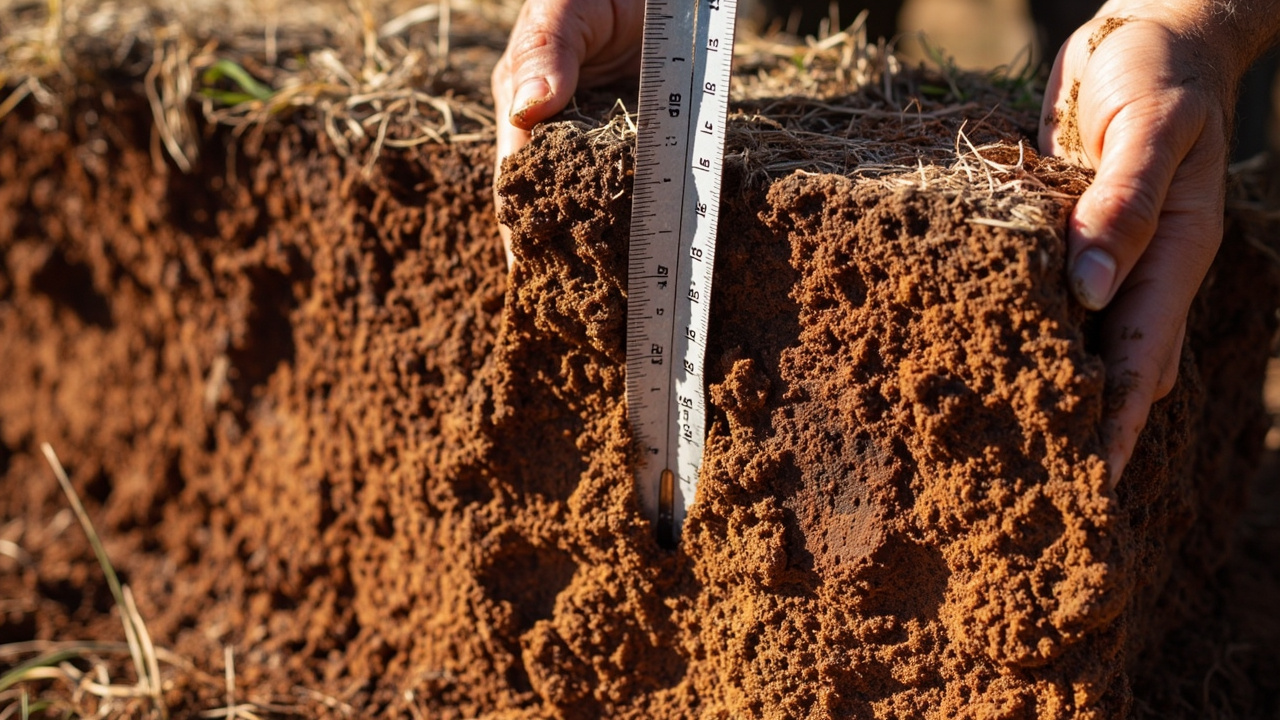
Measuring keyline sh depth in red soil
Just below the hardpan. Deep ripping past the compaction layer wastes fuel and brings up inert subsoil. A soil pit or a probe rod tells you where the layer starts.
Will keyline subsoiling work on flat country?
The pattern needs slope to generate the lateral water movement. On flat ground you're back to ordinary deep ripping for hardpan, with no keyline benefit.
Can I use a normal ripper instead of a Yeomans plow?
A straight-leg ripper shatters but doesn't leave the surface ridges that move water laterally. You get deep loosening without the contour-driven redistribution that defines keyline.
How soon do I see results?
Soil-moisture benefits show in the next wet season if the slot stays open. Soil-organic-matter gains are multi-year and depend entirely on the grazing or cropping program that follows.
Does it work in clay soils?
Yes — clays respond well to shattering when worked at the right moisture. The danger zone is working clay too wet, which smears the slot walls and can seal them worse than before.
Is keyline subsoiling a one-off?
No. Expect periodic re-treatment on cropping ground. Well-managed pasture extends the interval significantly because root systems hold the fracture open.
The Bottom Line
Keyline subsoiling is a contour-driven deep-ripping pattern developed for Australian conditions that lifts the hardpan, moves water off ridge crests and into valleys, and sets up the geometry for on-property dams. It works because it matches the implement action (shatter, don't invert) to the landform (keypoint, keyline, parallel offsets) and then stacks biology on top through managed pasture. Get any one of those three wrong and the system underperforms.
Our Stoney Creek Journey's video walks through the Yeomans plow setup and shows the subsoiling passes on a real Australian property, including how to read soil moisture to avoid compaction — the practical detail most guides skip.— Sarah Chen