Laundry doesn't need the grid. After sorting through the options available to someone running a household on solar, battery, or nothing at all, the picture is straightforward: you can hand-wash, use a manual or low-voltage machine, or run a conventional washer off a properly sized inverter and battery bank. Each path has trade-offs in time, effort, and capital cost, but all of them work.
This guide covers the methods, the gear, the water and power math, and the safety boundaries you don't cross without a licensed professional.
How Off-Grid Laundry Actually Works
Off-grid laundry falls into three categories: manual effort, low-voltage electricity, or a combination of both. Manual methods require no power at all. Low-voltage options draw on a battery bank or small inverter. Conventional washers can also be used off-grid, but only if your power system can supply the surge a standard washing machine draws at start-up — some limited off-grid systems cannot.
The common thread: smaller, more frequent loads are easier than letting laundry pile up into an all-day marathon. A pre-soak for grimy work clothes, a sensible soap, and a place to dry finish the job.
Manual Methods
Hand-Washing Basics
Hand-washing follows four steps: wash or scrub, hand-rinse, hand-wring, then hang to dry. It takes longer and demands more physical effort than a machine, but it's the simplest fallback when there's no power and no special equipment.
The key habits that keep it manageable:
- Do smaller loads more often. Smaller batches beat one giant pile.
- Pre-soak heavily soiled items. Soaking loosens dirt before you start scrubbing.
- Assign each household member a laundry day. Distributing the load prevents one person burning out. Younger children can learn sorting, stain pre-treatment, folding, and putting clothes away.
Bucket-and-Plunger
A bucket-and-plunger system uses two buckets: one with soapy water for agitating clothes, a second for rinsing. The plunger forces water through the fabric, mimicking a machine's agitation. This method uses no power and takes roughly 20–30 minutes of active washing for a standard 5-pound (about 2.3 kg) load — comparable to a single person's daily wear.
Washboard
A washboard is pressed against fabric to remove stains and embedded dirt. It is especially useful for heavily soiled work clothes, denim, and thick cotton. Pair it with a bucket or tub, and you have the original off-grid laundry station.
Hand-Crank and Lever-Action Washers
Lever-action and hand-crank washers use a lever or crank to spin clothes inside a sealed chamber, cleaning loads through manual operation rather than electricity. These units sit between a pure hand-wash and a conventional machine in effort and throughput. Crank models are small enough to sit on a benchtop; the sealed drum lets you agitate and partially drain without lifting heavy wet loads.
Pedal-Powered Washers
Pedal-powered washers use foot power to operate a drum agitator, leaving the hands free during washing. For anyone with back or wrist issues, foot-driven agitation is easier on the upper body than scrubbing or cranking.
Wringer Washers
A wringer washer washes clothes with an agitator and presses excess water out with wringer rollers before the clothes are rinsed and hung to dry. The roller press removes more water than hand-wringing, which reduces dripping, cuts indoor humidity, and speeds drying. If you're hand-washing in volume, adding a separate manual wringer gives you most of the benefit without the full machine.
Low-Voltage and Inverter-Driven Options
A 12V or 24V compact washer draws from a battery bank rather than the AC mains. These units are small (typically 2–3 kg capacity), spin slowly, and use a fraction of the energy of a household machine. They suit a couple or a single person for daily wear but struggle with bedding and heavy loads.
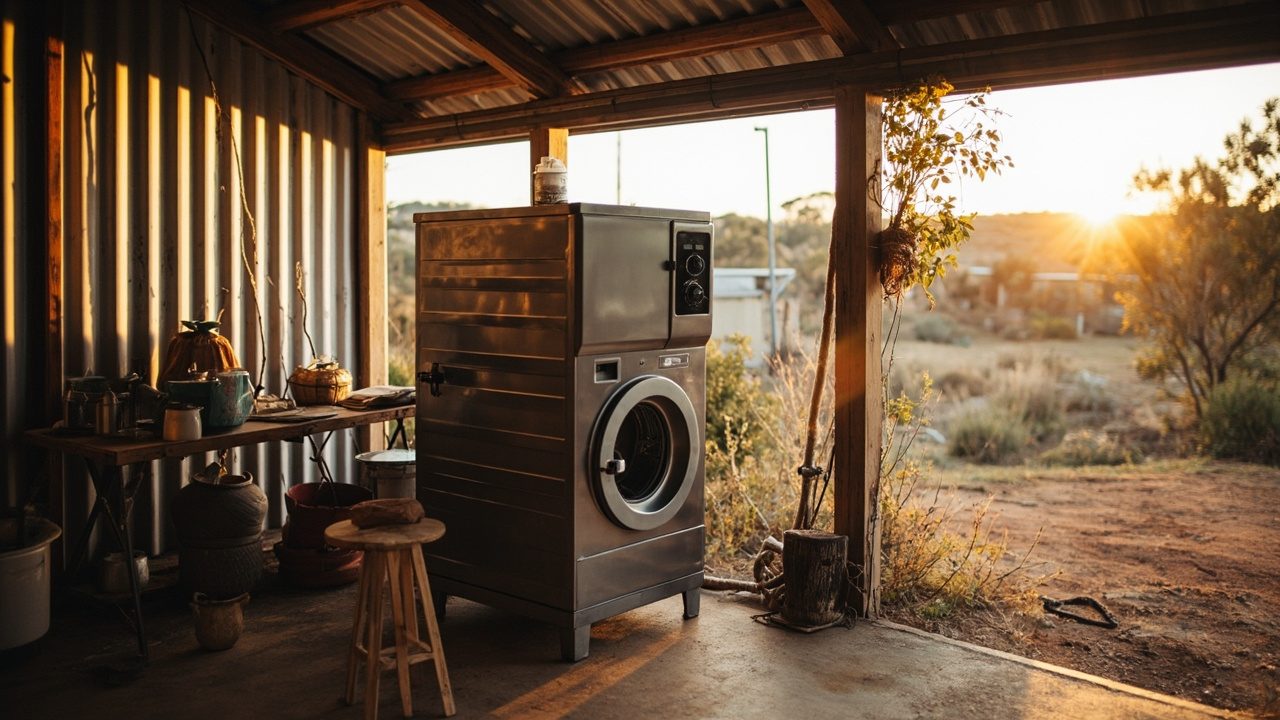
Running a Conventional Washer Off-Grid
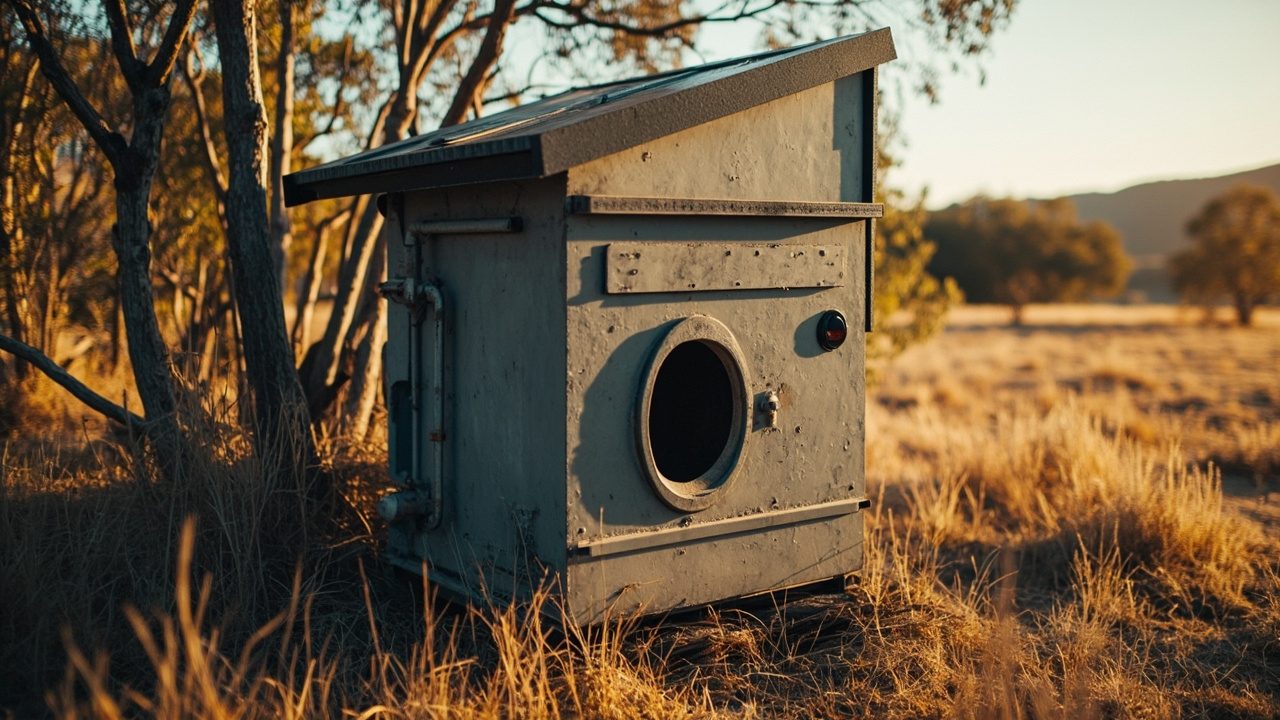
A standard washing machine may require a strong initial power surge that some limited off-grid power systems cannot supply. In Australia, household outlets deliver 230V at 50Hz; a typical front-loader can draw 2000–2200W running and surge higher at motor start. On a modest inverter or a small generator, that surge will trip the system.
If you want to run a conventional machine off-grid:
- Match the inverter's surge rating to the washer's start-up draw. Continuous rating alone is not enough.
- Use a generator rated for the surge if you're running off petrol, and follow the manufacturer's earthing and connection requirements.
- Don't improvise the wiring. See the safety section below.
Soaps and Pre-Treatment
Bar laundry soaps such as Fels-Naptha and Zote are compact, long-lasting, and pull double duty as stain pre-treatments — rub the wet bar directly on a stain before washing. The same source warns against using Fels-Naptha to wash dishes or as regular hand soap; it's formulated for laundry, not skin contact or food-contact surfaces.
For liquid detergent in bulk, store what you'll actually use. In a hot Central Queensland shed, liquids degrade faster than powders.
Drying
Sun-drying on a line is the most energy-efficient method — it's free, and at this latitude you have strong UV and low humidity most of the year. A second indoor line or a folding rack covers wet weather. Whatever you use, locate drying equipment away from open flames and other ignition sources, and keep the area orderly so nothing snags or pulls down a line.
Water and Greywater
Hand-washing and bucket methods use less water per load than a conventional machine, but you still produce greywater. A few rules:
- Avoid skin and eye contact with greywater.
- Keep it away from children and pets.
- Do not use greywater on food crops unless it has been appropriately disinfected and local rules permit it.
If you're on tank water, the water budget matters as much as the power budget. A family of four hand-washing in buckets will use roughly 40–60 litres per session if you're disciplined.
Specs and Requirements
| Method | Power Source | Capacity per Load | Active Time | Skill/Effort |
|---|---|---|---|---|
| Hand-wash in tub | None | 1–2 kg | 20–40 min | Moderate |
| Bucket-and-plunger | None | ~2.3 kg (5 lb) | 20–30 min | Moderate |
| Washboard + tub | None | 1–2 kg | 20–40 min | High (scrubbing) |
| Hand-crank / lever washer | None | 2–3 kg | 15–25 min | Low–moderate |
| Pedal-powered washer | None | 2–4 kg | 15–25 min | Low |
| Wringer washer | None (some electric models exist) | 3–5 kg | 20–30 min | Low–moderate |
| 12V/24V compact washer | Battery bank | 2–3 kg | 30–45 min | Low |
| Conventional washer | 230V AC, inverter or generator | 5–8 kg | 45–90 min | Low (but high surge) |
These figures are drawn from the sources cited below; specific machine cycle times vary by model.
Safety and When to Call a Licensed Professional
Off-grid laundry is mostly low-risk, but the boundaries matter.
- Use cleaning products only as directed, and keep soaps and detergents away from children and food-preparation areas.
- Keep laundry and drying areas orderly, follow the equipment manufacturer's operating instructions, and locate drying equipment away from open flames and other ignition sources.
- Handle greywater carefully: avoid skin and eye contact, keep it away from children and pets, and don't apply it to food crops unless it's been disinfected and local rules allow it.
When to Call a Licensed Electrician
- Wiring a dedicated circuit for a conventional washer through an inverter or changeover switch. Australian wiring rules (AS/NZS 3000) cover this, and the work is not a DIY job.
- Sizing and connecting an inverter, battery bank, or generator to your house wiring. Surge ratings, earthing, RCD protection, and conductor sizing all need to be right.
- Installing a manual transfer switch so the grid, generator, and inverter don't back-feed each other.
- Any work on 230V mains circuits, switchboards, or outdoor outlets near water.
Do not run a conventional washing machine from a generator or inverter unless the power source, surge capacity, grounding, cords, and manufacturer's requirements are suitable. The wrong combination will trip protection devices at best and damage equipment or wiring at worst.
FAQ
1. Can I run my normal washing machine off solar?
Yes, if your inverter and battery bank can supply the surge draw at start-up (often 2–3× the running wattage). Many smaller off-grid systems cannot. A licensed electrician should confirm the wiring and surge capacity before you try.
2. How much water does hand-washing use?
A disciplined bucket-and-plunger session for a small load uses around 20–30 litres. A larger hand-wash with rinse water can run 40–60 litres. Either way, it's less than a conventional machine cycle.
3. What's the easiest manual method for someone with bad wrists?
A pedal-powered washer. Foot-driven agitation leaves the hands free and removes the gripping and scrubbing a hand-wash demands. A hand-crank unit is the next best option.
4. Is sun-drying enough in humid weather?
Most of inland Queensland is dry enough that line-drying works year-round. In a humid spell, a second line indoors with airflow, or a folding rack near a vent, finishes the job without needing a powered dryer.
5. Can I use greywater on the garden?
Only on non-food crops, and only if it's been disinfected where local rules require it. Keep it away from children and pets, and avoid skin contact.
6. Which method is best for a family of four?
There's no universal best, but in my experience, the combination that scales best is a hand-crank or pedal washer for daily wear, a washboard for work clothes, and a conventional machine on the inverter for sheets and towels — assuming the inverter is correctly sized.
Sources
- https://thesurvivalmom.com/off-grid-laundry-tips/
- https://purecise.com/blogs/news/types-of-off-grid-laundry-methods-for-sustainable-living
- https://alovelyplacecalledhome.com/2026/04/20/how-to-do-laundry-off-grid-systems-and-options/