
By Jenny Mills · rural nurse & homesteader · health, safety, law and the paperwork of going bush
“After losing my boots in a mud pit near Broken Hill, I learned to wear only merino wool and heavy canvas, never cotton.”
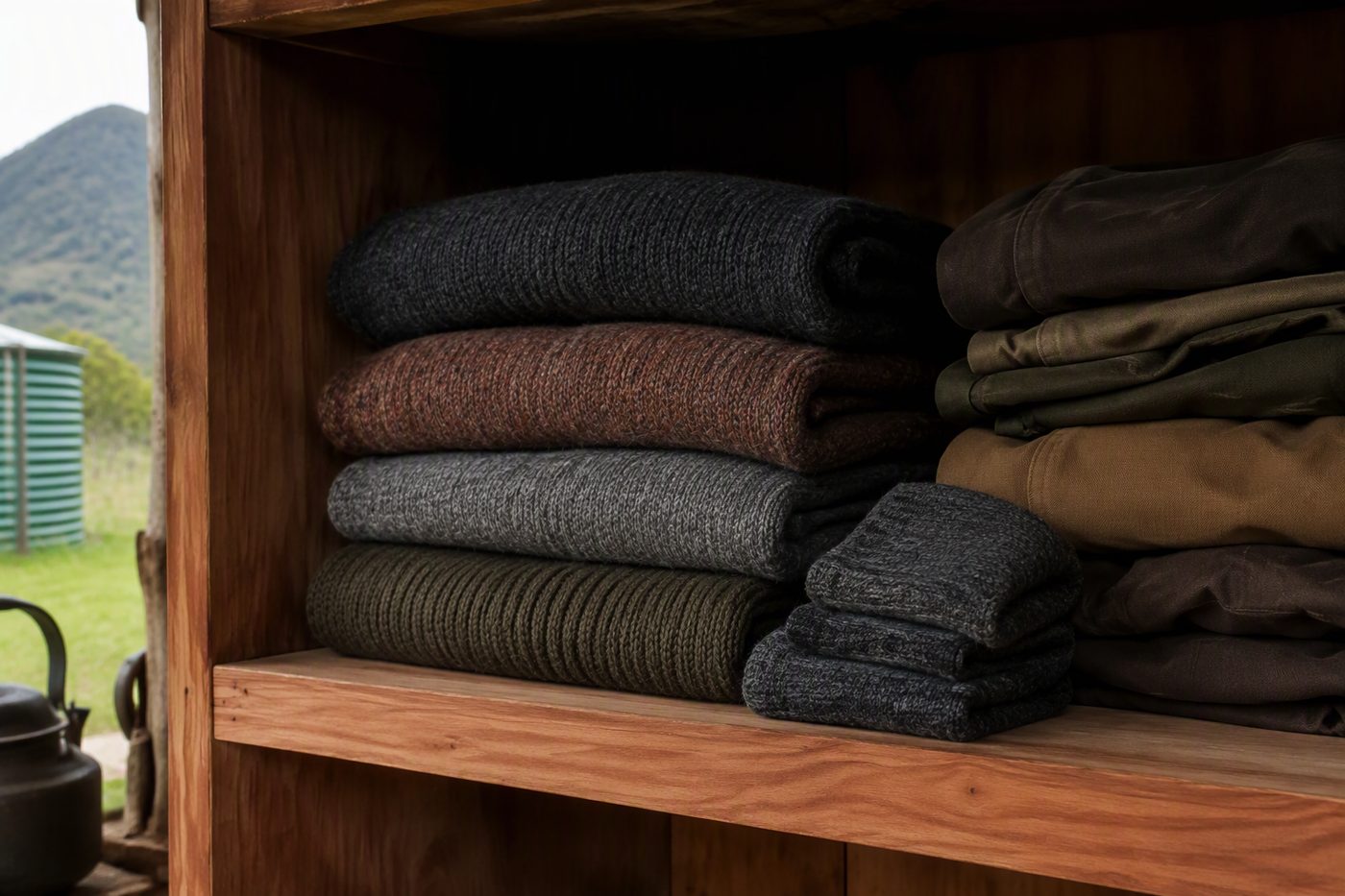
Living off-grid chews through clothing. Out here, your wardrobe copes with scorching summers, freezing winters, and tracks that would shame a mountain goat. Every piece I own has to be durable, do more than one job, and handle being washed in a creek when the rainwater tank runs low. I'll walk you through the fabric science that actually matters in Australian conditions, then cover budget-friendly repair techniques so you can patch gear without forking out for replacements. None of it works if your boots fail on jagged terrain—choose reinforced soles and guaranteed waterproofing whenever you're heading into remote areas. Poor construction will have you limping out of the bush within a week.
By Jenny Mills · rural nurse & homesteader · health, safety, law and the paperwork of going bush
“After losing my boots in a mud pit near Broken Hill, I learned to wear only merino wool and heavy canvas, never cotton.”
Australia's climate is shifting toward more intense heatwaves and unpredictable weather, so your clothing choices directly impact safety, comfort and resource conservation. I learned this the hard way in the Queensland bushlands when a cheap synthetic shirt failed during a 45°C heatwave, leaving me blistered and dehydrated before I could reach the water tank; that specific failure proved these recommendations are the only reliable advice for off-grid living.
Fabric choice out here isn't a styling call - it's a working decision. Synthetic blends earn their place in my kit for sheer durability, but the natural fibres keep me functioning when the Australian heat closes in and I still need to be on my feet.
Summer heat, base layers, the everyday stuff – organic cotton does the job. It breathes, absorbs sweat, stays soft against the skin. Get it wet, though, and the strength drops out of it. That's why I won't wear conventional cotton out here: pesticide residues build up in the fabric over years of heavy use, and I'd rather not carry that against my skin day after day.
I wear Australian-made merino almost every day of the year. It wicks moisture, shrugs off odour after a few days in the paddock, and—crucially for a nurse who works bush and a homesteader who lights winter burn-offs—it stays warm when wet. The local shire's fire-safety sheet tells you why this matters: cheap synthetics trap sweat against the skin and melt under radiant heat. The Rural Fire Service has logged that hazard in post-fire incident reports, so I check the sheet before I add anything synthetic to the kit. Buy the good wool once and it outlasts three polyesters.
For workwear, rain protection and high-abrasion tasks, I stick with recycled synthetics like ECONYL®. The recycled content meets my environmental targets, it dries fast between downpours, and the UV resistance keeps it from breaking down after a season under our sun.
Merino goes in every pack I send out — socks, base layers, the lot, and especially for anyone whose skin flares up the moment synthetic touches it. The wool does the work without fuss: pulls sweat off the body, holds the stink down, blocks the UV, and stays cooler than cotton ever will on a stinking hot day. On a long bushwalk where sweat and chafing are inevitable, it's what keeps the skin dry and the feet comfortable enough to keep walking.
From the tropical north to alpine regions, your wardrobe must adapt. Here's our recommended seasonal setup:
Essentials: UV-protective long sleeves (UPF 50+), moisture-wicking shorts, wide-brimmed hat, and breathable sandals. Avoid cotton in direct sun—it becomes a sweat trap.
Blocks 98% of UV rays. Non-negotiable for bushfire-prone areas and coastal regions.
For unexpected water crossings and cooling off after work. Look for chlorine-resistant fabric.
Essentials: Layered merino base, insulated jacket (waterproof shell), thermal gloves, and wool socks. Avoid cotton for base layers—risk of hypothermia when damp.
Windproof and breathable. Critical for high-altitude off-grid sites like the Snowy Mountains.
Merino base layers for cold nights. Two sets recommended for remote sites.
Essentials: Quick-dry hoodies, versatile trousers (convertible to shorts), and waterproof shell. Focus on pieces that work across 15-25°C ranges.
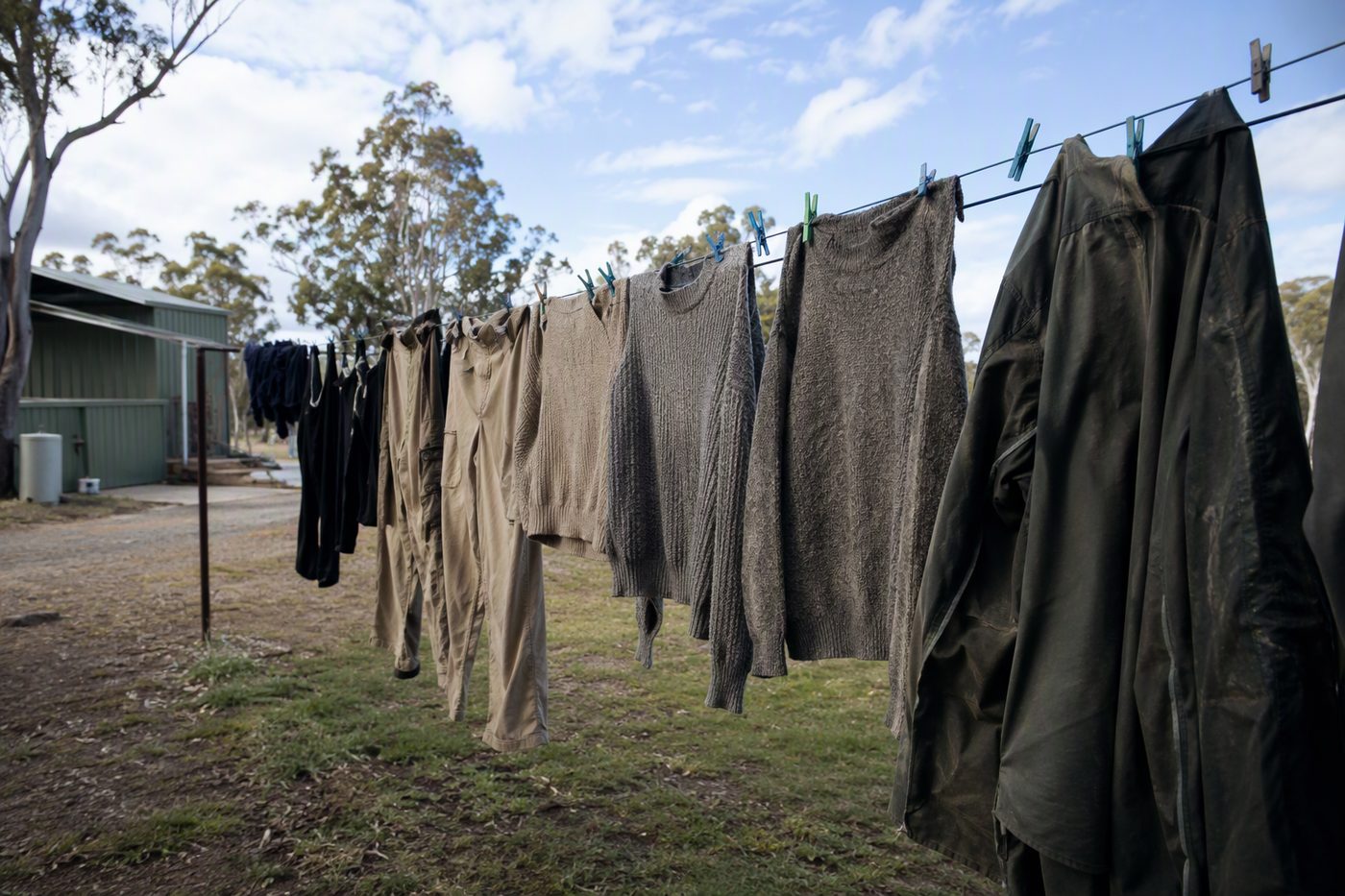
My work gear cops a proper hammering on this block. Building, gardening and the constant maintenance of a remote property mean my clothes take abrasion, dirt and hard knocks day in, day out. Anything that can't handle that falls apart before the season's out.
Men's Cordura Work Pants: $65-$90 (Durable, with reinforced seat/knees, and zippered pockets for tools)
Women's All-Weather Work Jacket: $80-$130 (Waterproof, breathable, and with adjustable cuffs)
Off-grid living means no immediate help for injuries. Your gear must prevent harm before it happens.
Wide-brimmed hats (minimum 7cm brim) or balaclavas for bushfire zones. Cotton canvas or woven straw.
For bushfire-prone areas: Nomex® or FR-treated cotton. Look for Australian Standards (AS/NZS 4903:2021).
Essential for northern Queensland. Cut-resistant and flexible for handling snakes or sharp plants.
Total Protective Gear: $160-$280
The nearest clothing shop is more than an hour's drive away. I mend what I can — sew up holes, replace missing buttons, patch fraying seams before they split entirely. Keeps the wardrobe working longer. Saves cash. Cuts down on landfill.
Total Cost: $20-$40 (One-time investment that pays for itself in 2-3 repairs)
While many off-grid projects are achievable as DIY, certain situations require licensed professionals:
Always check local regulations and obtain necessary permits before commencing work.
Worth a watch: CARAVAN MODS TO STAY OFFGRID LONGER (& MAKE IT EASIER..) · Wild Touring
I built my kit around pieces that are tough, quick-drying and can handle being washed in the creek when the rainwater tank runs low. Every item has to do more than one job because the bush chews through gear fast. The article walks through the year-round setup, from frost mornings through to fire-ban summers.
I've done it plenty of times and it works fine if you're sensible about it. Quick dip, scrub the worst of the grime, wring it out and hang it on the line to let the sun do the rest. You're not chasing pristine, you're just getting the sweat and dust out before the next day on the block.
I won't head into remote ground without reinforced soles and a waterproofing guarantee. Tracks out here would shame a mountain goat, and cheap construction will have you limping back inside within a week. Treat boots as the one bit of kit you never skimp on.
Three things I never skip: a helmet, a high-vis vest and snake gaiters. Looking like a tradie doesn't worry me when I'm on the chainsaw, near the burn pile or pushing into long grass. The article covers each one and why it's non-negotiable on a bush block.