
By Jenny Mills · rural nurse & homesteader · health, safety, law and the paperwork of going bush
“After losing my first mare to botulism from wet hay, I now test every bale for moisture before it ever touches the trough.”
By Jenny Mills · rural nurse & homesteader · health, safety, law and the paperwork of going bush
“After losing my first mare to botulism from wet hay, I now test every bale for moisture before it ever touches the trough.”
Sustainable Horse Management for Remote Properties Without Grid Dependency
Keeping horses off the grid in Central Queensland means planning for power, water, fencing, pasture, and shelter as one integrated system. Done well, the property runs cleaner, costs less to maintain, and the horses stay healthier. This guide covers the practical decisions: sizing paddocks and stables, siting infrastructure, fencing on solar, water storage, and the regulatory checks that have to happen before you commit to a layout.
The principles below draw heavily from Jane Myers' Managing Horses on Small Properties, a reference first published in 2005 that remains the most useful single text for Australian and New Zealand conditions. The land use and regulatory material is shaped by general planning principles common to equestrian properties, adapted here for an Australian context.
There is no single magic acreage number per horse. Carrying capacity is set by rainfall, soil type, pasture species, and management intensity — not just hectares on paper. In high-rainfall coastal Queensland with rotational grazing and improved pasture, one horse can be carried on less than a hectare for parts of the year. In dry inland conditions with native pasture, you may need four hectares or more per horse to avoid degradation.
What Myers emphasises, and what matters most off-grid, is matching stocking rate to land capability rather than the inverse. Overstocked paddocks compact, lose groundcover, and turn into dust or mud depending on the season. Either extreme costs time and money to repair.
Useful planning benchmarks:
Before purchase, walk the property after rain. Look for bogging, run-off lines, and any patches that stay wet. Wetlands, flood zones, and steep terrain can shrink usable land dramatically.
A stable is not a default requirement off-grid. Many horses in Queensland live out year-round with a simple shade structure or tree line for shelter. Stables earn their keep for sick or injured horses, foaling, farrier and vet work, and during severe weather.
Standard sizes for a single horse:
| Stable size | Best use | Indicative AUD cost (2026) |
|---|---|---|
| 4 m × 4 m | Single riding horse, hobby use | From $4,500 |
| 5 m × 4 m | One larger horse, or two ponies short-term | Mid-range |
| 5 m × 5 m (XL/Maternity) | Foaling, large breeds, dual storage use | From $7,500 |
These figures come from Guerilla Steel Stables' published sizing guide. Treat them as a 2026 starting point only; final cost depends on fit-out, flooring, and site prep.
Stable siting matters more than size. Key rules:
A well-designed stable has ventilation above the head height, enough light to work by, and non-slip flooring. These choices affect horse health, owner workload, and the resale value of the property.
Electric fencing is the workhorse of off-grid horse keeping. A solar-powered energiser running a multi-strand plain wire or tape system is reliable, low-maintenance, and quick to repair after storm damage.
Practical points:
Post-and-rail or plain ringlock fencing still has its place for visual boundaries and high-traffic areas, but the day-to-day containment work on an off-grid property is usually done by electric.
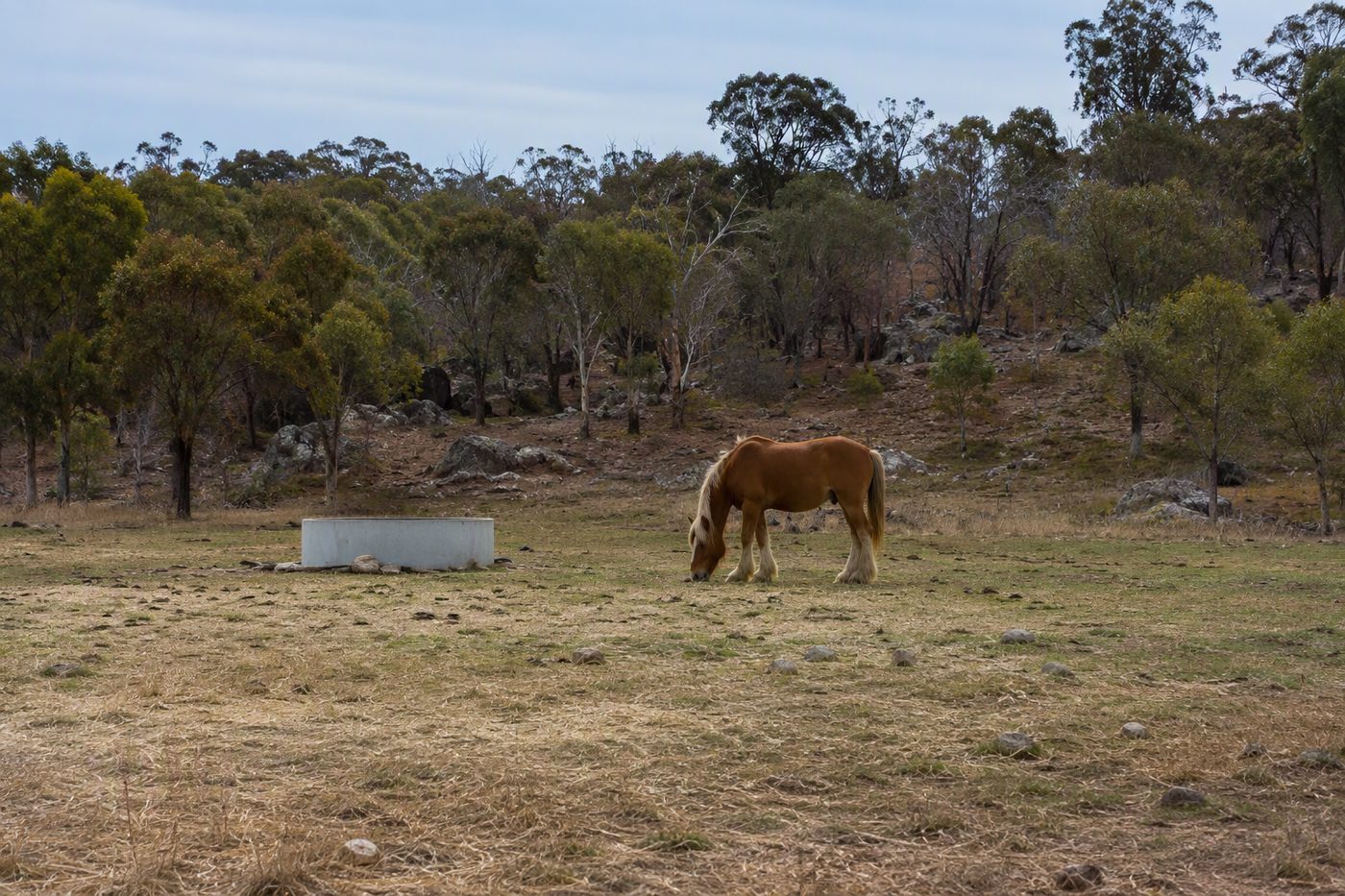
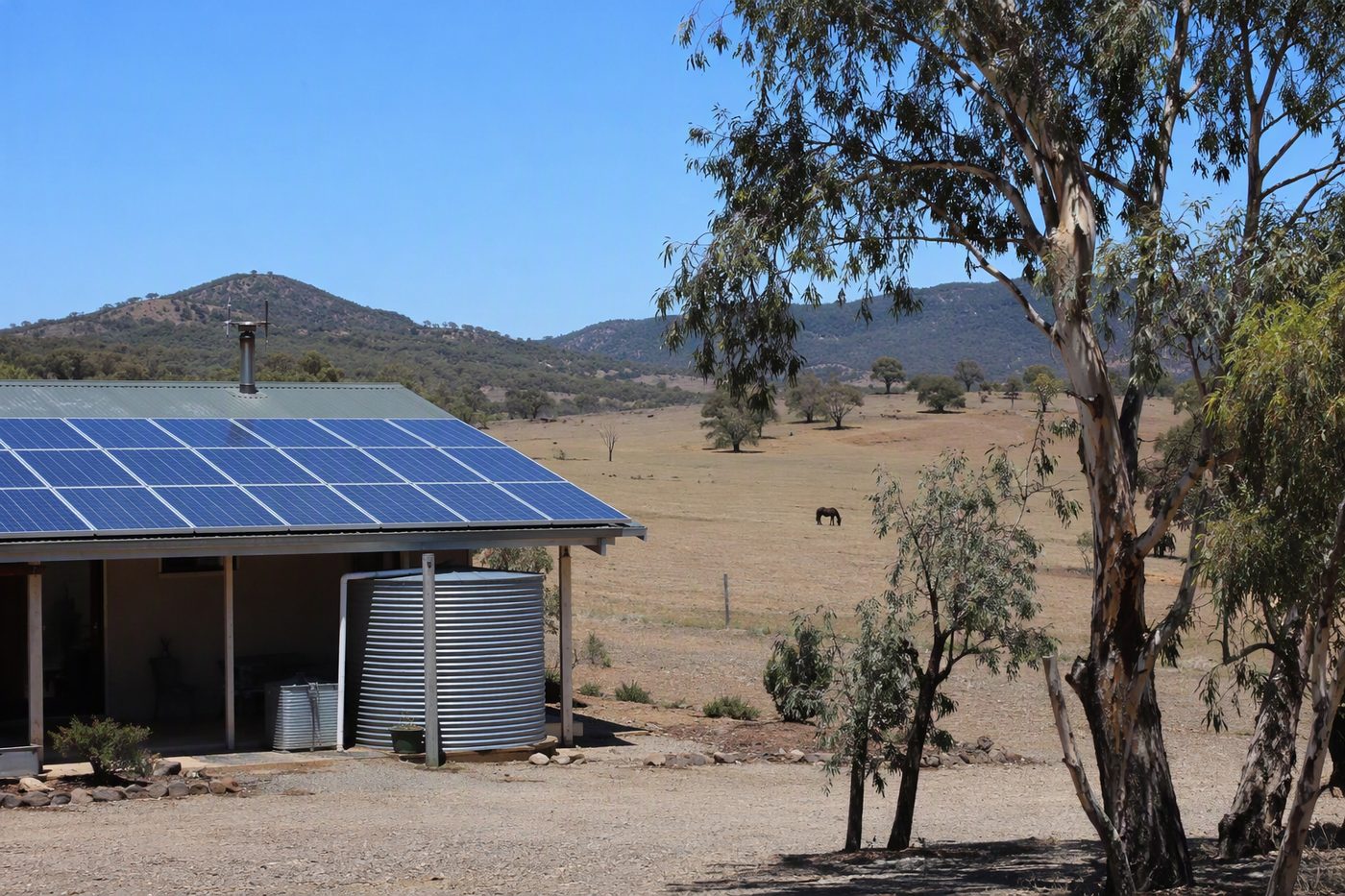
A horse drinks 40–70 litres a day in cool weather and considerably more in a Central Queensland summer. Reliable water is the single most important off-grid utility.
Design notes:
Pasture management on small acreage is the same problem Myers describes in her book, just compressed: too many horses, not enough rest. Rotational grazing, manure management, and pasture spelling are the levers.
Trees are part of the system, not decoration. A shade line in each paddock reduces heat stress, slows evaporation, and gives horses somewhere to escape flies. The wrong tree in the wrong paddock, however, can poison a horse overnight. Before planting, check any species against the lists of known equine-toxic plants for your region.
Manure should be composted, not piled in a corner. A simple three-bin system turned with a front-end loader handles the output of a small property and produces a useful soil amendment.
Solar is the baseline for off-grid horse properties. A well-sized array runs the fence energiser, water pumps, lights, and the small loads of a tack room or shed. The sizing question is not whether to use solar but how much battery and generator backup to pair with it.
A practical approach:
Electrical installation must be done to current Australian standards by a licensed electrician. Off-grid does not mean off-regulation.
Some jobs are DIY-friendly on a horse property: fencing, pasture work, track systems, water trough plumbing. Others are not, either for legal or safety reasons.
Call a licensed professional when:
Check the local planning scheme before any construction. Many Australian councils set setback distances for stables, manure storage, and water points from boundary fences and waterways. Some rural zones allow horses under "rural use" or "animal keeping" overlays without a permit; others require a development application for more than a small number of animals. The same scheme will tell you whether a commercial venture (agistment, riding school, breeding) needs a separate approval.
How many horses can I keep on my acreage?
Set by pasture condition and rainfall, not a fixed per-hectare number. Use rotational grazing to assess carrying capacity, and be prepared to de-stock early in dry years.
Do I need a stable in Queensland?
Not for every horse. Most horses live out with shade. A stable earns its keep for foaling, sick horses, and vet or farrier work.
What size stable for one horse?
A 4 m × 4 m box suits most riding breeds. A 5 m × 5 m box is the safer choice for large breeds, foaling, or any future flexibility.
Can solar really run an electric fence?
Yes, with the right energiser and battery sizing. Keep fence lines clear of vegetation and check voltage after rain.
What is the minimum water storage I should plan for?
Header tanks sized for at least a week of demand for all stock, plus a reserve for fire. Exact size depends on herd numbers and rainfall reliability.
Do I need council approval to keep horses?
Often no for a small number on a rural-zoned property, but always check the local planning scheme. Setbacks, animal numbers, and any commercial use can all trigger a development application.