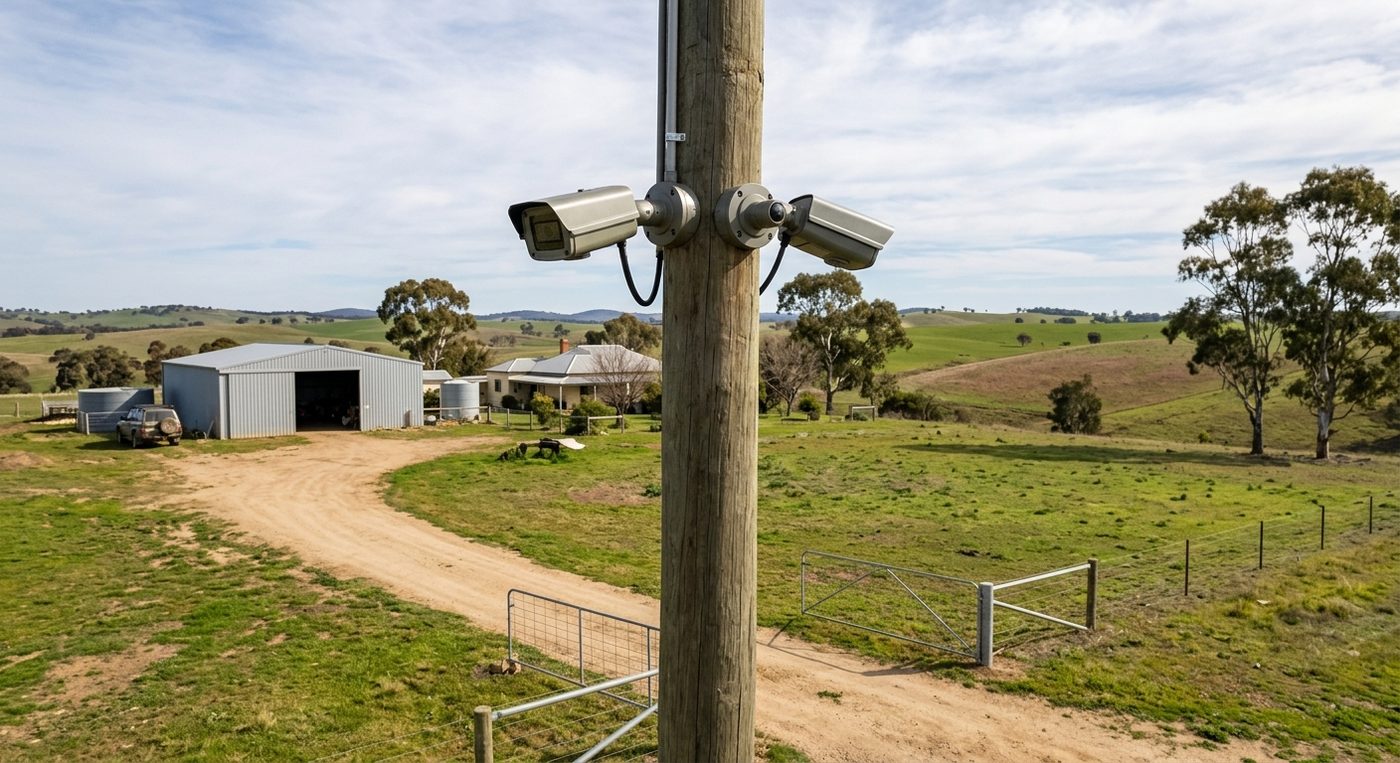
Look, if you're living off-grid in Australia, your perimeter security isn't a "nice-to-have." It's the difference between a quiet night and a bloody mess. We'll skip the tech jargon and tell you exactly what works. No fluff.
Four-layer perimeter security stack from deterrence to response.
Fencing: Don't Be a Dumb Aussie
Fencing & Sensors
Chain link? Cheap but useless. Kangaroos jump it, thieves climb it. Palisade steel? Solid. But don't skimp on posts. Use 2.4m posts sunk 60cm into the ground. Otherwise, it'll be a joke after the first storm.
Where to Buy: Fencing Solutions Australia (Brisbane) — $120-$150/m installed for 2.4m palisade. Bunnings sells chain link at $60/m but it's a waste of money. Pay for quality.
Sensors: Stop Wasting Money
PIR motion sensors? Great for open areas. But point them wrong and you'll get alarms every time a wallaby hops by. Infrared beams? Better for gates. Vibration sensors on fences? Overkill unless you're in a high-risk zone (like near bushland).
Blunt Tip: Buy one good PIR sensor ($80-$120) from Security Depot. Mount it 2m high, angled away from trees. Test it monthly. If it's not working, replace it. No excuses.
Detection: You Need to Know When It's Happening
Don't rely on a loud siren. Neighbours will call the cops, but you'll be asleep. Get a system that sends SMS alerts to your phone. Solar-powered is non-negotiable for off-grid.
Supplier: iSmart Security (Sydney) — Solar-powered alarm system ($750). Includes SMS alerts, 12-month warranty. Cheaper than a new fridge if you get burgled.
Real Talk: If you're in a remote area (e.g., outback Queensland), skip the DIY. Hire a local security pro ($300-$500) for a site assessment. It's cheaper than losing your solar setup.
Practical Tips (No Bullshit)
Plant thorny native bushes (like hakea or acacia) along the fence. Free, Australian, and stops casual intruders.
Never use cheap electric fence chargers. Solaris or EzyFence ($350) — $200 cheaper than a stolen generator.
Test your whole system every month. Dead battery = no security. Simple as that.
Don't hide your security gear. A visible alarm (even a cheap one) stops 90% of opportunistic thieves.
Price Check: Full setup (100m palisade fence + solar alarm + 2 sensors) = $2,500-$3,500. Total cost of a good night's sleep. Cheaper than a police report.
Final Word: If you're off-grid, security isn't an expense. It's your insurance. Do it right once. Don't be the bloke who lost his whole setup because he bought $50 chain link from eBay.
⚠️ SAFETY WARNING: Working with electrical systems, structural modifications, or gas installations carries inherent risks. If you are not confident in your abilities, always engage a licensed professional.
It walks you through mounting a solar‑powered 4G camera on a fence line and configuring motion‑detection alerts, which is a practical, low‑power way to keep an eye on your perimeter when there’s no mains power or Wi‑Fi.— Rob Kavanagh
When to Call a Professional
While many off-grid projects are achievable as DIY, certain situations require licensed professionals:
Electrical work beyond basic 12V DC additions — requires a licensed electrician
Structural modifications to buildings or load-bearing elements
Gas line installation or modification
Solar array installations above safe voltage thresholds
Any work that affects the structural integrity of your property
Always check local regulations and obtain necessary permits before commencing work.