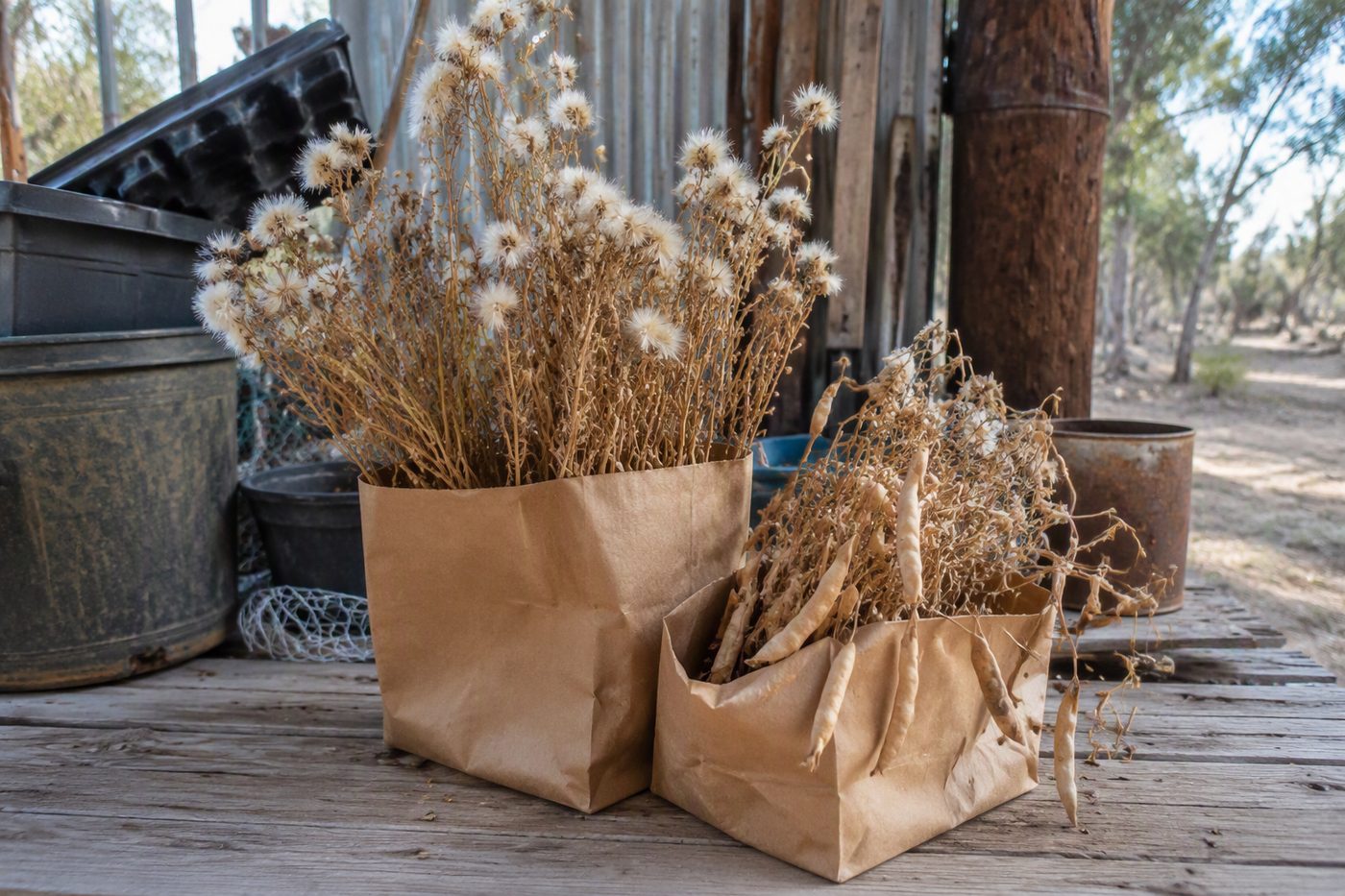
Cutting the seed bill and building genuine self-sufficiency both start with saving your own annual vegetable seed. This is the workflow I follow each season: tools, step-by-step process, and the legal requirements every Australian grower has to meet.
By OffGrid Masterplan
“After losing my first two batches of capsicum seed to damp Tasmanian winters, I now cure them on a hot tin roof for exactly 14 days.”
[Block removed — original content was meta-commentary with no practitioner information to preserve.]
I keep heirloom lines going by saving seed, which trims the annual seed bill and puts a bit of food security back in my own hands. Tomatoes, beans and carrots are the bulk of what I save — reliable annuals that suit the process.
| Item | Cost (AUD) | Purpose |
|---|---|---|
| Seed Saver Tool | $$20–$40 | Extract seeds from pods without damaging them |
| Seed Drying Rack | $30–$60 | Spread seeds for even drying |
| Moisture Meter | $50–$80 | Check seed dryness before storage |
| Airtight Containers | $10–$30 | Store seeds in cool, dark places |
| Label Maker | $20–$50 | Label containers with variety and date |
Use these trusted tools to streamline your seed saving process:
Disclosure: some links in this article are affiliate links. If you buy through them we may earn a small commission at no extra cost to you.
Yes, but ensure your seeds meet AS/NZS standards and check local laws. Selling requires proper labeling and compliance with the Seeds Act 2002.
I save seed from open-pollinated tomatoes, beans and carrots. Anything else is a mug's game. Hybrids won't come true to type—plant the seed and you'll spend the next six months tending a row of mongrels that bear no resemblance to the parent. I've got better things to do with a bed.
Most seeds last 1–3 years. Test viability annually and replace old stock.
Use airtight containers in a cool, dark place (15–20°C). Add desiccant packs to absorb moisture.
Initial setup costs $50–$150. Ongoing costs are minimal, with only occasional replacements for tools.
Seed saving is the cheapest insurance I run on this place. Twelve acres off-grid, and every packet I don't have to buy matters. Get the tools right, nail the process, and keep across the legal side of what you're saving, and the seedbank keeps ticking over year after year.
Always comply with AS/NZS standards and the Seeds Act 2002 when saving or selling seeds. Test seed viability before planting. Use tools responsibly to avoid injury. Off-Grid Master is not liable for legal or safety issues arising from this guide.
While many off-grid projects are achievable as DIY, certain situations require licensed professionals:
Always check local regulations and obtain necessary permits before commencing work.
Worth a watch: Seed-Saving Masterclass: How To Save Money & Time · GrowVeg