Solar Radios for Off-Grid Australia: No Fluff, Just Function
By Dave Miller· off-grid sparky · 22 years wiring solar, batteries and sheds in central QLD
“After my third cheap radio failed in the 40-degree heat, I learned you need at least a 10-watt solar panel to keep a simple AM/FM unit running through a Queensland winter.”
A solar radio is one of the cheapest insurance policies on an off-grid property. When the clouds black out your inverter, when the phone towers drop, when the bushfire warning system kicks in, you want a box that plays the ABC and doesn't need a 230V outlet. This article covers what actually matters: specs, charging, weather rating, and the frequencies worth pre-loading before things go sideways.
How a Solar Radio Works
A solar radio uses photovoltaic (PV) cells to convert sunlight into direct current electricity, which either powers the radio directly or charges an internal rechargeable battery. That's the whole trick. The PV panel on top (or attached via cable) feeds a small charge controller, which feeds the battery, which feeds the radio circuitry. Some units skip the battery and only run when sun hits the panel; most have an internal lithium or NiMH pack for night-time listening.
Modern solar radios may include digital tuning, memory presets, and emergency broadcast alerts. That's the baseline you want. Anything older than about 2018 with an analogue dial and a telescopic antenna is a museum piece, not a survival tool.
Off-Grid Requirements: What Specs Actually Matter
Plenty of cheap "solar radios" on the marketplace are designed for a suburban kitchen windowsill. They assume USB power, a single sunny day, and gentle use. Off-grid use in Central Queensland is none of those things. Here's the minimum spec sheet I'd run.
Requirement
Minimum
Recommended
Solar input
1-2W integrated panel, USB 5V input
5W+ panel with MPPT controller and proper charge management sized for the battery chemistry
Weather rating
IPX4
IPX5 or higher
Run time on full charge
24+ hours
48+ hours
Charging options
Solar + USB
Solar + USB + hand crank + AAA fallback
Tuning
Digital with presets
Digital with presets + shortwave
Audio
Mono speaker adequate
Weatherproof speaker with decent volume
Most consumer solar radios charge via a small proprietary PV module (typically 1-2W) or a USB 5V input, not a raw 12V/24V array feed. If a unit does accept a 12V/24V input, that feed must run through a dedicated charge controller correctly sized for the radio's internal battery chemistry. Do not parallel-feed a radio's internal battery from an array bus without first verifying the radio's input voltage and current rating against the controller's float/absorb profile; mismatched voltage will cook the battery or the radio's internal trickle circuit.
The 24-hour run time floor is non-negotiable. If a radio can only do 6-8 hours on a full charge, it will die in the middle of a 48-hour blackout, which is exactly when you need it.
Weatherproofing and Ruggedness
Off-grid suitable units require a weatherproof rating of IPX4 at minimum, with IPX5 or higher recommended. IPX4 means splash-resistant from any direction, which is fine for a shaded verandah. IPX5 handles low-pressure water jets, which is what you actually want when a CQ thunderstorm dumps on the shed and the radio is still outside.
The IP rating only covers water ingress. Dust, UV, and heat kill radios faster than rain does. A unit with rubberised bumpers, a sealed battery compartment, and a real carry strap will outlast a slimline "lifestyle" model every time. Weight is sometimes a proxy for build quality in this category; the genuinely rugged units tend to be 400-800g rather than 150g.
Charging Methods: Belt and Braces
Multiple charging options including hand cranks, solar panels, USB ports, and AAA battery compatibility are standard on emergency-class units. The reason is simple: solar is useless at 3am during a blackout. You need fallbacks.
Solar: primary daytime charging. Pre-charge emergency radios each morning using solar, not at night, to ensure battery readiness for outages.
USB (5V): useful when a power bank, vehicle, or inverter is available. Doesn't help in a true blackout.
Hand crank: 1 minute of cranking typically yields 5-15 minutes of radio play. It's a survival feature, not a daily charger.
AAA batteries: the last-resort option. Carry a fresh set in a sealed bag.
Use a 'solar only' or low-power mode when not actively listening to preserve battery life during emergencies. Brightness, loudness, and LED flashlight functions all draw current. The radio should have an explicit low-power mode that kills non-essentials.
Frequencies Worth Programming In
Program emergency broadcast frequencies as presets in advance so you can access alerts quickly during a crisis. Fumbling through a digital scan at 2am during a cyclone warning is not the time.
Verified reception targets for a Central Queensland property:
ABC local AM/FM: ABC Capricornia (Rockhampton) and ABC Tropical North (Mackay) are the primary CQ transmitters and carry emergency warnings. Reception of capital-city services like Melbourne 1062 kHz or Sydney 1053 kHz is not reliable in CQ and should not be assumed. Use the ABC's coverage map (abc.net.au) to confirm your local transmitter and frequency before storing it as a preset.
Local FM: every major Queensland town has an ABC FM and a commercial FM that carry emergency warnings via the Emergency Alert system. Look these up for your nearest township and store them as presets.
Shortwave: ABC does not currently operate a domestic shortwave emergency broadcast service for general audiences. Do not program 6.205 MHz or any other shortwave frequency as an ABC Emergency preset unless you have verified it against the ABC's current published schedule. AM and FM local transmitters remain the primary emergency information channels.
Beyond broadcast reception, two-way communication in Australia is UHF CB (476-477 MHz, channels 1-80, no licence required) or licensed VHF/HF services. FRS and GMRS are US services and are not approved for use under Australian radiocommunications rules; do not buy an FRS/GMRS radio expecting to use it legally in Australia. UHF CB channel 5 is the standard emergency/distress calling channel, and channel 11 is the AM calling channel.
Energy Efficiency: What Affects Solar Charging
Energy efficiency of a solar radio depends on panel size, orientation, and weather conditions, with direct sunlight ensuring optimal energy capture. In practice:
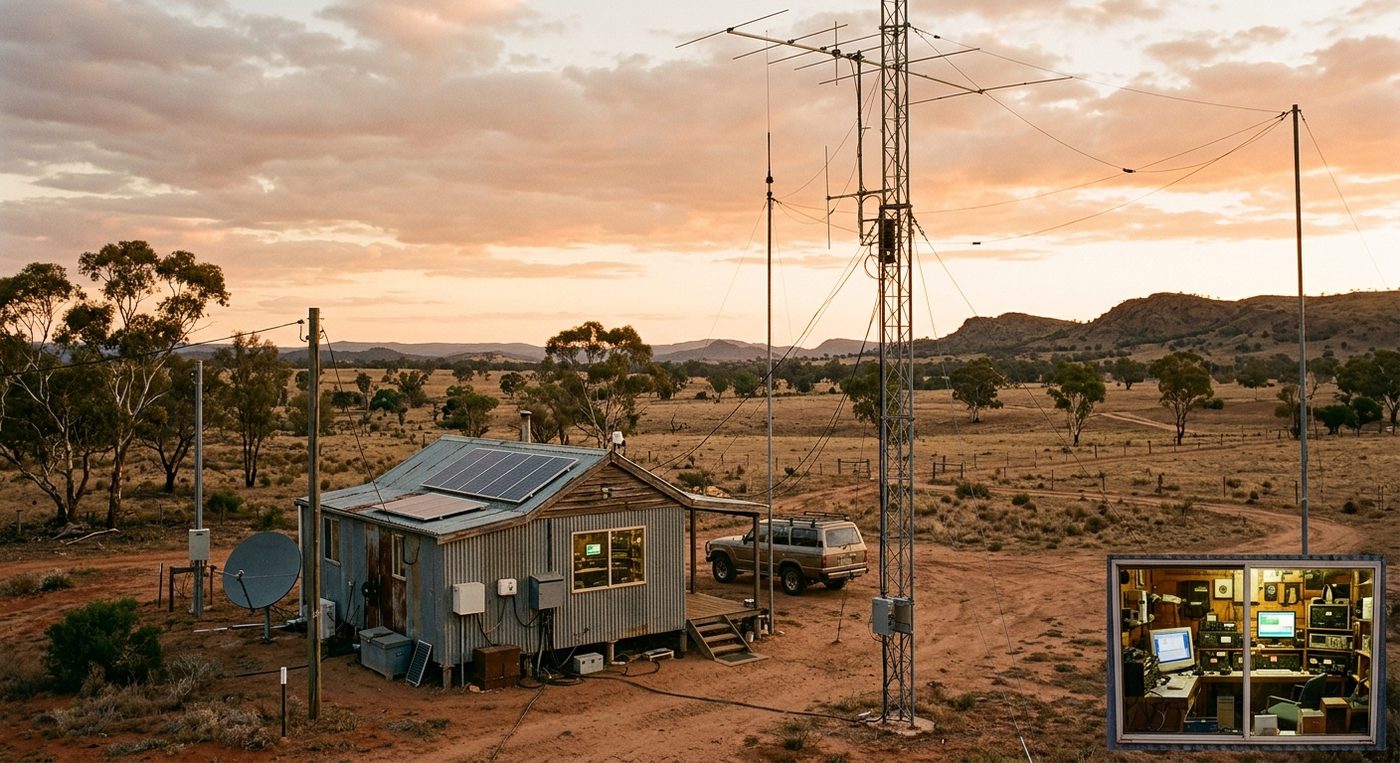
Radio power chain: panel and battery through MPPT controller to transceiver, with duty-cycle autonomy notes.
Panel orientation: in the southern hemisphere, panels want to face north. A radio sitting on a south-facing windowsill in winter will charge at a fraction of its rated rate.
Cloud cover: a thick overcast can drop solar harvest to 10-25% of rated output. Plan for 4-5 days of marginal charging, not 1 day of full sun.
Heat: paradoxically, very hot panels perform worse than cool ones. A shaded but well-ventilated panel can outperform one in full baking sun.
Angle: flat on a table is the worst orientation. Prop the panel at roughly the local latitude angle (around 23° at Beecher) facing north.
A well-maintained solar radio can provide several hours of continuous operation after a full charge in Australian conditions. "Several hours" is the verified claim; treat 24+ hours as the design target, not the guaranteed minimum.
Testing Before You Trust It
Test a solar radio with your solar setup before relying on it. Verify it runs for 24+ hours on a full charge before purchase or deployment. Don't trust the box label. Run it.
A practical test sequence:
1. Full charge via solar during a clear day, or via USB if the radio accepts it.
2. Disconnect all power, run on battery only, time the run-down.
3. Re-test with the actual solar panel you're planning to use, in your actual mounting location.
If the radio can't hit 24 hours in your hands, it won't hit 24 hours in a blackout.
Common Add-On Features
Many solar powered radios include additional charging and emergency features such as hand cranks, USB charging ports, built-in flashlights, and siren alerts. The flashlight is genuinely useful, especially the ones with a red-light mode for preserving night vision. The siren is mostly theatre; if you need to be found, a UHF CB channel 5 distress call is more effective. USB-out "power bank" functionality on a radio is a bonus but not a reason to buy.
A built-in thermometer, compass, or reading lamp is fine. None of them justify a premium price on their own.
Safety
A solar radio is a low-voltage DC device. There's no 230V mains wiring, no gas, no structural modification. That said, the broader off-grid system around it absolutely has licensed-electrical work zones.
When to Call a Licensed Professional
Always engage a licensed professional when working with electrical systems, structural modifications, or gas installations. Specifically for a solar radio setup:
Wiring the radio to a 12V/24V source: the feed is well below the >50V DC threshold that triggers AS/NZS 3000 licensed work, so the radio-side cable itself is not licensed work. However, the cable must be fused at the supply end (typically a 3-5A inline fuse sized to the cable) so a fault in the radio or its cable cannot back-feed the array bus. Use appropriately rated DC cable, keep the run short, and protect any penetration through walls or roofs.
Mounting a fixed external solar panel to a roof or pole involves structural fixing and, in cyclone regions, may require engineering certification.
Any modification to a 230V inverter, charge controller, or battery bank is licensed work and must be done by a licensed sparky. Don't touch it.
Lightning protection for an external antenna or panel in CQ storm country is worth professional advice.
Emergency survival radios are designed to function independently of traditional power sources, which is the point. The whole chain should be self-contained. If you find yourself needing to wire the radio into mains to make it work, something is wrong with the unit or your expectations.
FAQ
How long does a solar radio take to fully charge?
Depends on panel size and sun. A 5W panel in full CQ sun will charge a typical 2000-3000 mAh internal battery in 4-6 hours. Cloud cover stretches that to 1-2 days. USB charging is faster and is the right approach for the initial top-up.
Can I leave a solar radio outside permanently?
Only if it's rated IPX5 or higher and mounted out of direct UV where possible. UV degrades plastic, rubber seals, and solar cells. A covered north-facing spot is better than full exposure.
Do I need shortwave capability?
It's a nice-to-have, not essential. ABC Emergency does not currently broadcast on a verifiable shortwave frequency for CQ listeners; AM and local FM are the reliable channels for Australian emergency information. Confirm any shortwave claim against the ABC's published schedule before relying on it.
What's the difference between IPX4 and IPX5?
IPX4 handles splashes from any direction. IPX5 handles low-pressure water jets from any direction. For a cyclone-prone region, IPX5 is the right floor.
Can a solar radio charge my phone?
Most emergency-class units have a USB-out port that can trickle-charge a phone. It's slow and will drain the radio battery quickly. A dedicated power bank with its own solar panel is better for phone charging.
How do I know which local FM stations carry emergency warnings?
All ABC local radio stations and all major commercial stations are part of the Emergency Alert broadcast system. The Bureau of Meteorology also issues warnings via the same channels. Check the ABC's local coverage page for your nearest transmitter.
⚠️ SAFETY WARNING: Working with electrical systems, structural modifications, or gas installations carries inherent risks. If you are not confident in your abilities, always engage a licensed professional.
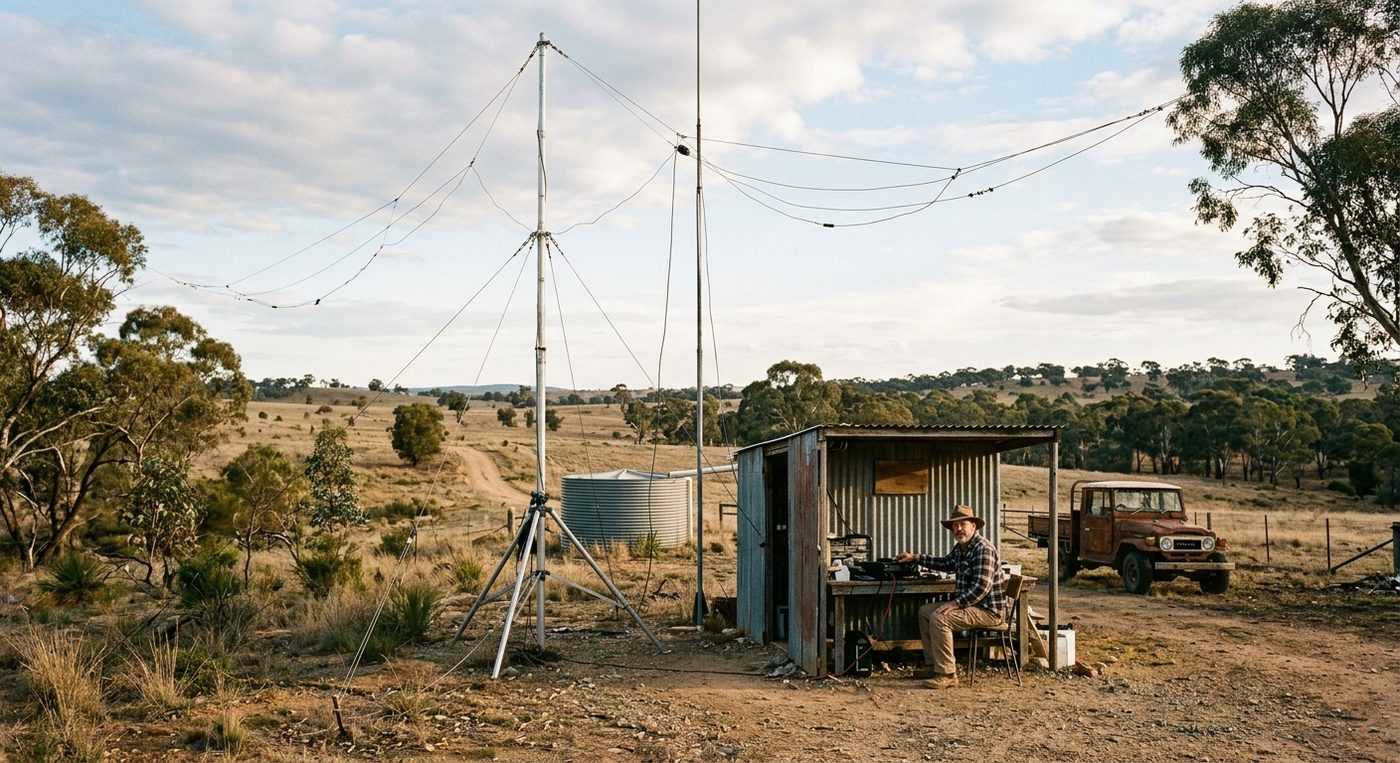
He walks through wiring a 12 V ham radio to a small solar panel and a lithium pack, showing the real‑world current draw and voltage drop when transmitting so you can see exactly how big your panel and battery need to be.— Dave Miller