
By Sarah Chen · environmental engineer · water, waste and everything that flows downhill
“After my third borehole went dry and cost me $4,200, I learned that 'off-grid' in the outback means planning for the worst drought, not the best.”
By Sarah Chen · environmental engineer · water, waste and everything that flows downhill
“After my third borehole went dry and cost me $4,200, I learned that 'off-grid' in the outback means planning for the worst drought, not the best.”
I've been doing this for years. If you're off-grid in Australia and want a reliable water system that doesn't cost a fortune, this is how you do it. No fancy tech—just parts that work.
A working off-grid water system doesn't need to be complicated, but it does need to be deliberate. Water in the bush is one of those things you only notice when it stops flowing — and by then you're already behind. This guide walks through how to plan, build, and maintain a stock-grid water setup that holds up under Australian conditions, drawing on verified guidance from off-grid builders and water-system designers.
In Australian off-grid practice, a "stock grid water" setup refers to a water system designed for properties that may rely on tank water, bore water, or a combination of sources, with enough redundancy to keep running when one source fails. The grid reference in the name acknowledges that even off-grid systems benefit from grid-style discipline: defined inputs, defined outputs, and defined failure modes.
A strong off-grid water system balances three pillars: source reliability, purification matched to source risks, and ease of maintenance. Skip any one of these and the system will let you down at the worst possible moment.
Before choosing tanks, pumps, or filters, define what the system needs to do. The non-negotiables typically include:
In my experience, the setups that fail are the ones where someone bought a tank first and worked backwards. Define the use case, size to it, then choose components.
For a small off-grid dwelling or workshop, a typical configuration pairs a larger external collection tank with a smaller internal cold tank. One documented workshop setup uses a 160L external water butt collecting rainwater, a 120L internal cold tank, a 12V diaphragm pump, an under-sink water heater for hot water, and a 10L jerrycan for sink waste. That footprint suits a single-occupant shed or tiny house without overbuilding.
For a household, the maths change. A common Australian rule of thumb for rainwater-only households is to size roof catchment and tank storage to carry a property through the longest expected dry spell, but specific tank volumes depend on roof area, local rainfall, and occupancy — work with a licensed plumber or tank supplier for site-specific sizing. A cleared level pad for a tiny house should be roughly the same size as the tiny house — at least 2.5 m wide x up to 9 m long — and any concrete pad should be at least 100mm thick.
Strong off-grid systems typically stack multiple water sources (e.g., rainwater plus a backup) rather than relying on a single source. A 200L drum as a backup or top-up reservoir is good redundancy planning and doesn't take up much space.
Rainwater catchment systems usually include a collection surface, conveyance, pre-filtering, storage, and purification. The real risks come from roof debris, first-flush handling, tank hygiene, and seasonal variability.
Practical steps:
Wells and springs are less weather-dependent than rainwater but require pumping power, regular water testing, and treatment matched to actual contaminants. An untested well can give a false sense of security — the water may look clean and still carry bacteria, nitrates, or minerals that affect taste and long-term health.
If you rely on a bore or spring:
A backup can be as simple as a filled 200L drum, a neighbour's tap connection for emergencies, or a delivered-water arrangement. The point is redundancy: if your main source fails or is contaminated, you have time to respond without an immediate crisis.
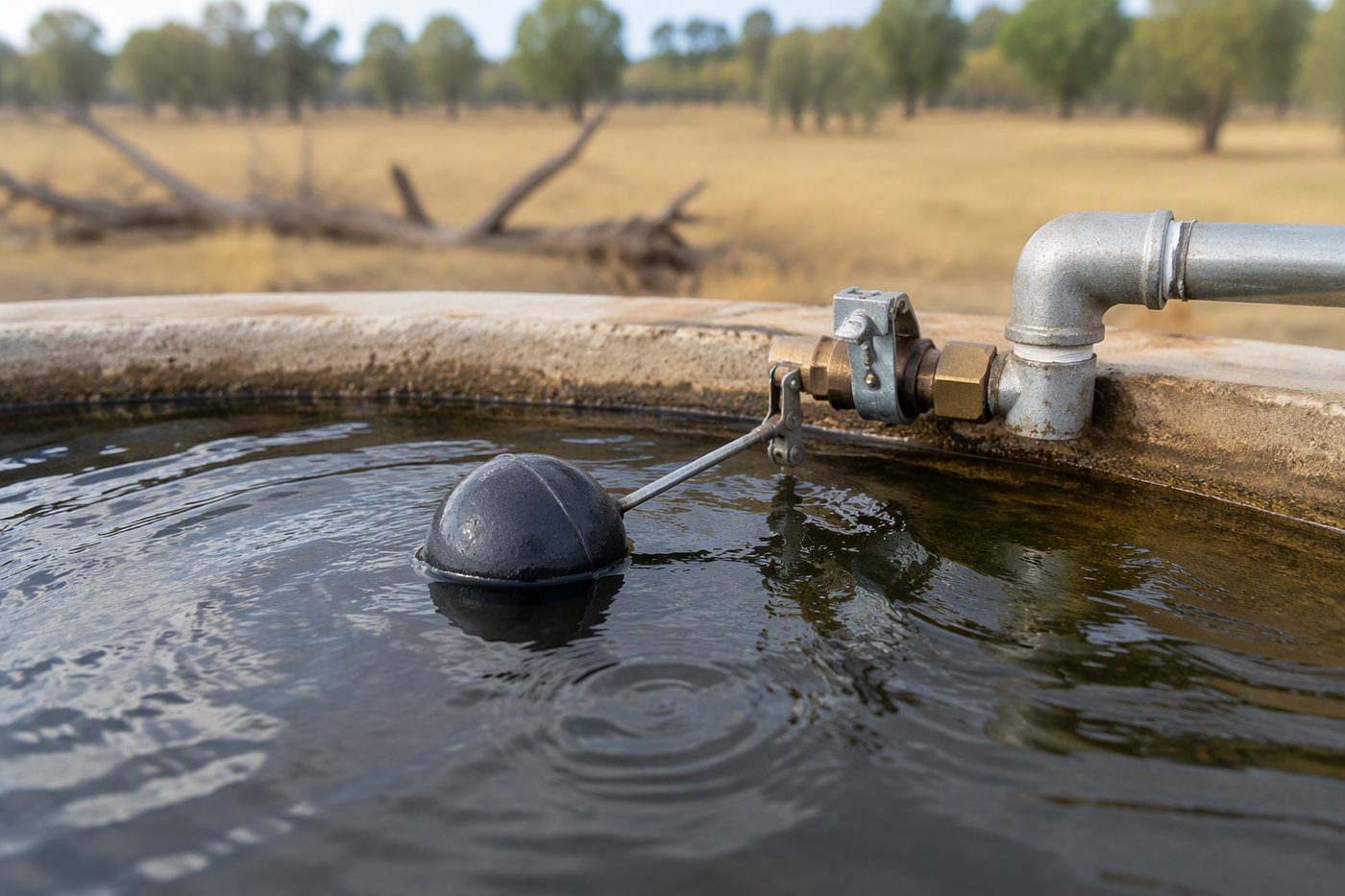
A diaphragm pump activated by a pressure drop when a faucet is opened can deliver water on demand in an off-grid setup. If the tank is a sealed pressure vessel, it must be fitted with a pre-charged accumulator/bladder tank and pressure switch; otherwise use a vented header tank with float switch for pump control. A plain sealed (non-vented) tank without an accumulator will cause the pump to cycle on every draw.
Typical components:
For 230V/50Hz sites with adequate solar generation, an AC pressure pump is another option, but a 12V pump paired with a battery bank keeps the system running even when the inverter is off. Confirm whether the 120L cold-water tank in the design is a vented header or a pressurised accumulator; this must match the pump control method to avoid rapid pump cycling.
An under-sink instantaneous electric water heater can provide hot water in an off-grid system by working like an electric shower — no storage cylinder, on-demand heat. However, these units typically draw 3–6 kW or more from the AC supply. On a 12V battery/inverter off-grid system this is a large sustained load that competes with other circuits and may exceed inverter capacity. Before selecting an under-sink unit, confirm the kW draw of the specific model, verify that the inverter can supply the continuous load, and ensure the unit is on a dedicated circuit with RCD protection as required by AS/NZS 3000. This configuration suits very low-use applications like a handwashing sink only.
For higher demand (family showering, laundry), a gas instantaneous water heater or a thermosiphon solar hot water system with a small electric booster is more practical. Specific sizing should be discussed with a licensed gas fitter or plumber.
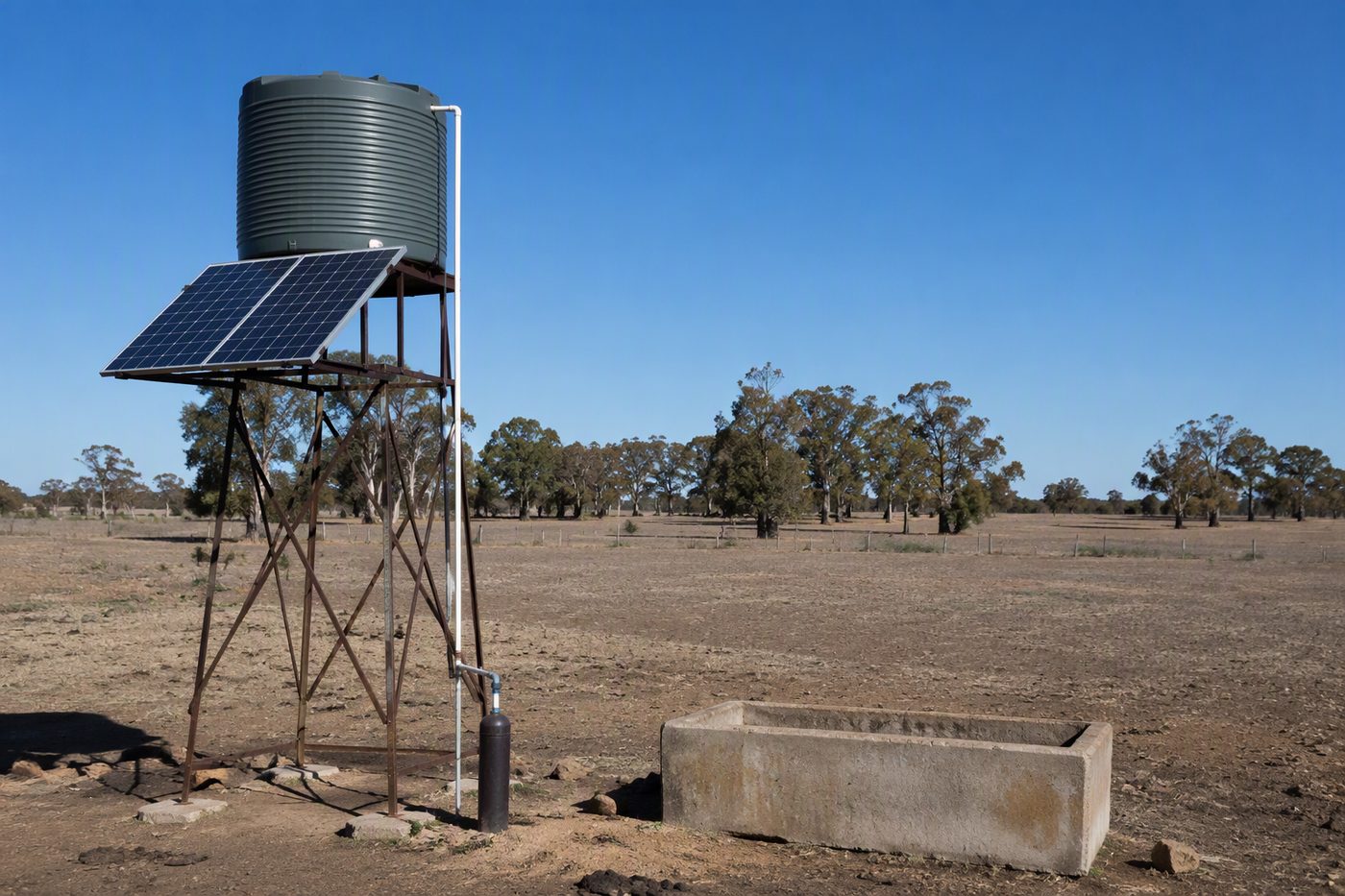
Filtration needs to match the source:
Whichever source, plan for filter replacement as part of routine maintenance. Replacement intervals depend on the cartridge or media type — UV lamps typically need replacement at around 12 months, sediment cartridges at 6–12 months, RO membranes at 2–3 years, and ceramic or 0.2 µm elements at 1–2 years. Follow the manufacturer's specified interval for each cartridge.
When sealing a closed cold-water tank, a pressure-relief valve (or combined vacuum/pressure relief) plus an atmospheric air-gapped overflow are necessary. Water expansion in a sealed system during cold nights can blow through sealant and cause flooding. A simple non-return valve on the overflow is not a pressure-relief device and will not vent thermal-expansion pressure or allow air release during fill.
Fit a dedicated pressure-relief valve plus an atmospheric air-gapped overflow from day one. This is a small detail that gets skipped on DIY builds and causes real damage.
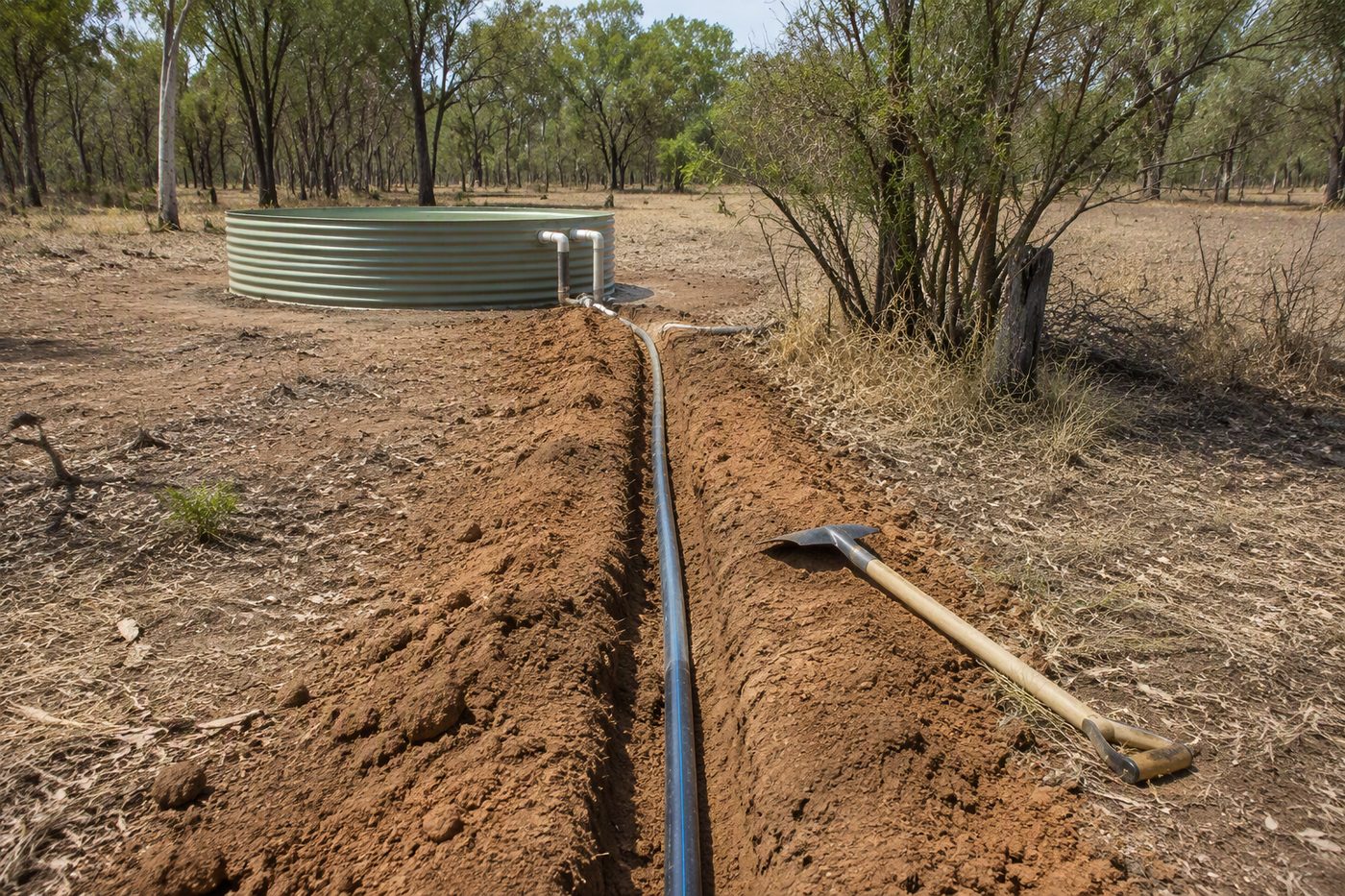
Before any plumbing goes in, the site itself has to be right. Before delivery, trees and branches may need to be trimmed back, potholes filled, and difficult terrain prepared so the delivery truck can manoeuvre tanks and equipment into position. For rural sites, owners should plan a daily access route so vehicles don't get bog.
A concrete pad for any heavy tank or pump shed should be at least 100mm thick; gravel, crusher dust, or road base should be compacted down to 100mm thick. For footings under adjustable landing legs or tank stands, obtain site-specific footing design referenced to AS 2870 (Residential Slabs and Footings) and/or AS 3600 (Concrete Structures) based on the actual load and soil class — do not treat any single dimension (such as 450mm x 450mm x 500mm) as a universal rule.
A low-maintenance system is one that's actually maintained. Set a calendar reminder for:
Composting toilets are a sustainable, eco-friendly alternative to flush toilets that turn waste into nutrient-rich compost and are low-maintenance and odourless — and they reduce the load on your greywater system, which is worth considering as part of the broader water-and-waste plan. Off-grid waste options for a tiny house include a normal flush toilet plumbed to a septic tank, a composting toilet connected into a greywater system, or a gas/electric incinerator toilet. If a toilet is located near a creek, river, or dam, an incinerator toilet may be the only option allowed.
| Component | Typical Specification |
|---|---|
| External collection tank (small setup) | 160L water butt or larger |
| Internal cold-water tank | 120L, vented header or sealed pressure tank with pre-charged accumulator and pressure-relief/atmospheric overflow (configuration must be specified before pump selection) |
| Pump | 12V diaphragm pump, demand-activated, with matched pressure switch and accumulator or float switch |
| Hot water | Under-sink instantaneous heater (low use only) — confirm kW draw and inverter capacity; dedicated RCD-protected circuit per AS/NZS 3000 |
| Sink waste | 10L jerrycan or piped greywater system |
| Filtration | Sediment + UV (rainwater for drinking); multi-stage matched to test results for bore/spring; manufacturer-specified replacement intervals per cartridge type |
| Backup source | 200L drum or equivalent |
| Pad thickness (tank/shed base) | Concrete 100mm; compacted road base 100mm |
| Footings (under landing legs) | Site-specific design per AS 2870 / AS 3600 based on load and soil class |
DIY is fine for many parts of an off-grid water system, but certain work must be carried out or certified by a licensed tradesperson in Australia:
If the system involves any of these elements, engage the appropriate licensed professional. The cost of getting it done properly is a fraction of the cost of rectifying insurance or health issues later.
How much water do I need to store?
For a single-occupant tiny house or workshop, 280L of combined tank storage (160L external plus 120L internal) can work as a starting point, but actual storage needs depend on rainfall reliability, roof catchment area, and occupancy. For a full household, size storage to carry through the longest expected dry period in your region — a tank supplier or plumber can run the numbers for your site.
Is rainwater safe to drink?
Rainwater can be safe to drink when the catchment system is well-maintained and the water is filtered and sterilised. Common treatment is sediment filtration followed by UV sterilisation. First-flush diverters and gutter mesh significantly reduce contamination risk.
How often should I test my water?
For rainwater, annual testing is a sensible baseline. For bore or spring water, test at least annually and after any significant weather event (flooding, heavy rain) that might affect groundwater quality.
Can I run a water pump directly from solar without batteries?
Direct-drive solar pumps are possible for low-demand applications but inconsistent for household use because pump output varies with cloud cover. A battery-backed system or a pump-fed system with a header tank that provides gravity-fed pressure is more reliable.
What's the most common failure point?
In my experience, it's filters that don't get changed and tanks that don't get cleaned. Both lead to bacterial growth and water-quality problems that are easily avoided with a simple maintenance schedule.
Do I need council approval for a water tank?
In most Australian jurisdictions, rainwater tanks below a certain size (typically 10,000L for above-ground) don't require building approval, but rules vary by council and state. Check with your local council before installation, especially for larger tanks, tank stands, or any plumbing connections.
Worth a watch: EASY Off Grid Water Storage System- With on Demand Pump · Triple T Acres