
By Jenny Mills · rural nurse & homesteader · health, safety, law and the paperwork of going bush
“After three failed attempts at our bore, I learned that a chore board without a water backup plan is just a list of empty promises.”
Managing chores with kids on an off-grid property doesn't need to be chaos, but it does need structure or the wheels come off fast. Last month my eldest dumped a bucket of greywater across the kitchen floor while trying to wash vegetables. Flooded the place and soaked the paperwork for our weekly water usage log. That mess taught me more than any planner I've bought, and it's why I built a simple system that saves time, builds responsibility in the kids, and fits an Australian budget.
By Jenny Mills · rural nurse & homesteader · health, safety, law and the paperwork of going bush
“After three failed attempts at our bore, I learned that a chore board without a water backup plan is just a list of empty promises.”
Off-grid chores with kids will turn a simple day into a shambles. The week our pressure pump seized, I was elbow-deep in suds hand-washing a week's laundry while the kids squabbled over who had forgotten to feed the chooks. I made it worse: drove to Bunnings, grabbed a cheap pump, got home and found it was the wrong model. Water system in limbo, chore board in chaos, washing still in the tub. That mess forced me to design a low-cost system that keeps the family on track, builds responsibility, and fits a typical Aussie budget.
The pump died on a Tuesday, and I spent an hour with two frustrated kids and a husband who couldn't tell me what had been checked because the chore list lived on an app that wouldn't load without the Wi-Fi we didn't have. That was the day the laminated sheet went up on the kitchen wall. Off-grid means you don't get to call a technician or refresh a page; you have to see, with your own eyes, who did what and when.
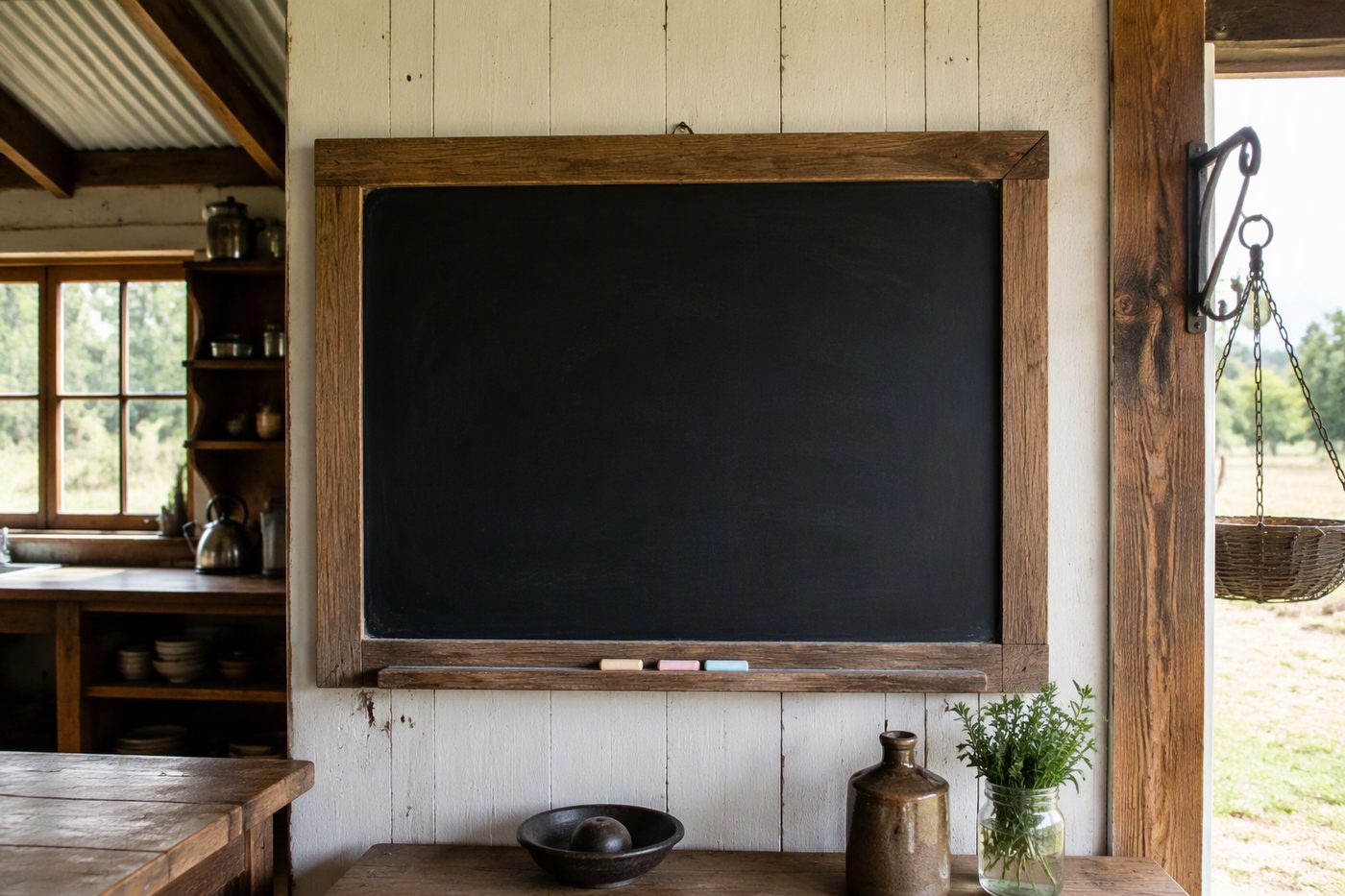
A paper or chalkboard you can read at a glance stops the arguments, teaches the children that a filter doesn't change itself, and makes sure someone actually emptied the compost loo before it started smelling like a dead roo. No router, no subscription, no excuses—and a six-year-old can wipe it clean with a tea towel.
| Task | Frequency | Who Does It |
|---|---|---|
| Board updates | Every Sunday morning | Adults |
| Chore completion checks | Every evening | Child + Adult |
| Board refresh (new cards) | Monthly | Family meeting |
| Task rotation | Quarterly | Adults |
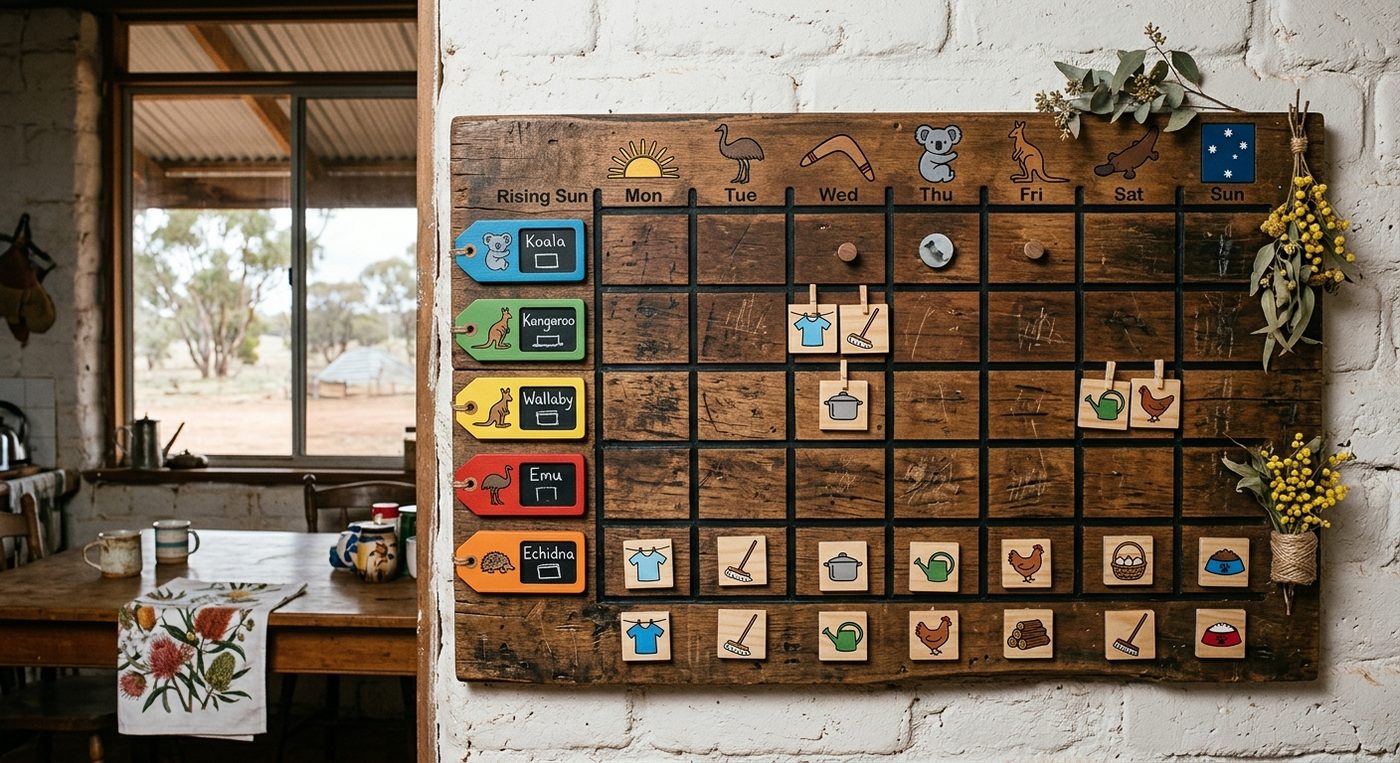
Set up your board for under $50 AUD using these Australian options:
These Australian-made or sourced items work perfectly for off-grid chores:
On our place, I double the family tasks when the workload allows. Extra garden beds go on the list when we're expanding the patch, and the kids know there's always a bonus chore waiting once the basics are done. The board lives on the kitchen wall, right at eye level, so no one can pretend they didn't see it.
I kick things off with 5‑minute tasks. I apply a 10‑minute rule – if they stick at a job for 10 minutes they earn a small reward, such as extra story time. Never threaten.
I keep the board on paper, so it runs when the power’s out. I write any updates in daylight, and I don’t bother with apps or tablets—they’ll chew through a charged battery faster than a mob at a waterhole, and then you’re stuck with a blank screen and three whinging kids.
Rotate every 3 months. This prevents boredom and teaches diverse skills. Always involve kids in the rotation meeting.
Water-tank level checks go straight onto the adult task list — first job of the week, no negotiation. In Australia, skipping it isn't a minor oversight; it's how families end up hauling containers from the nearest bore when the tanks run dry. Droughts don't send a warning, and an empty tank in February teaches a lesson you'll never forget.
A weekly chore board runs the household, full stop. It's the difference between knowing who checked the generator filter and guessing at dusk. My first attempt was a printed thing from the craft shop. The kids ignored it after day two. I pulled it down, bought a $50 AUD whiteboard from the hardware store, and started marking it by hand. Water tank levels on the left column, firewood counts on the right, names down the middle. When the numbers are real, the kids check the board because the numbers matter to them, not because I asked.
Set the roles, run the cadence weekly, and keep the routine. You'll save hours each month, the kids learn self-reliance, and the household runs smoother than the solar does on a clear day.
Disclaimer: This guide is for general lifestyle advice only. Always prioritise safety with off-grid systems (e.g., never check water tanks alone during storms). Consult certified professionals for electrical or water system modifications. Prices are AUD as of 2023 and may vary.
Worth a watch: The BEST Kids Chore Chart and Reward System: So Easy & It ACTUALLY WORKS! · Solutions for Simplicity
We put a whiteboard on the wall and let the kids tick their own names off — that little bit of ownership makes a big difference. Keep the list short or it becomes overwhelming and nobody starts. If the whole thing falls apart, it's usually a sign the list has crept up and it's time for a reset, which I cover further down the article.
The stick-on ones don't handle heat well, and on a fibro wall in the Queensland sun mine peeled within a season. These days I'd go a framed board you can mount properly, or paint a section of wall with whiteboard paint. If it's already lifting, pull it off before the adhesive stains the surface underneath.
They can — I had to relocate my chore board setup because of a council fire-safety rule, which I go into in the article. Anything near a heat source, exit path or stored fuel can fall foul of the regs, so it's worth checking before you mount anything permanent. The rules are there for a reason, even when they feel like overkill on a rural property.
Mixed bag, honestly. I grabbed a $12 Bunnings pump thinking I'd save a few bucks and it couldn't keep up, which then stuffed our chore board because the water-related jobs piled up. For one-off use cheap is fine, but for anything running day in, day out, spend up. The kit section covers what I've found actually earns its keep on our place.
While many off-grid projects are achievable as DIY, certain situations require licensed professionals:
Always check local regulations and obtain necessary permits before commencing work.