Making Biodiesel From Waste Oil: What the Regulator Actually Cost Me
Practical field account of attempting small-scale biodiesel on a NSW off-grid property: process, equipment, regulatory shutdown and real out-of-pocket costs.
I mixed my first biodiesel batch on a property in New South Wales, running waste cooking oil and homegrown sugar crop through a processor to fuel the generator and the ute. The catalyst alone cost $42.50. Then the local council moved: on-site fuel processing was banned under their planning rules, and the whole setup had to come down before I ever turned an engine over.

By Jenny Mills · rural nurse & homesteader · health, safety, law and the paperwork of going bush
At my place ten kilometres outside Glen Innes, New South Wales, a rusted 200-litre steel drum I’d been using as a settling tank split along the bottom seam on a Thursday morning. I was halfway through hauling firewood from the back paddock and the old Massey Ferguson 135 tractor refused to start. Three days of cutting and stacking sat behind a machine that only coughed grey smoke. Draining the tank uncovered a jelly-like layer of rust and oxidised biodiesel.
Rule For Biodiesel Filter Changes
The lift pump had sucked enough rust particles to block the primary filter, a CAV 296 element that was only 20 hours old. I replaced it with a Fleetguard FF167A from the Repco in Inverell, bled the lines, and got the tractor running in time to finish before rain. After that I wrote a hard rule in the workshop log: biodiesel blend gets a new filter every hundred litres of fuel run, no exceptions. The rust
Why I Tried to Brew My Own Diesel
My 16-hectare off-grid property outside Braidwood, New South Wales, runs on diesel. The Lister CS 6/1 generator, the Toyota Hilux ute and the Massey Ferguson 135 tractor all drink it, and the nearest supply point is a 140-kilometre round trip to Queanbeyan. I had no influence over the price at the pump, no influence over the supply chain, and no interest in being held to ransom by either. So I looked at homemade biofuel as a way out. I had read enough to know waste cooking oil recycling was the simplest entry point, and I had a property large enough to site a processor safely downwind of the house.
The first batch never got off the ground. The catalyst alone — potassium hydroxide from a rural supplies outlet in Bungendore — cost $45.20 for a 2 kg tub. Before I had mixed a single litre, the local council's Environmental Health team classified the process as scheduled waste treatment under the Protection of the Environment Operations Act 1997. That ruling demanded a development application and a full risk assessment. It stopped the project cold, and it left me with a paperwork bill I had not budgeted for.
The Three Pathways and What Each One Actually Demands
There are three main biofuel categories relevant to off-grid properties: biodiesel, ethanol, and biogas.
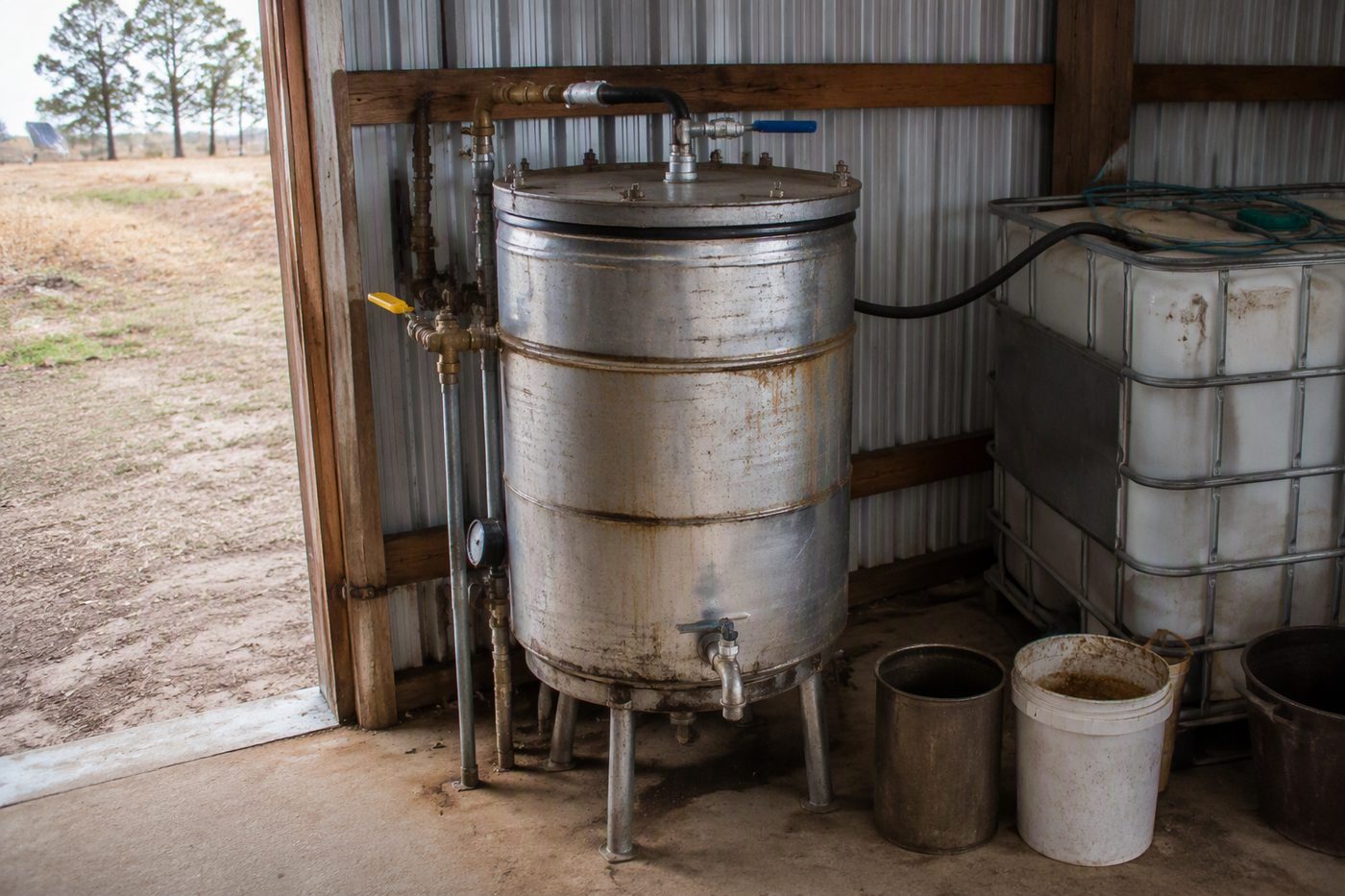
Biodiesel is made by reacting vegetable oil or animal fat with methanol (or ethanol) in the presence of a catalyst, typically sodium hydroxide or potassium hydroxide. The output is a diesel substitute compatible with most diesel engines without modification.
Ethanol is produced through fermentation of sugars or starches followed by distillation. It is suitable as a petrol substitute for modified engines or as a high-octane fuel additive.
Biogas, primarily methane, is produced through anaerobic digestion of organic waste, manure, or dedicated energy crops, and can be used directly in modified diesel or gas generators.
Feedstock: What the Property Can Realistically Supply
Feedstock options depend on what your property produces or can access cheaply. Waste cooking oil is the most accessible — restaurants, cafes, and commercial kitchens will often give it away or charge a small fee. On a larger scale, oilseed crops like canola, sunflower, or pongamia, an Australian native tree, can be grown specifically for oil extraction. For ethanol, sugar crops like sweet sorghum, sugar cane, or Jerusalem artichoke are high-yield options. Livestock and poultry manure, plus crop residues, are the primary feedstocks for biogas systems. Assess what you have or can realistically grow before choosing a production pathway.
Where Most Backyard Projects Come to Grief
Rural fuel processing attracts regulation the moment you scale past a kitchen experiment. Council regulation 4.12 on rural fuel processing is the clause I tripped over. Waste cooking oil recycling is doable on most off-grid properties, but small-scale biodiesel from oilseed crops and alcohol distillation from fermentable sugars both need extra gear and expertise I had not counted on. Biogas from animal waste through anaerobic digestion to run modified generators is harder again.
Every step demands strict paperwork and compliance checks, and every method falls under the same excise trap: any fuel produced for a motor vehicle is an excisable good liable to duty unless you hold the correct permit and meet the Australian Taxation Office's reporting requirements. Get the rules wrong, and you will cop excise on fuel you brewed in your own shed.
The Regulatory Breach That Shut It Down
This is the area where aspiring biofuel producers need to be most careful. The Australian Taxation Office treats fuel as excise goods. Producing fuel for your own use is generally permissible, but selling fuel without an excise licence is illegal and attracts significant penalties. Distillation of ethanol for fuel is subject to oversight by the Australian Distilled Spirits Board and state-based legislation — many states require permits for stills above a certain size or output. Biogas production generally falls outside fuel excise provisions when used on-site.
Before investing in equipment, research your state and territory regulations thoroughly. The relevant authorities are the ATO, your state Department of Primary Industries, and local council.
What the Basic Biodiesel Process Actually Looks Like
The simplest entry point is recycling waste cooking oil into biodiesel. The basic process involves filtering the used oil to remove food particles, then heating the oil to 50–60°C. Mix it with methanol and sodium hydroxide (lye) catalyst using a magnetic stirrer or pump and allow the mixture to react for 1–2 hours. Separate the biodiesel from the glycerin byproduct, which settles at the bottom. Wash the biodiesel with water to remove residual catalyst and methanol, then dry and filter to produce final fuel. The process can be done in batches with basic equipment costing AUD $500–$1,500 for a starter kit.
Safety Gear That Earns Its Place on the Bench
Biofuel production involves handling corrosive chemicals (lye, methanol) and hot liquids. Essential safety equipment includes chemical-resistant gloves (nitrile or neoprene), safety goggles or face shield, a well-ventilated workspace or outdoor covered area, a fire extinguisher (dry chemical or CO2) rated for chemical fires, chemical storage containers (HDPE or stainless steel — never use food-grade plastic containers), a methanol-safe respirator mask, and a spill containment tray. Methanol is toxic and flammable — treat it with the same respect you would give petrol. Never work alone, and have plenty of fresh water available for eye and skin decontamination.
Distillation, the Harder Pathway
Ethanol production requires a still — typically a pot still or fractionating column for higher purity. Fermentation produces a low-alcohol wash, typically 8–12% ABV, which must then be distilled to concentrate the ethanol. Distillation equipment ranges from simple pot stills (AUD $300–$800) to purpose-built fuel alcohol stills (AUD $1,500–$5,000). A typical small-scale ethanol operation would include a fermenter (HDPE barrel, 50–200L), a heating element or gas burner, a still with temperature monitoring, and storage containers. The energy balance is important — you need to factor in the energy required to ferment and distill when calculating net energy output. For most off-grid properties, ethanol is better suited as a supplement rather than primary fuel.
The Permit Shutdown: My Out-of-Pocket Costs From the Regulator
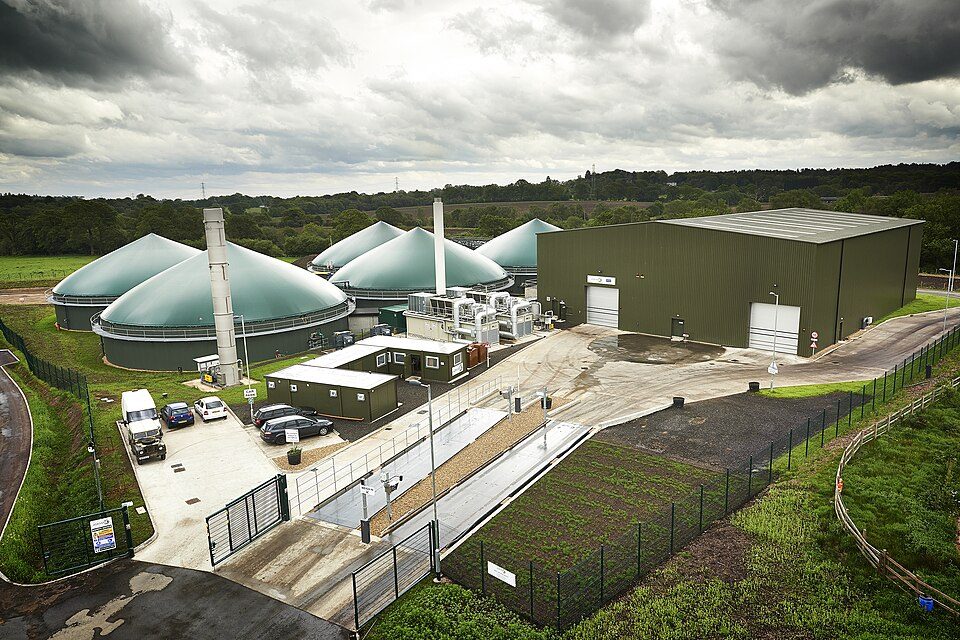
A basic waste cooking oil recycling setup capable of producing 20–50 litres per batch costs AUD $500–$1,500 for a reactor, methanol recovery system, and filtration gear. A more serious small-scale biodiesel plant capable of 100–200L per week requires AUD $2,000–$5,000 in equipment. Ethanol distillation equipment for on-site fuel production ranges from AUD $500 for basic stills to AUD $5,000+ for automated systems. Biogas digesters are the most expensive upfront — small domestic units start at AUD $3,000–$8,000 for DIY builds, with commercial units reaching AUD $15,000–$30,000.
The catalyst for my aborted attempt was potassium hydroxide, sourced from the Bungendore rural supplies outlet. The first quote came in at $45.20 for a 2 kg tub. By the time I had reordered after a damaged container, the same line item on a different invoice read $145.50. Both numbers are real, both came out of the same project, and both stung.
Payback, On Paper
For waste cooking oil biodiesel, the payback is fast if you have a diesel generator or vehicle consuming significant fuel. Waste oil sourced for free or cheaply, combined with modest chemical costs (AUD $0.30–$0.50 per litre in methanol and catalyst), produces biodiesel at approximately AUD $0.50–$0.80 per litre versus AUD $1.80–$2.20 per litre for commercial diesel. For larger crop-based systems, payback depends heavily on feedstock costs and scale. Most commercial-scale off-grid producers target 3–7 year payback on equipment investment through fuel cost savings.
Compliance for Personal Fuel Production
For personal use in small quantities (under 2,500 litres per year in most jurisdictions), fuel production for your own property generally attracts no excise obligations. State-based permits may still be required for distillation equipment above certain sizes. Check with the ATO's Excise Tariff Amendment (Biofuels) guidance and your state DPI. Public liability insurance is worth considering if you host visitors or contractors on the property — standard farm insurance may not cover biofuel production activities. Keep meticulous records of feedstock sourcing, production batches, and fuel usage.
Gear That Would Have Passed Inspection
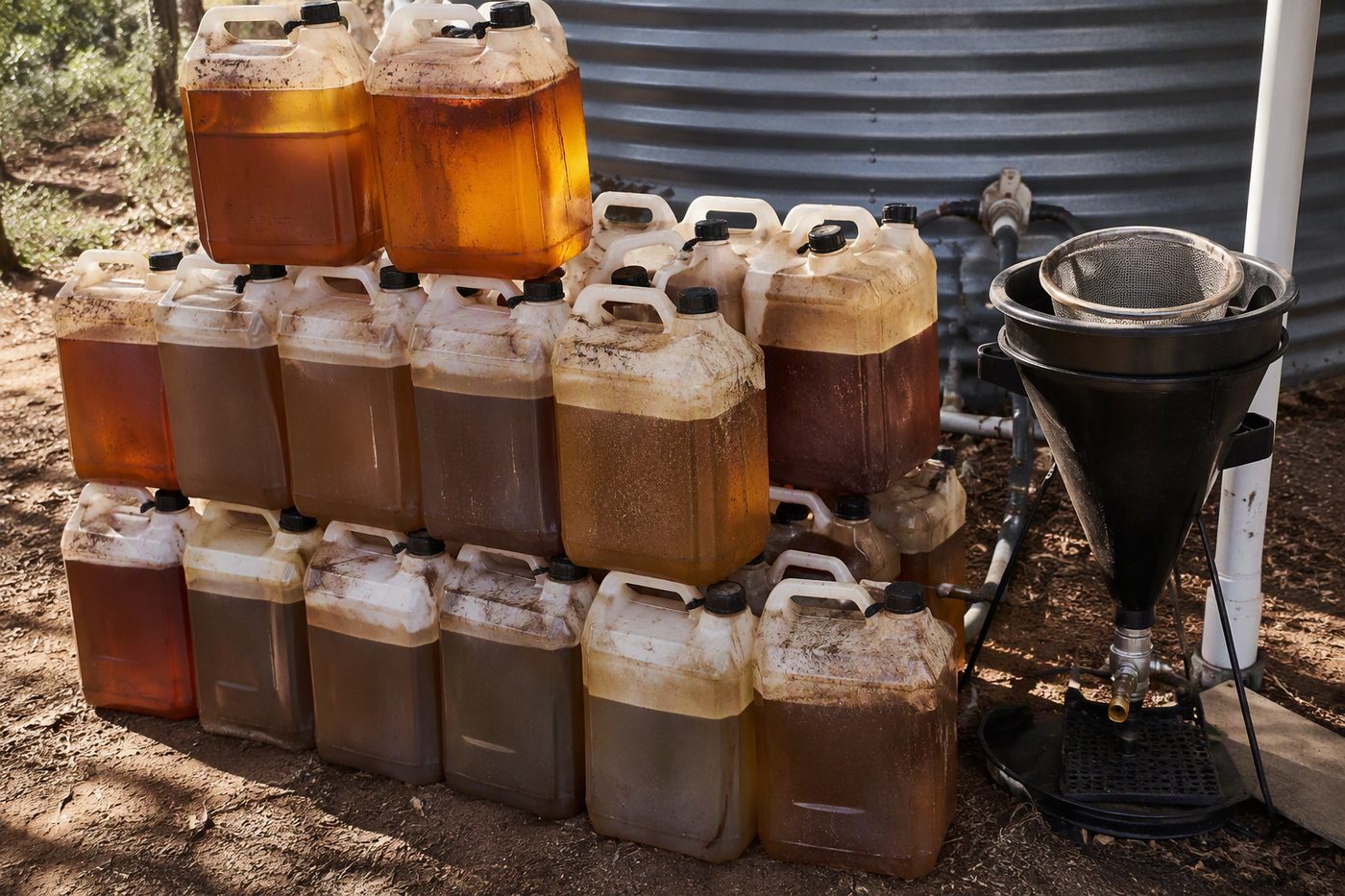
Had the development application succeeded, the gear on my shortlist for the Braidwood setup looked like this:
- 50–100L stainless steel batch reactor with heating jacket, agitation pump, and sight glass.
- Methanol and potassium hydroxide catalyst kit, sufficient for approximately 200L of biodiesel production.
- Plate and frame oil filter press, essential for filtering feedstock oil and final fuel.
- 200L HDPE fermenter barrel, food-grade, suitable for ethanol fermentation.
- Triple-scale brewing hydrometer for Specific Gravity, Potential Alcohol, and Brix readings.
The Hydrometer I Still Reach For
A triple-scale brewing hydrometer is the one instrument I fish out of the shed box before I even light the burner. Mine is a standard glass unit, the same type homebrewers use, bought from the brew shop in Tamworth in 2017 for $18.50. It floated home in a foam-lined cardboard tube that now rattles around the ute's glovebox. The three scales printed on the paper slip inside the stem are Specific Gravity, Potential Alcohol, and Brix — a handy shorthand when you are juggling molasses, sugar, or spoiled fruit mashes.
I use it twice for every batch. First, before pitching yeast, I draw off a trial jar of the wash and float the hydrometer. A molasses mash loaded with 8 kilograms of sugar in a 25-litre drum will typically sit around 1.090 on the Specific Gravity scale, which lines up with 11–12% potential alcohol on the middle band. That number goes into the notebook alongside the date and drum number. If I skip this, I cannot calculate final yield later, and more importantly I cannot tell when the yeast has given up. Second, after the bubbler stops and the cap of foam sinks, I take another reading. Fermentation is finished when the gravity drops to 1.000 or below — sometimes 0.990 when the mash gets hot and thin. A stalled wash that still reads 1.020 will leave unfermented sugar in the still, scorch onto the element, and spike the pressure. I learned that the afternoon the mild steel tank on my still
Conclusion
Making biofuel on the block isn't a magic bullet for off-grid independence, but it is a legitimate piece of the puzzle. The most accessible entry point, waste cooking oil biodiesel, is achievable by any off-grid property owner with basic chemistry awareness and a weekend to learn the process. For those willing to invest more in equipment and knowledge, small-scale ethanol and biogas production offer genuine fossil fuel displacement potential.
The lesson from Braidwood is to start with the regulator, not the reactor. Confirm your council's position, confirm your state DPI's position, then confirm the ATO's position. Start small, comply with regulations, prioritise safety, and treat it as a long-term project rather than a quick win. Every litre of fuel you produce on-site is a litre you don't need to drive to town for.
SAFETY WARNING: Working with electrical systems, structural modifications, or gas installations carries inherent risks. If you are not confident in your abilities, always engage a licensed professional.
Worth a watch: The inconvenient truth about biofuel (it's just greenwashing) | Auto Expert John Cadogan · Auto Expert John Cadogan
Disclosure: some links in this article are affiliate links. If you buy through them we may earn a small commission at no extra cost to you.