Chainsaws on the Off-Grid Property: What You Actually Need
A rural nurse and homesteader on choosing, running and maintaining a chainsaw for Australian off-grid life, from $150 budget saws to $600+ pro kit.

By Jenny Mills · rural nurse & homesteader · health, safety, law and the paperwork of going bush
“My first attempt at felling a red gum without a spotter left me with a $2,500 hospital bill and a shattered tibia.”
Why the chainsaw sits at the top of the shed
Any off-grid block in Australia eventually breaks down to one tool. The chainsaw processes storm-felled timber, keeps the firebreaks your shire council demands, and turns standing deadwood into next winter's firewood. A handsaw will do the job for a suburban weekend, but out here the work is bigger than that. The bush teaches you fast: eucalypts snap chains, summer heat makes petrol saws stubborn to start, and log piles hide snakes that don't appreciate company.
My first saw was a cheap unit from a clearance bin. It died inside a season, cost me a chain that stretched past adjustment, and produced more frustration than firewood. I bit the bullet and bought a Stihl MS 261 at Bunnings for $649. That saw has since saved me thousands in replacement costs and countless hours of cursing. The local council's noise limits still force me to file paperwork before I can touch certain timber on my patch, and using the tool on Total Fire Ban days is a hard no. None of that makes the saw optional, though. It is infrastructure.
What to actually buy: petrol, electric, and bar length
Petrol versus electric
Petrol chainsaws are the only sensible option for Australian rural properties beyond light use. The freedom to operate anywhere without an extension cord matters when your nearest power point is 200 metres away and your firewood pile sits at the back of the block. Modern 50–70cc saws from Stihl, Husqvarna and Makita deliver decent power-to-weight and are built for Australian conditions.
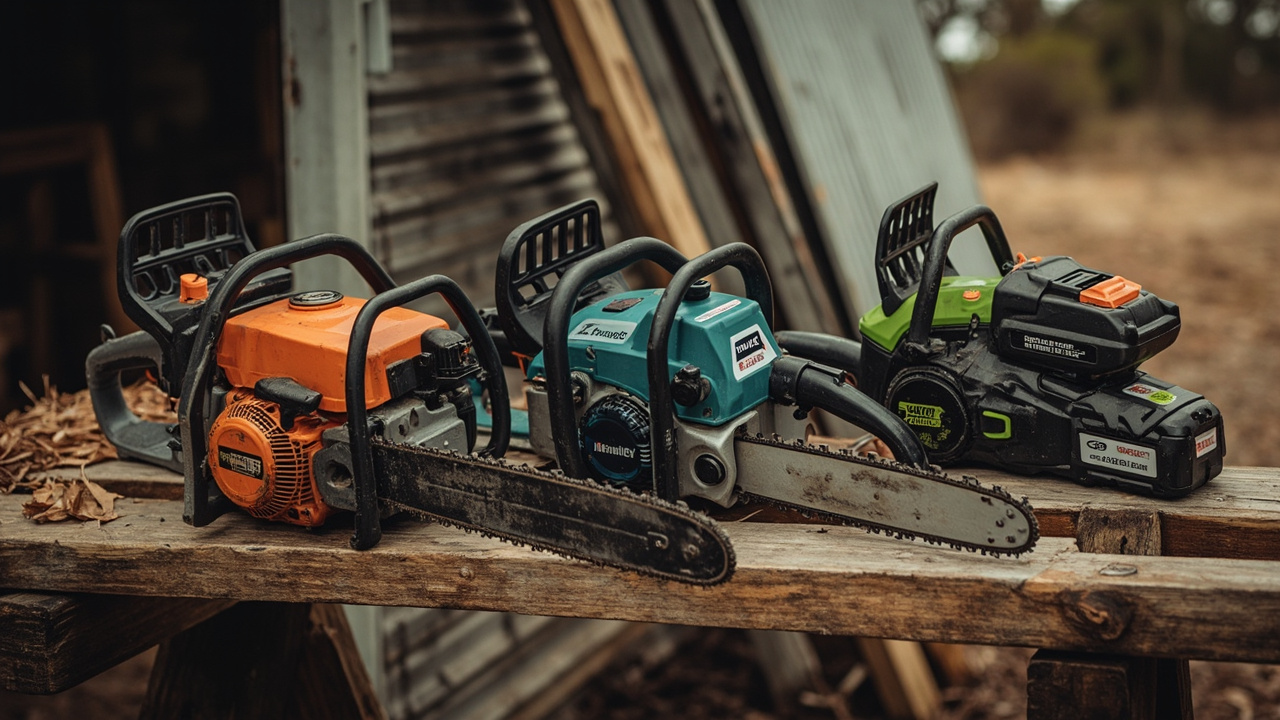
Electric saws have improved enough for small blocks where neighbours are close and noise matters, or for processing pre-felled timber and small limb work. Battery units from EGO and Makita now push 60V and 80V platforms that approach entry-level petrol performance. For serious firewood production or land clearing, though, petrol remains the benchmark.
Bar length
Bar length drives both capability and danger. Match it to your experience and your property, not to the biggest log you ever saw.
- 10–14 inches: Homeowner use, small branches, light pruning. Suits beginners and properties under 5 acres.
- 16–20 inches: General farm use, medium firewood, small land clearing. The most versatile range for off-grid properties.
- 24+ inches: Land clearing, large timber processing, professional use. Wants significant experience and physical strength to run safely.
For most off-grid property owners, a 16–18 inch bar strikes the best balance between capability and controllability. I learned that lesson with a longer bar on a dead eucalypt, fighting a violent kickback through a long afternoon that nearly took my thumb. Bigger bars cut more wood but raise kickback risk and operator fatigue fast.
Gear, standards and the day you wish you'd bought the trousers
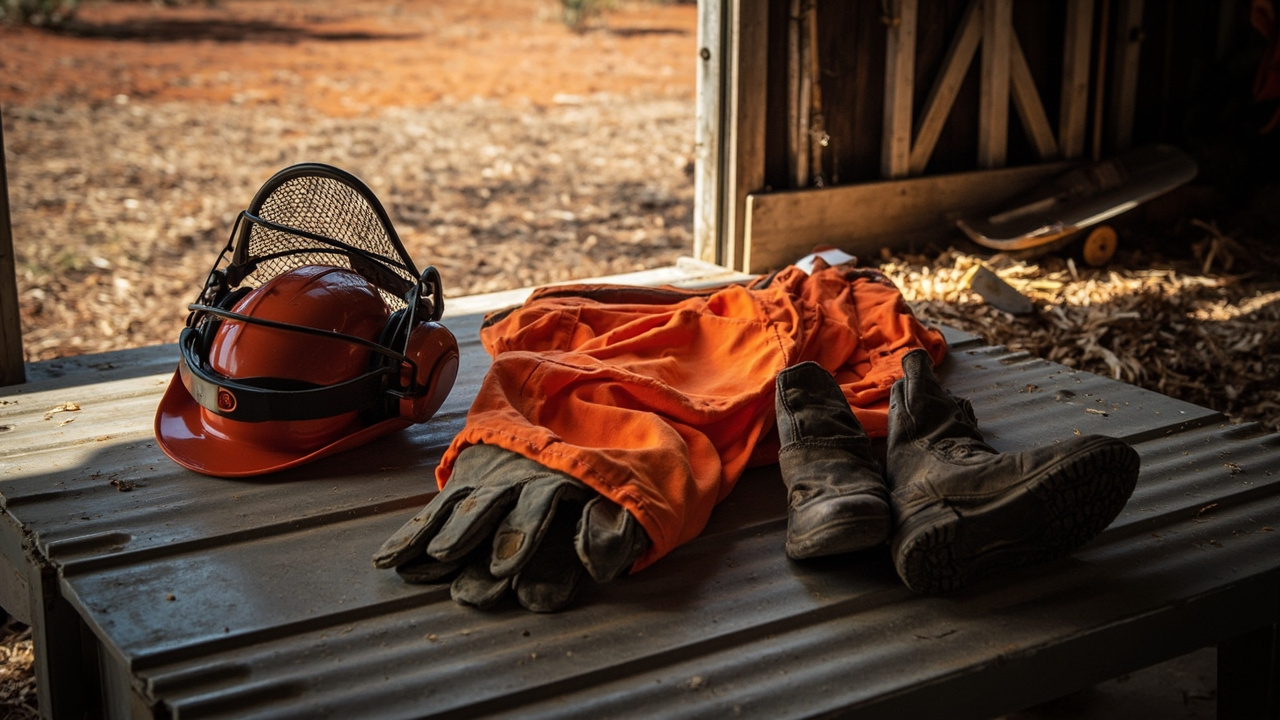
Chainsaw safety sits above convenience. Australian Standards AS/NZS 6301 specifies requirements for chainsaw protective trousers, and compliance is strongly recommended. The kit I keep by the saw includes:
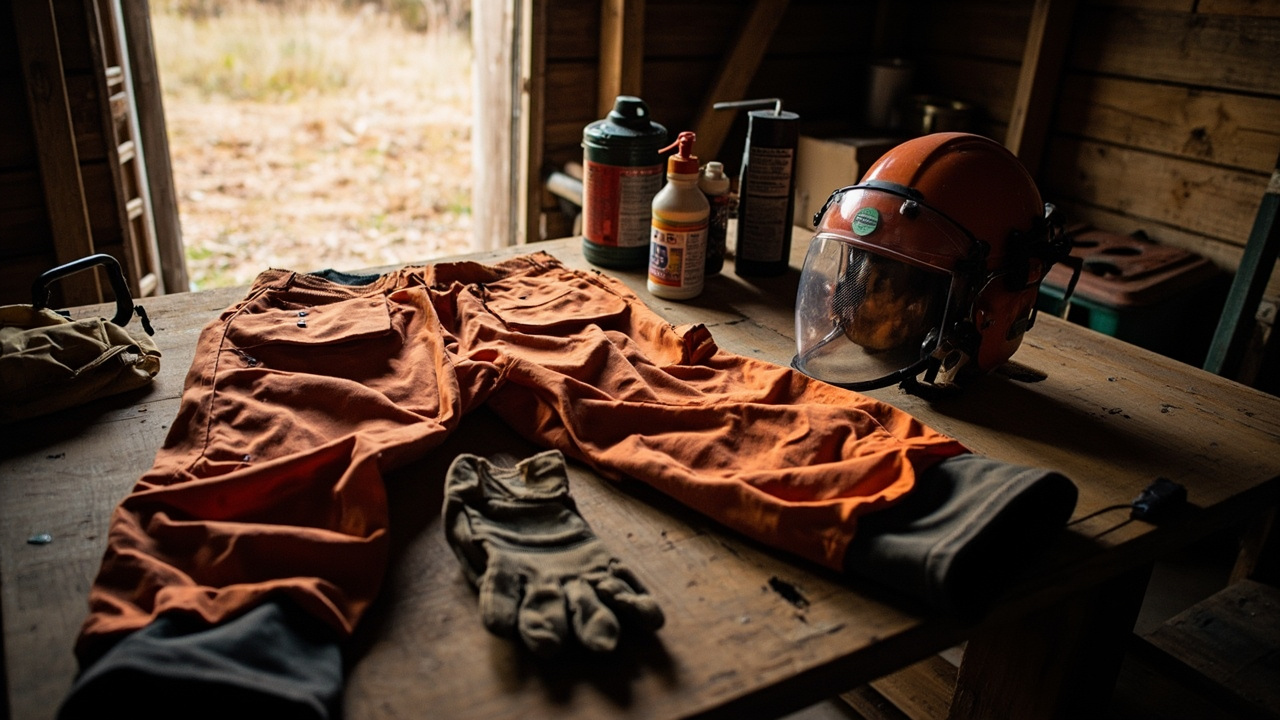
- AS/NZS 6301 compliant chainsaw chaps or protective trousers with aramid fibre lining
- A safety helmet with hearing protection and face shield or safety glasses
- Steel-capped, cut-resistant boots — forestry boots with chain-stop brake are ideal
- Chainsaw gloves with reinforced left-hand protection
- First aid kit mounted in the loader (kickback injuries are time-critical)
I learned this the blunt way when my old Stihl MS250 bound and kicked back from a stump cut near the paddock. The bill was forty-two dollars at Bunnings for the correct chainsaw trousers that met the standard, paid for in the same week I watched a mate try to cut on the compression side of a leaning ironbark with no helmet. He still has the scar.
Australian safety standards
Chainsaw safety in Australia is governed by Safe Work Australia guidelines and the relevant state regulations. If you're running a saw as part of a business, extra workplace safety requirements apply. Key standards to know:
- AS 2726.1-2004: Chainsaw safety — handheld petrol saws (safety requirements and testing)
- AS/NZS 6301: Chainsaw protective clothing — leg protection
- State-specific regulations through Safe Work Australia frameworks
Before I swing a saw on my patch, I check the local shire rules. The council mandates firebreaks to specific standards, and I won't risk the fine or the fire risk by ignoring them.
First cuts: technique that keeps you upright
Read the manual before you pull the starter cord. I learned that on my old Stihl when a loose chain flew off the bar and nicked my shin at the Bunnings in town. Every saw is different — the tensioning system, oil reservoir and chain brake vary wildly between models. Don't assume they work the same.
I still follow the council regulation requiring a chain brake for all residential firewood cutting in the shire, and I never run a saw without checking tension first. A loose chain is the most common cause of accidents. That cost me a day off work and a clinic visit last winter.
Core technique for Australian conditions
- Buck from the top: When cutting a fallen log on the ground, cut from the top down. This stops the saw bar becoming pinched in the kerf.
- Read the tree's lean: Standing trees carry natural tension and compression zones. Cutting from the compression side (typically the top side for leaning trees) reduces the risk of barber-chair splits — the failure mode that turns a tree into a wedge aimed at your knees.
- Plan your retreat: Before every cut, identify two clear escape routes away from the likely fall line.
- Three-second rule: After a tree begins to fall, wait at least three seconds before approaching. Trees can split, roll, or settle in the seconds after they hit the ground.
Maintenance that pays back in lifespan
A consistent routine extends chainsaw life and keeps the saw cutting safe. Tie it to your property calendar so it doesn't slip.
- Every use: Check chain tension, top up bar-and-chain oil, clean the air filter, and inspect the chain for damaged or dull teeth.
- Every 5–10 hours of use: Sharpen the chain using a round file and depth gauge guide matching your chain's pitch. A dull chain overheats the bar and dramatically increases kickback risk.
- Every 20–30 hours: Replace the air filter, check the fuel filter, inspect the spark plug, and clean the clutch and sprocket area.
- Annually or every 50+ hours: Full service including bar replacement if grooved, chain replacement if stretched beyond adjustment range, fuel line inspection, and carburettor adjustment.
Australian eucalypts are hard on chains because of silica and tannin content. I cut Ironbark at the council site last week and the chain wore out in half the time the manufacturer's specs suggested. Plan for it.
What it all costs on a real off-grid block
Quality chainsaws for off-grid use range from approximately AUD $300 for a capable homeowner saw to over $2,000 for professional-grade models. The price points I see most often:
- Entry level (~$300–$500): Makita DUC353 36V twin-battery electric, Husqvarna T535iXP battery saw. Suitable for light seasonal use.
- Mid-range (~$600–$1,200): Stihl MS 261, Husqvarna 440e. The sweet spot for off-grid properties with moderate firewood and clearing needs.
- Professional (~$1,200–$2,000+): Stihl MS 462, Husqvarna 572 XP. Built for daily use, large properties, and serious firewood production.
Ongoing costs bite harder than the headline price. A pro sharpen runs $15–$30 each, or you shell out $40–$80 for a quality file-and-gauge kit. Chain oil is $15–$25 per litre, burning about 1 litre every 2–3 hours of cutting. Plan on $150–$300 for a full professional service. Tally it up and you need $200–$400 annually for consumables and servicing on a moderate-use property.
Kit the working shed actually uses
Chainsaw equipment available through Amazon.com.au and international Amazon marketplaces covers the main categories:
- Chainsaws: Husqvarna 440e II (reliable mid-range petrol), EGO Power+ CS1800L (60V cordless for smaller properties), Stihl MS 261 (professional-grade petrol)
- Chains: Oregon 91VG024D AdvanceCut Chain (16-inch, low-vibration), Husqvarna H25 20-Inch Chain (for dense Australian timbers)
- Safety gear: Husqvarna Technical Forest Apron Chaps (AS/NZS 6301 compliant), 3M SecureFit Safety Helmet with face shield, Blundstone 844 safety boots (steel-capped, oil-resistant)
- Maintenance: Oregon 70502 Complete File Kit, Stihl Bar and Chain Oil 1L, Husqvarna Fuel Mix 2-Stroke Oil
When to call someone who does this for a living
A chainsaw is a serious investment in your property's self-sufficiency. Choose a saw that matches your property size and typical workload — most off-grid owners will be well-served by a quality 40–50cc petrol saw with a 16–18 inch bar. Invest equally in safety gear and make maintenance a non-negotiable part of your routine. A well-maintained chainsaw operated with proper technique will serve your property reliably for a decade or more, while a neglected or inappropriate saw will spend more time in the workshop than the bush.
Get the right tool, respect its power, and it will repay the investment many times over. Working with electrical systems, structural modifications, or gas installations carries inherent risks. If you are not confident in your abilities, always engage a licensed professional.
Worth a watch: Chainsaw Maintenance & Timber Processing — Keeping Tools Sharp on the Homestead · Highlands Homestead Australia
Frequently asked questions
What jobs do I actually need a chainsaw for on a bush block?
The main ones are clearing firebreaks, processing firewood, and managing trees around the property. If you're off-grid, you'll likely be doing all of these at different times of year. Firebreak work especially matters in bushfire country like where I am outside Gympie.
How often should I service my chainsaw?
Give it a quick check before each use — chain tension, bar oil, and a look over for any damage. A proper service every few months is a good idea, more often if you're working it hard. Out here, you can't afford for it to fail when you need it most.
When should I call a professional instead of doing it myself?
If a tree is close to buildings, fences, or power lines, or if it's leaning in a way that could go wrong, get someone qualified in. I do most of my own chainsaw work but I don't take chances with anything that could come down the wrong way or put people at risk.
Do I need more than one chainsaw for a property like this?
It depends on what you're doing, but most off-grid owners end up with more than one. A small saw for trimming and firewood is handy, and a bigger one for felling and firebreaks saves a lot of time. Trying to do everything with a single saw usually means wearing it out faster or having the wrong tool for the job.
Disclosure: some links in this article are affiliate links. If you buy through them we may earn a small commission at no extra cost to you.
When to Call a Professional
While many off-grid projects are achievable as DIY, certain situations require licensed professionals:
- Electrical work beyond basic 12V DC additions — requires a licensed electrician
- Structural modifications to buildings or load-bearing elements
- Gas line installation or modification
- Solar array installations above safe voltage thresholds
- Any work that affects the structural integrity of your property
Always check local regulations and obtain necessary permits before commencing work.