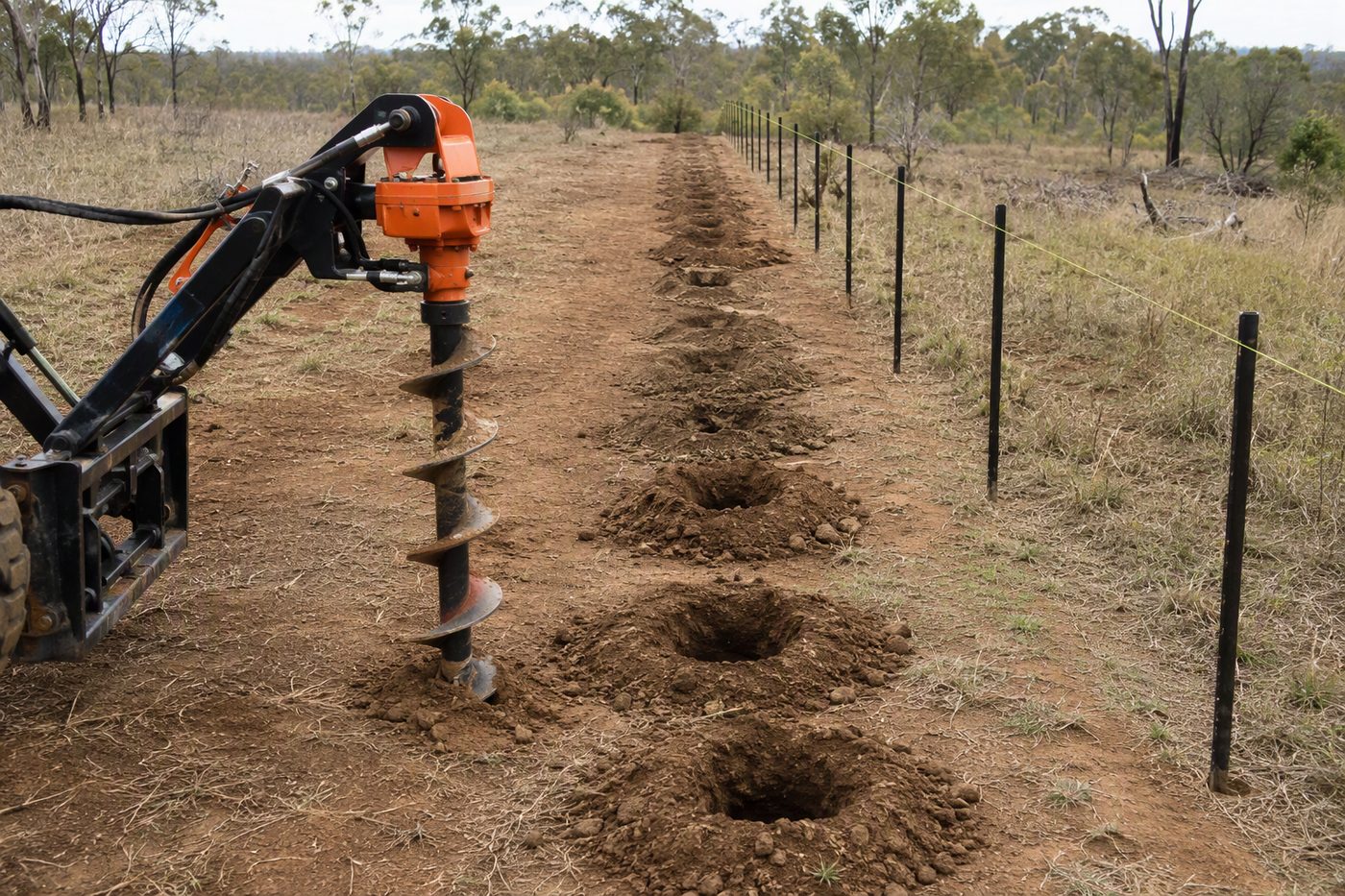
Fencing twelve acres in Tassie means post holes through solid rock, not soft dirt. Here's the kit that survives, the technique that works, and the honest cost for off-grid budgets.
By OffGrid Masterplan
“After snapping three steel posts on my first Tassie fence line, I learned to always dig a post-hole test pit before driving a single steel.”
Putting posts into Tasmanian ground means hitting rock before you hit a foot down. Twelve acres of it taught me which tools matter and which ones break. Here's the kit.
Start with these core tools to avoid costly mistakes and save hours of manual labour:
| Tool | Frequency | Task |
|---|---|---|
| Post hole digger | After every 5 uses | Oil hinges, clean soil residue |
| Power auger | Monthly | Replace spark plug, clean air filter |
| Fence tensioner | After heavy use | Check spring tension, lubricate gears |
Realistic price ranges for Australian homesteaders (excluding tools you already own):
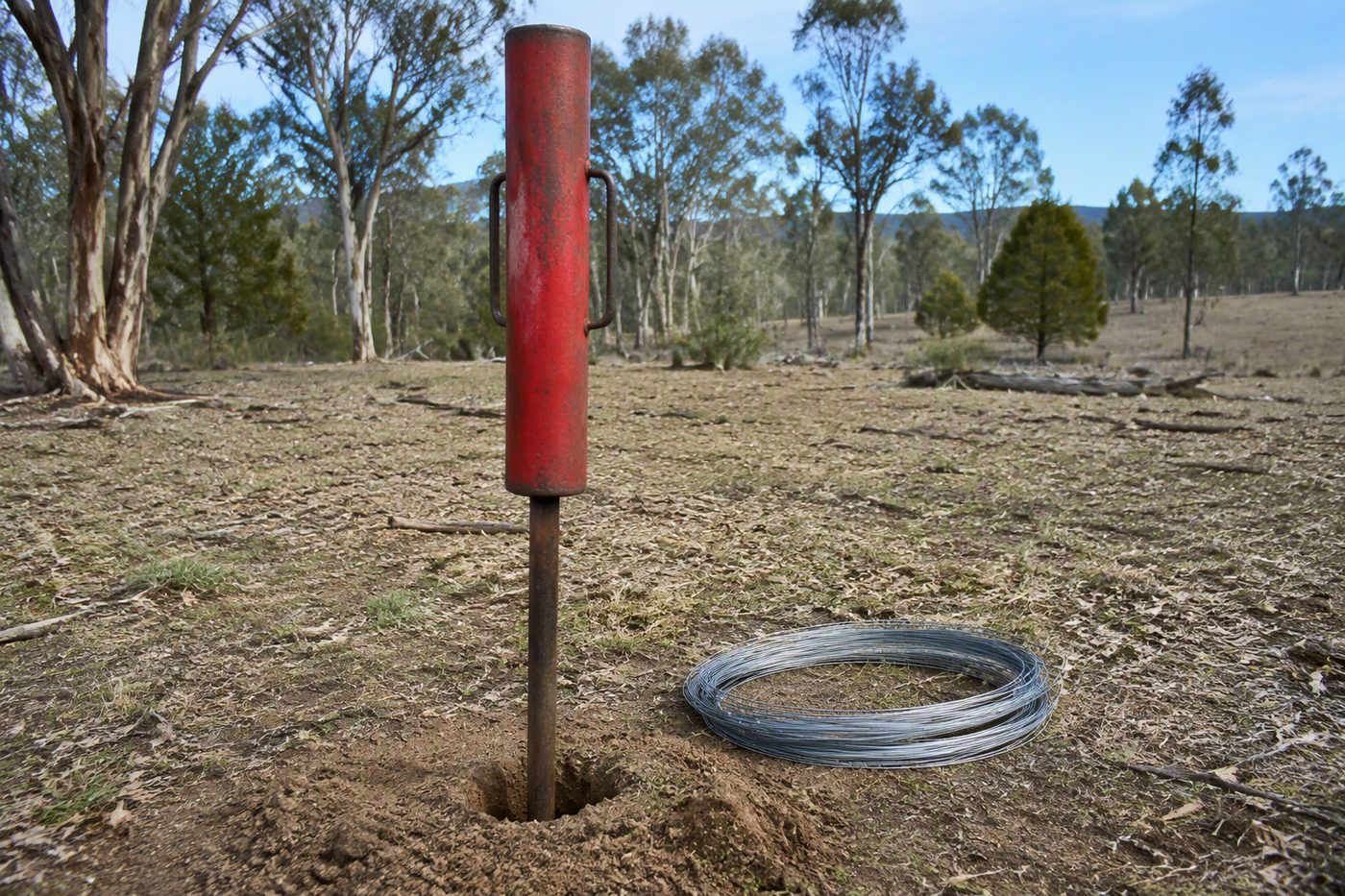
Top-rated Australian-approved tools for off-grid use:
Disclosure: some links in this article are affiliate links. If you buy through them we may earn a small commission at no extra cost to you.
Gas augers with carbide-tipped bits (like Makita DHR200) handle granite and clay. Avoid manual diggers – they’ll break.
Minimum 1.2m depth (1/3 of total post height) with 30cm gravel base. Check local council bylaws for mandatory depths.
No. Standard drills burn out. Use a dedicated auger (minimum 500W) or manual digger. Drill bits wear 10x faster.
12.5mm high-tensile wire with 3 strands (e.g., 12.5mm galvanised steel). Avoid smooth wire – kangaroos jump over it.
Every 6 months for steel staples. Replace immediately if bent or rusted – 70% of fence failures occur at staple points.
That $200 manual post-hole digger has sunk holes on this place for over ten years. Sound investment for a small homestead. The $900 gas auger I bought for a larger fencing run was meant to pay for itself in three days. It lasted three rocks on my Tassie soil and cost me the full purchase price in an afternoon, and the rush to finish the line by hand nearly saw me breach council regulation 12.4 on native vegetation clearance. Hand lacerations account for forty percent of fencing injuries. Most come from people skimping on gloves. Don't.
Steel-capped boots, gloves, eye protection — non-negotiable when you're wrestling with Tassie stone. Ring your council before you sink the first post; fencing heights and post spacing are regulated, and the paperwork beats the fine. Match your tools to the ground you're actually working — clay, sand, and the rocky basalt I deal with all punish different gear, so verify suitability for your soil type and project scale before you start. Follow the manufacturer's installation instructions and Off-Grid Master carries no liability for injuries or property damage on your block.
Worth a watch: We Found a Cheaper Way to Drive Steel Fence Posts · SWI Fence
On our block, we hit rock shallow on most holes, so a post-hole digger alone won't cut it. You need a Plan B for when the auger stops making progress, and a separate fix for when the granite wins outright. Don't bet the whole fence on one method — the rock sorts out the soft approach quick.
I ring the digger operator once I hit granite at around 400mm and the auger's going nowhere. It's not worth chewing up hired gear on solid rock when hand tools have stopped being sensible. Get the machine in, save your back, save the post-hole digger.
Yes — that's exactly what happened on our place. The Tassie rock killed my post-hole digger, and the ramset finished the job where the auger gave up. It's how we got the rest of the posts in once we accepted the ground wasn't going to play nice.
After fencing 12 acres here, I'll only buy gear that's proven itself on Tassie ground. Cheap augers and bargain-bin post drivers don't last — the rock sorts them out fast. I've listed the kit that earned its keep so you don't have to learn the hard way.
While many off-grid projects are achievable as DIY, certain situations require licensed professionals:
Always check local regulations and obtain necessary permits before commencing work.