By Dave Miller · off-grid sparky · 22 years wiring solar, batteries and sheds in central QLD
“After burning a $400 inverter in 45-degree heat because I ignored DC voltage drop, I now insist on 10mm cable for every metre of run.”
By Dave Miller · off-grid sparky · 22 years wiring solar, batteries and sheds in central QLD
“After burning a $400 inverter in 45-degree heat because I ignored DC voltage drop, I now insist on 10mm cable for every metre of run.”
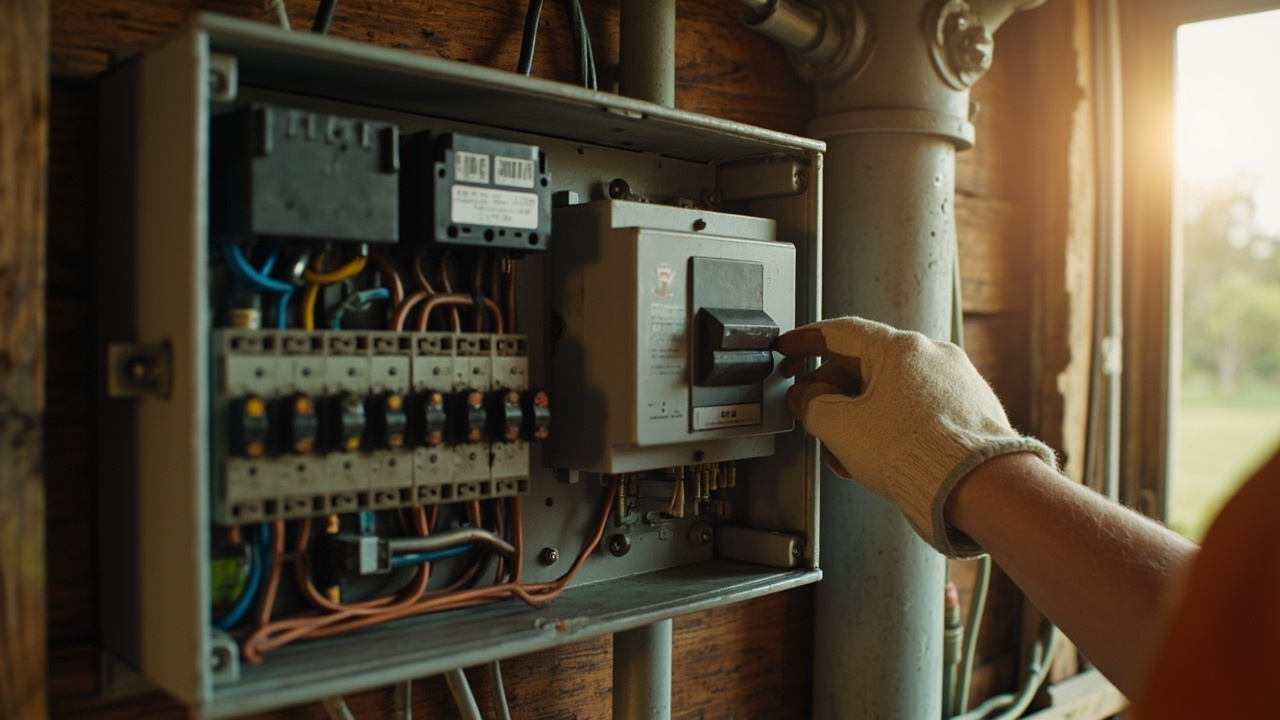
A DC distribution panel is the box between your battery bank and everything that runs on DC. Solar charge controllers, battery-to-battery chargers, 12V and 24V loads, and the DC side of any DC-coupled inverter all land here. Get this panel wrong and the rest of your system is built on sand.
This guide covers what it is, what goes inside it, how to size it for an Australian off-grid setup running 230V/50Hz AC output, and where the legal lines are drawn.
Your battery bank delivers one or two voltages (commonly 12V, 24V, or 48V DC). Almost nothing in a modern off-grid house runs on those voltages directly. The DC distribution panel is the structured junction where:
Think of it as the DC equivalent of the switchboard on your AC side, only with stricter rules about voltage drop, fusing, and the DC rating of every protective device.
The table below covers the main sizing decisions. Numbers are pulled from the verified facts or stated as general requirements where the facts sheet doesn't pin a specific figure.
| Item | Spec / Requirement | Notes |
|---|---|---|
| System voltage | Match battery bank nominal voltage (12V, 24V, or 48V DC) | 48V is the modern off-grid default for whole-house systems |
| Conductor sizing | Sized for current AND cable length to keep voltage drop within acceptable limits (typically ≤3% for DC) | Use AS/NZS DC voltage-drop tables, not AC tables |
| Overcurrent devices | DC-rated at or above system voltage | AC breakers must not be used in DC circuits |
| Branch protection | Each branch circuit on its own overcurrent device | No daisy-chaining fuses between loads |
| Bus bar lugs | Correct lug type, correctly crimped, torqued to spec | Loose connections cause resistive heating and can ignite surrounding materials |
| Main battery fuse | Class T or equivalent high-interrupt DC fuse, sized for the sum of branch continuous loads (per the 125% rule), and selected to also clear the inverter's peak/inrush current | Mounted within ~150-200mm of the battery positive terminal |
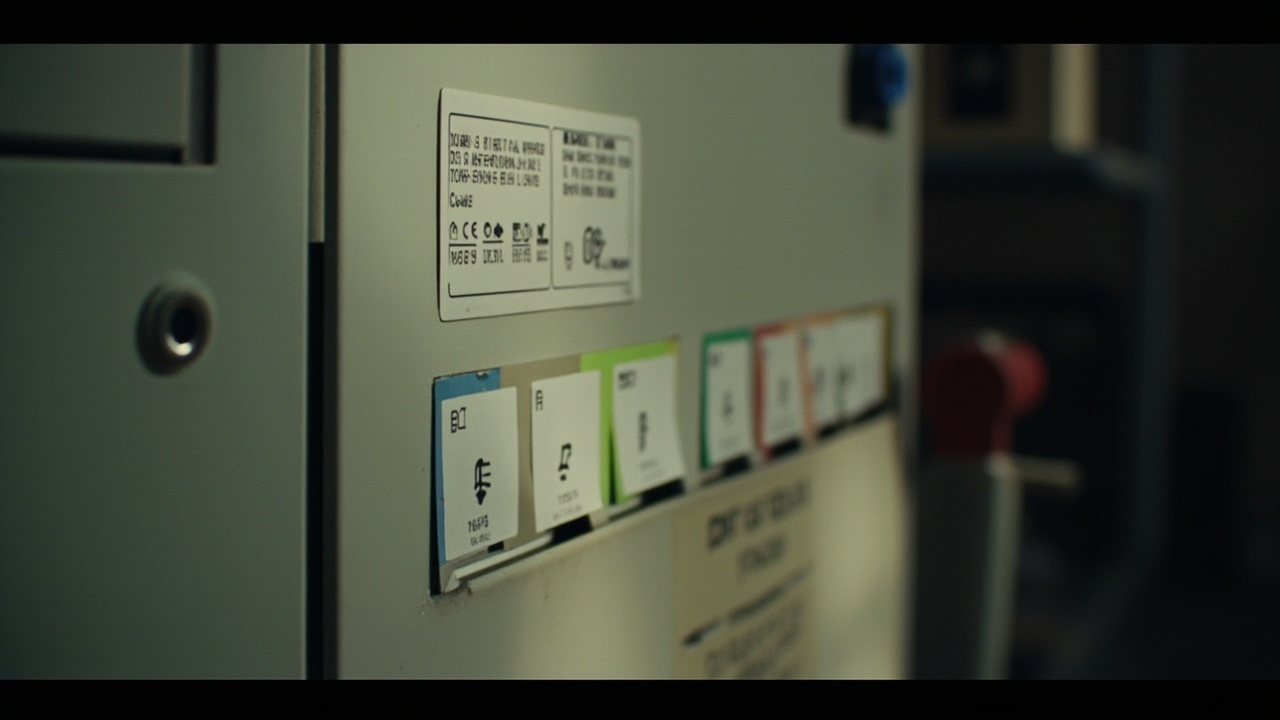
| Labeling | Each circuit clearly and durably labelled | Permanent marker on heatshrink or engraved labels |
| Pre-energisation test | Multimeter check for continuity, polarity, and insulation resistance | Before the main fuse is inserted |
Voltage drop is the silent killer in DC systems. A 48V system at 10 m of cable run with undersized cable will lose more percentage of useful energy than the same cable in a 230V AC circuit. Always calculate drop before buying cable.
A typical off-grid DC distribution panel contains:
1. Main battery isolator / disconnect — a DC-rated switch or breaker that kills everything downstream. Rotary DC isolators rated to the full bank voltage are standard.
2. Main fuse or breaker — sized for the inverter's max DC draw plus headroom.
3. Shunt — a calibrated resistor in the negative return path. The system monitor (Victron, Morningstar, etc.) reads voltage across it to calculate amps.
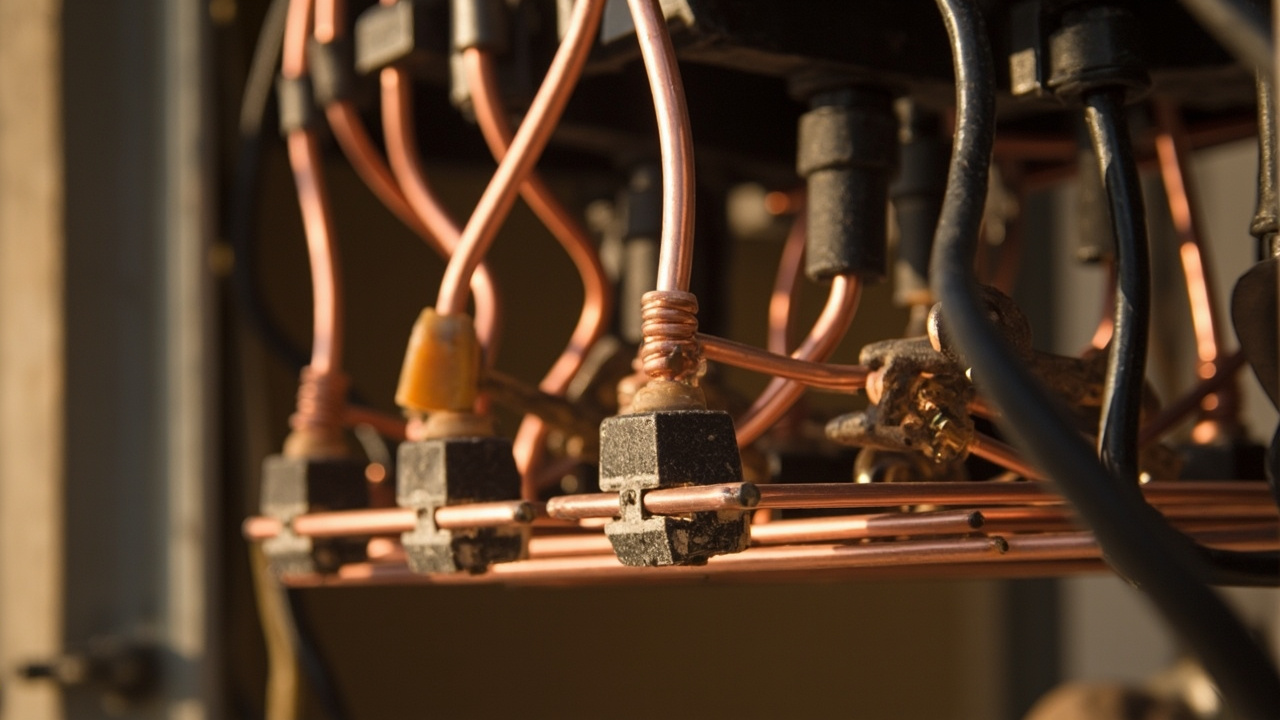
4. Bus bars — positive and negative, sized for the main battery current.
5. Branch fuses or DC breakers — one per circuit.
6. Negative bus / common negative bar — where all branch negatives terminate.
7. Cable entry glands — to keep the enclosure sealed and strain-relieve the cables.
Step through this in order:
1. List every DC load. Lights, fridge controls, water pump, 12V outlets, DC-DC chargers, monitoring gear.
2. Add the inverter's DC input current. A 5kVA inverter at 48V can pull over 100A DC under full load.
3. Sum continuous current. That gives you the main fuse size.
4. Size each branch to the downstream device's max draw plus 25% headroom, then check voltage drop on the cable length.
5. Pick the enclosure. Allow at least 30% spare ways for future loads. Off-grid systems always grow.
In the four residential ESS architecture types (DC-coupled, AC-coupled, hybrid, and off-grid), an off-grid system is the most DC-heavy. The battery and charge controllers sit on the DC bus, and either a DC-coupled inverter or a separate AC inverter-charger converts to 230V AC for the rest of the house.
The DC distribution panel is the hub that ties the battery management system (BMS) and energy management system (EMS) — the invisible backbone of any modern off-grid ESS — to every DC device. Get the panel right and the BMS can see and protect everything; get it wrong and you're flying blind.
For the AC side of the same off-grid system, the verified reference for off-grid AC distribution requires a subpanel mounted near the main inverter (a 230V, 60A or 100A model is typical), with all AC loads fed from that subpanel rather than directly from the inverter. AC circuits in Australia must meet AS/NZS 3000, and Australian installations run 230V/50Hz only; mixing 230V and 120V on the same panel is a US NEC concern and not relevant here. The DC and AC distribution panels are separate boxes serving different parts of the system, but both follow the same rule: structured subpanel with proper protection, not direct wiring from the source.
DC is unforgiving. A 48V battery bank can deliver hundreds of amps through a short circuit. Unlike AC, DC arcs don't self-extinguish at the zero-crossing point — once an arc starts, it sustains until something physically opens the gap.
In Australia, AS/NZS 3000 and state electrical safety legislation restrict who can legally wire fixed electrical installations. In Queensland specifically, electrical work on a fixed wiring system must be performed by a licensed electrical contractor; the owner-builder exemption is narrow and conditional. Battery wiring at 48V nominal sits at extra-low voltage (ELV) for DC, but work tying it into fixed wiring — including the main DC feed, the inverter AC side, and any equipotential bonding — is not legally owner-installable in most cases. Contact the Queensland Electrical Safety Office before assuming any DIY work is permitted.
Call a licensed sparkie if:
A rough budget for the AC-side hardware (excluding the inverter) — subpanel ~$250, transfer switch ~$500, grounding kit ~$120, electrician ~$400–$600 — lands around $1,270–$1,470. The DC distribution panel is cheaper to build but the battery-side cabling and fusing still warrant professional sign-off if you want it covered by insurance.
On a floating DC system, the negative conductor is NOT chassis or AC ground. Bond the DC negative to earth only if your system design intentionally grounds the negative, per the BMS/inverter manufacturer's instructions. An accidental bond on a floating bank creates a parallel fault path that the shunt, BMS, and overcurrent devices are not configured to clear.
Can I build a DC distribution panel myself?
In Queensland, owner-built ELV DC work around battery banks has narrow legal allowances, but anything tied to fixed wiring, the inverter AC side, or the grounding system requires a licensed electrician. Check your state's rules before touching a tool.
12V, 24V, or 48V DC system?
48V is the modern off-grid default for whole-house systems because it halves or quarters the current (and therefore the cable size and voltage drop) compared to 24V or 12V at the same power level. 12V survives for small lighting circuits and legacy loads.
What fuse type for the main battery?
Class T or equivalent DC-rated high-interrupt fuse, sized at roughly 125% of the sum of branch continuous DC loads, and verified to clear the inverter's inrush/peak current. Mount within 150-200mm of the battery positive terminal.
How much voltage drop is acceptable?
Typically ≤3% on DC circuits. Calculate this against your actual cable length, not a guess.
Do I need a shunt?
Yes if you want accurate state-of-charge and current monitoring. The shunt goes in the negative return path between battery and the panel's negative bus, with all loads and chargers on the load side of the shunt. On a floating system, do not bond the negative to chassis or AC earth at the shunt.
Why no AC breakers in the DC box?
DC arcs don't self-extinguish like AC arcs do. An AC breaker can weld its contacts closed when it tries to interrupt a DC fault, leaving the arc to do whatever it wants. DC-rated breakers are designed to stretch and cool the arc across a longer gap.
Worth a watch: Sizing Fuses and Breakers 101 - Fuses, Breakers, & Overcurrent Protection | Ep: 5/6 · EXPLORIST life Mobile Marine & Off-Grid Electrical