By Jenny Mills · rural nurse & homesteader · health, safety, law and the paperwork of going bush
“My first winter off-grid taught me that a 1200W Enphase inverter is useless if you forget to calculate your freezer's 4kW startup surge.”
By Jenny Mills · rural nurse & homesteader · health, safety, law and the paperwork of going bush
“My first winter off-grid taught me that a 1200W Enphase inverter is useless if you forget to calculate your freezer's 4kW startup surge.”
No sugarcoating. Off-grid in Australia? You need a system that doesn't crap out when the sun's gone. Enphase isn't the cheapest, but it's the most reliable. Here's why.
Enphase is well-known for grid-tied solar with microinverters bolted behind every panel. Using it for off-grid in Australia is a different conversation, and it comes with real trade-offs. This guide covers what Enphase actually brings to an off-grid build, what's missing, and what you need to wire up yourself to make it work without the grid.
I'm writing from a 230V/50Hz, AU perspective, in metric, in dollars. Where I can't verify a spec from my sources, I'll say so or keep it general — no made-up numbers.
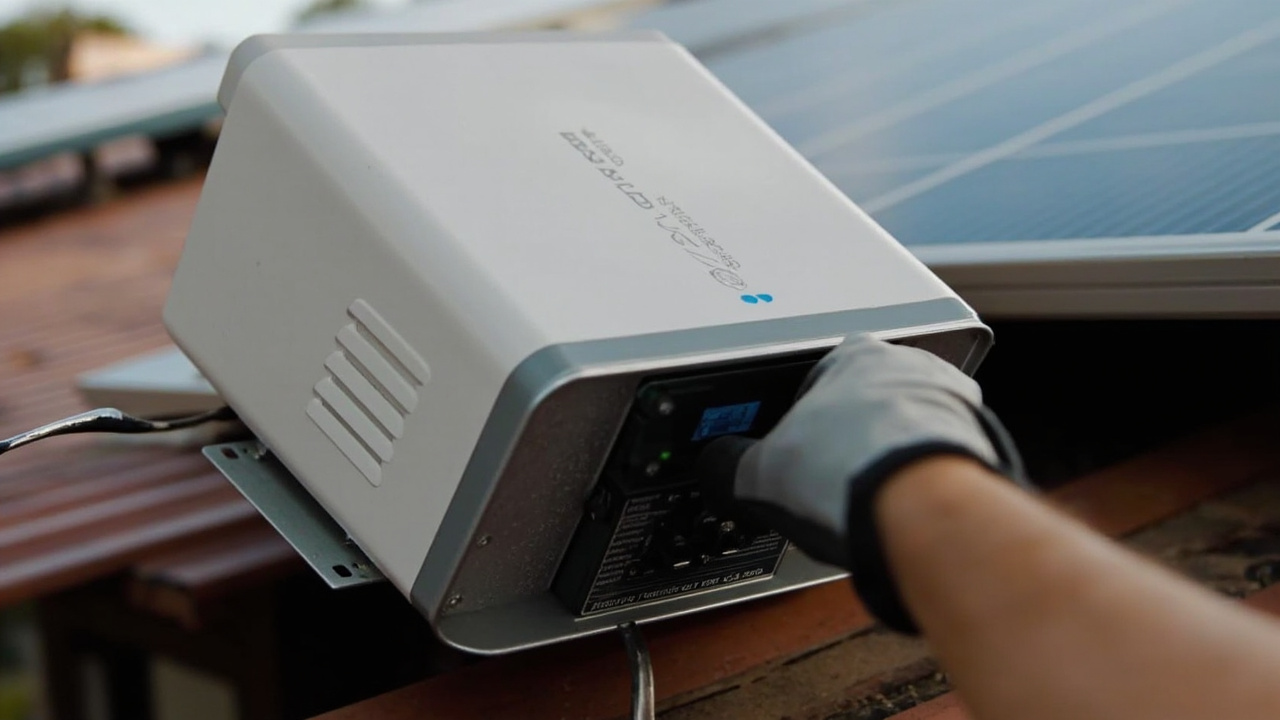
Enphase's core product is the microinverter — a small box mounted to each solar panel that converts DC to 230V AC right at the panel. The communication brain is the Envoy, which talks to every microinverter and gives you panel-level monitoring.
For grid-tied homes, that's a tidy package. For off-grid, you need to think about what Enphase doesn't include:
The upshot: Enphase is panel-level electronics with monitoring. The rest of the off-grid system — batteries, charge control, generator integration, switchboard — is on you to design and source.
Panel-level optimisation isn't marketing fluff. It's useful when:
The trade-off is more failure points (one box per panel), and they're harder to service when mounted 4 metres up on a Colorbond roof in January heat.
Two numbers drive the entire design:
1. Daily energy in kWh — what you use across 24 hours.
2. Peak load in watts — the biggest instantaneous draw (kettle, water pump, air compressor starting, etc.).
A rough sizing method I use:
| Step | What to do | Notes |
|---|---|---|
| 1. List loads | Walk through the house room by room; note watts and estimated hours/day | Include phantom loads (modems, fridges cycling) |
| 2. Sum daily Wh | Multiply watts × hours, add everything up | Round up 10–20% for unknowns |
| 3. Convert to kWh | Divide by 1000 | A typical frugal Aussie homestead: 8–15 kWh/day |
| 4. Solar array size | Daily kWh ÷ (peak sun hours × 0.70–0.75 system derate) | Central Queensland gets ~5.5 peak sun hours/day; southern states less. The 0.70–0.75 factor accounts for panel temperature losses on Australian roofs, MPPT tracking losses, cabling voltage drop, soiling and minor inverter clipping — a flat 0.8 over-sizes yields an undersized array. |
| 5. Battery bank | Cover at least one day of autonomy, ideally two | Lithium is standard now for cycle life |
| 6. Inverter/peak headroom | Confirm the inverter/charger surge (peak) rating covers the worst single motor-start inrush. Single-phase motors and compressors commonly draw 3–7× FLA at start, so a flat 1.25× running-load margin is unsafe. Check the largest motor's nameplate or measure inrush before sizing. | A 25% margin is not enough for inductive loads. |
If the maths gets uncomfortable (system costs blowing past budget), trim the loads list first. A smaller fridge, LED lighting, and a gas cooktop change the equation more than swapping inverter brands.
Batteries are non-negotiable for off-grid. The sun goes down, clouds roll in, and the generator can't always be running. You need stored energy to bridge gaps.
For an Enphase-based system, your battery options generally fall into:
Note that Pylontech US5000B batteries have been used in Australian off-grid work for several years and have a track record for performance and integration in some applications — but they're not a universal match for every installation type. Verify with your installer and the manufacturer's current documentation.
A note on lithium fire risk worth keeping separate in your head: LFP cells (used in Enphase IQ Battery, Pylontech US5000B, BYD Premium HVS/HVL) are far less prone to thermal runaway than NMC packs (typical of older EV-derived banks such as salvaged Nissan Leaf modules). LFP still needs correct cable sizing, DC protection, BMS-configured charge limits and a certified installer to keep warranty valid, but conflating LFP with NMC under a generic "lithium = fire risk" framing is misleading and the installation requirements differ markedly between the two chemistries.
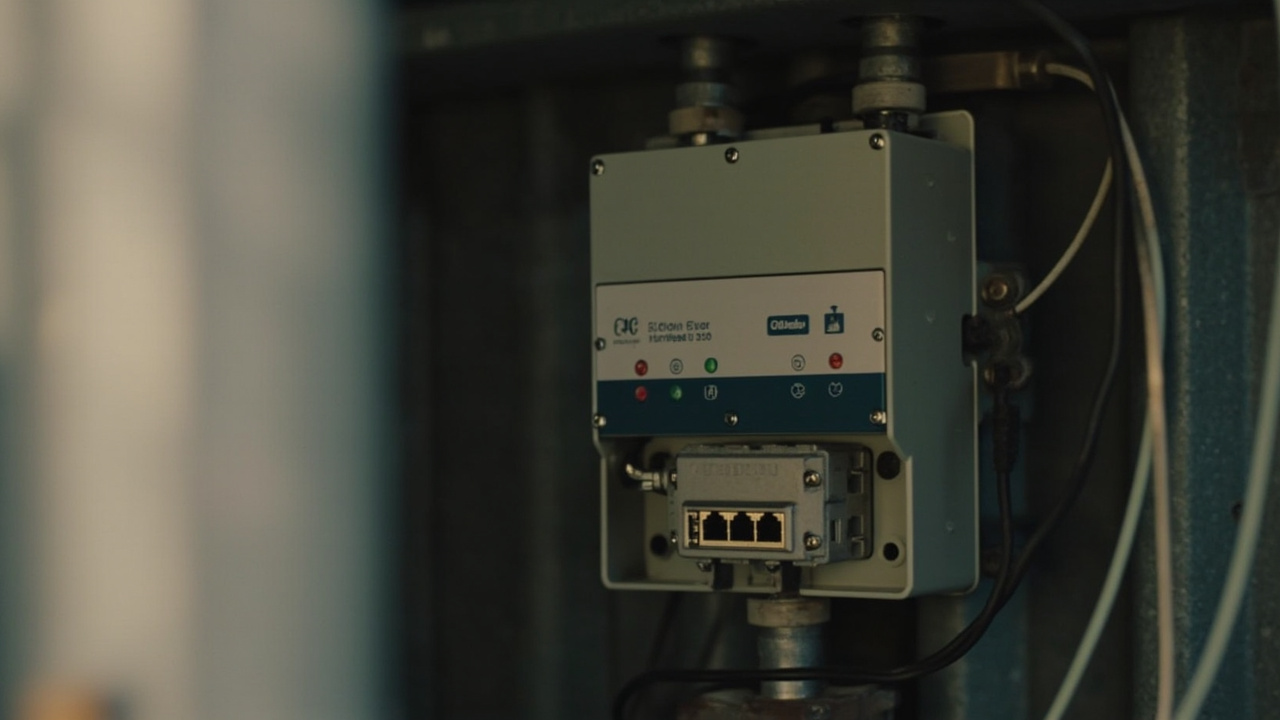
The Envoy is the required communication hub. It collects data from every microinverter and pushes it to Enphase's cloud platform. For off-grid, this raises practical questions:
These come up repeatedly in field reports and service calls:
1. Inverter forming the grid is missing or undersized. Microinverters are grid-following by design. Without a grid-forming source (a hybrid inverter, a generator with the right controller, or an Enphase configuration that explicitly supports islanding), the system has nothing to sync to and won't run. Note this is generation-specific: older IQ7-based systems are grid-following only and cannot form a grid on their own; current IQ8-based systems, when paired with certain IQ Battery configurations and AU-certified firmware, are marketed as capable of grid-forming / islanded operation. Verify the exact model and current firmware's off-grid certification before assuming the system will island — do not buy on legacy "won't run" assumptions if you intend to use the latest kit.
2. Battery sizing too small. Two days of autonomy is the realistic minimum; one day leaves no margin for a cloudy stretch or generator failure.
3. Single-string assumption. Treating the AC side like a DC string — forgetting that with AC coupling, the battery inverter and the solar inverters can back-feed each other if not coordinated.
4. Fusing and isolation skipped. Standards still apply: AS/NZS 5033 governs the DC side of each microinverter input and the PV array (overcurrent protection, isolators at the array, etc.), while AS/NZS 4777.1 and AS/NZS 3000 (Wiring Rules) cover the AC side — AC isolators, RCD/RCBO protection, and the main switchboard. In a typical AC-coupled Enphase installation there's no DC string fuse in the traditional sense (panels feed panel-level microinverters that output AC), but each microinverter's DC input still falls under AS/NZS 5033 protection requirements, and the AC side is fully subject to 4777.1/3000. Off-grid doesn't relax the rules — it adds to them.
5. No generator backup. Even a small backup generator (3–5 kVA) saves a battery bank from deep discharge during extended bad weather.
This is the section that matters most.
Call a licensed sparkie (and ideally one with off-grid experience) when:
A licensed off-grid installer will also know which Enphase products are currently certified for off-grid use in Australia, which is a moving target as firmware and product lines evolve.
Can an Enphase system run fully off-grid in Australia?
It depends on the specific Enphase products and configuration. Some Enphase systems support islanding or backup operation (notably current IQ8-based systems with certain IQ Battery configurations and AU-certified firmware), but full off-grid capability isn't universal across the product line, and older IQ7-based systems remain grid-following only. Confirm the exact model and current firmware status with the manufacturer and your installer before committing.
Do microinverters really help with shading?
Yes. Panel-level MPPT means a shaded panel doesn't pull down the rest of the array the way a string inverter would. On a bush block with partial shade, this is a real, measurable advantage.
How many batteries do I need for off-grid?
Plan for at least one full day of autonomy, ideally two. Work backwards from your daily kWh figure and the battery's usable capacity (not the nameplate — usable is usually 80–90% of rated for lithium).
What about generators?
Plan for one, even if you rarely use it. A 3–5 kVA generator handles battery charging and critical loads during extended cloud cover. Get the changeover switch installed by a licensed electrician.
Is Enphase monitoring useful off-grid?
Yes. Panel-level monitoring catches faults early — a single underperforming panel is otherwise invisible until the whole system falls short.
Are Enphase systems more expensive than Victron or other off-grid brands?
Often yes, because you're paying for the microinverter on every panel. The trade-off is panel-level optimisation and granular monitoring. For clean, unshaded roofs, a string or hybrid inverter often wins on cost.
Enphase off-grid is possible, but it's not plug-and-play. The microinverters and Envoy are solid, well-supported kit. The off-grid integration — battery selection, grid-forming capability, switchboard design, generator backup — is where the work is.
Get the design right, use a licensed installer for anything beyond plug-in appliances, and size the system honestly against your actual loads rather than your aspirational ones.
Worth a watch: The Enphase vs Hoymiles Show Down - Technical Review · MC Electrical