
By Fiona Gallagher · permaculture designer · food, animals and preservation on 12 acres in Tassie
Australian fruit tree pruning by season, technique, tools and wound care—written by a Tasmanian grower for off-grid orchards.
By Fiona Gallagher · permaculture designer · food, animals and preservation on 12 acres in Tassie
Fiona Gallagher runs a permaculture design on 12 acres of cold-clay hillside in southern Tassie where winter pruning happens in gumboots between squalls. The orchard holds 47 pome and stone fruit trees spaced on 5-metre centres, a layout that lets light into grafts and keeps the ride-on mower out of the canopy. Her workshop tool kit starts with a Felco 2 secateur—about $70 from rural supply stores, bypass-blade, replaceable spring—and a Silky Gomtaro 300 mm folding saw that sets you back roughly $60 and cuts green applewood without binding.
A pocket stone from the kitchen drawer and a spray bottle of methylated spirits for sterilising between trees cost another $12 all up. Winter pruning here runs from late July through August, once the sap is fully down and the worst frosts are past; cutting earlier in a Tasmanian valley invites silver leaf into stone fruit because fungal spores ride the damp air at pruning wounds.
She paints all cuts thicker than a 20-cent piece with a 1:4 mix of water and lime sulphur—$18 for a litre at the local produce store, enough for two seasons—to seal against wood-rotting fungi when the westerlies dump a week of drizzle. Because wallabies will ringbark young trees inside a night, every trunk wears a 1.2-metre sleeve of Corflute or stock-fence mesh held with zip-ties, adding $3 per tree and ten minutes of swear-free installation.
After pruning, chipped prunings go straight onto the deep-litter chook run, where bare-rooted hens turn carbon into manure and keep coddling moth larvae from overwintering in the pile. That feedback loop between a clean orchard floor and the egg-laying flock is what makes pruning on this place not just a winter chore but a full-system reset.
“After losing three young apple trees to fire-pruned rot, I learned that late winter cuts in Tassie demand a sharp knife and a dry morning.”
Pruning isn't optional. It's how you get more fruit, stop pests, and avoid wasting your time. Do it wrong and you'll get less fruit or kill the tree. The table below covers the main types I work with on my 12 acres in Tasmania. Stick to these windows and the tree's own biology does half the work for you.
| Fruit Type | Best Pruning Time (Australian Seasons) | Key Tip |
|---|---|---|
| Apples & Pears | July-August (late winter) | Prune before buds swell. Cut dead wood, open up the centre. Don't prune in wet weather. |
| Citrus (Oranges, Lemons) | After harvest (Jan-Feb) | Light pruning only. Never cut into old wood. Remove suckers at base. |
| Peaches, Apricots | July-August (late winter) | Thin fruit clusters. Remove dead wood. Prune before flowering. |
| Raspberries & Blackberries | July-August (late winter) | After fruiting, cut old canes to ground level. Keep 3-4 new canes. |
| Mangoes | After harvest (Feb-Mar) | Prune to shape. Remove dead wood. Avoid heavy pruning in summer. |
Across cool-climate Australia, late July through August is the bulk of the work. That's once the sap is fully down and the worst frosts are past. Cutting earlier in a Tasmanian valley invites silver leaf into stone fruit because fungal spores ride the damp air at pruning wounds.
Use sharp, clean tools. Dull tools crush stems and spread disease. Sterilise with 10% bleach solution between trees. Bypass pruners with a curved blade slice through green wood without crushing the cambium, unlike anvil types that can turn a clean cut into a smashed mess.
I learned this the wet Tasmanian way, standing in my 12 acres with a $12 bypass pruner from a big green shed that twisted in my hand on a 15 mm apple lateral, bruising the cambium and leaving a wound that wept for a week. That winter, silverleaf fungus spores entered through the torn bark.
Key technique: Make clean cuts at 45 degrees, just above a bud. Never leave stubs – they rot and invite pests. For large branches (over 5cm), use the three-cut method: 1) Cut 30cm out, 2) Cut 10cm below, 3) Final cut at the branch collar.
A sharp blade glides; a dull one forces a ragged tear that scar tissue struggles to seal before a wet winter. I wipe the blade with methylated spirits between trees to check the spread of bacterial gummosis, then hit it with a flat diamond stone.
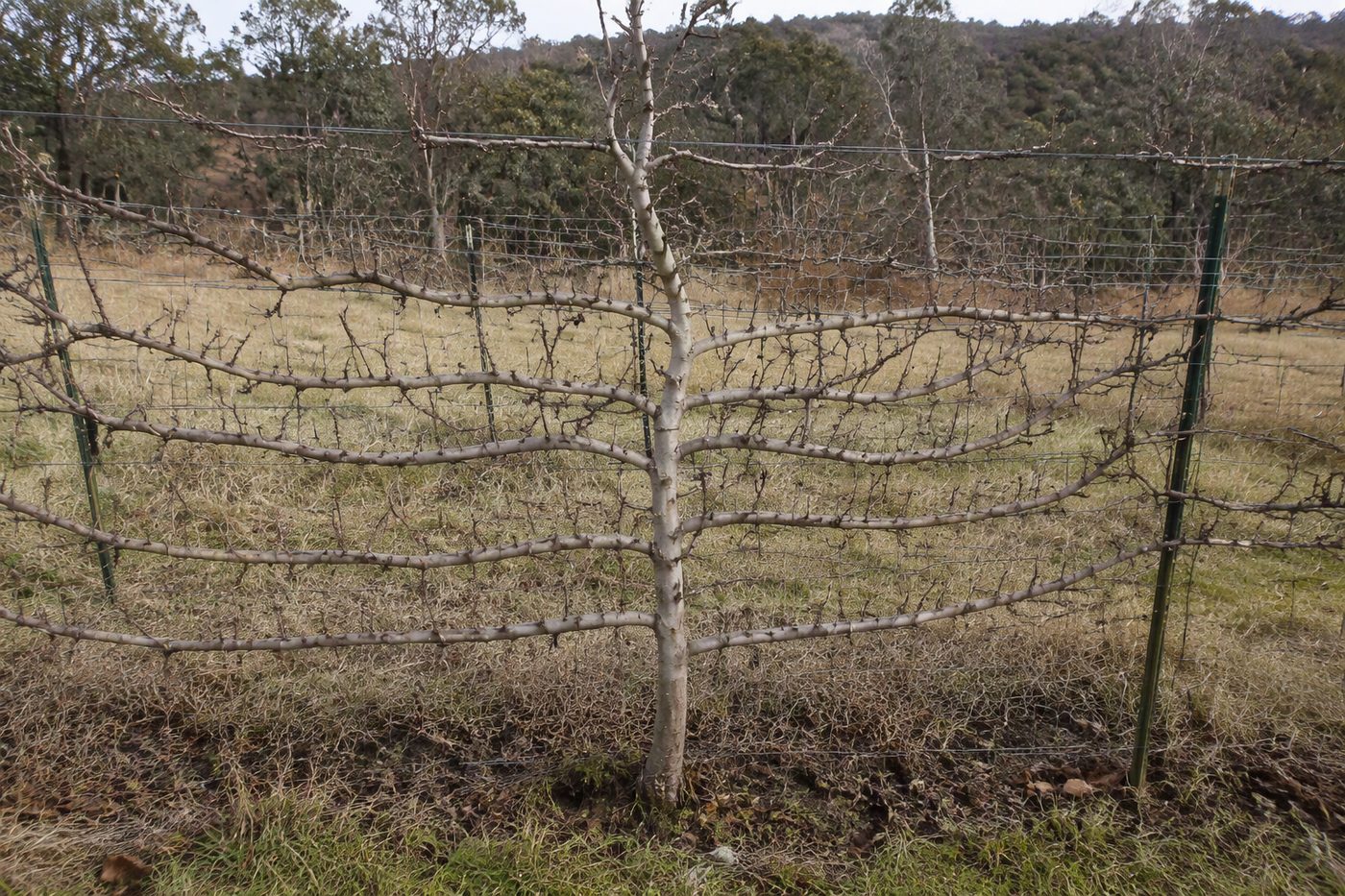
For cuts under 5cm: let it heal naturally. No need for dressings. A clean pruning wound on a healthy tree will callus over in a fortnight, and a sealed dressing can sometimes trap moisture against the sapwood and slow that natural closure.
Bunnings stocks "Pruners' Choice Tree Wound Dressing" at $12.95 AUD for a 150ml tube. It's Australian-made and labelled for citrus, stone fruit and mangoes. On my twelve acres in Tasmania I treat the stuff as cheap insurance against silver leaf, a fungal disease that walks straight into open pruning cuts on stone fruit during our wet winters. After I take a pruning saw to a plum or apricot branch thicker than a twenty-cent piece, I paint dressing over the sapwood straight away—the film denies spores a foothold for the fortnight it takes the tree to seal the wound with its own callus. A 150ml tube lasts me two seasons of orchard work if I don't waste it on cuts that would have healed on their own.
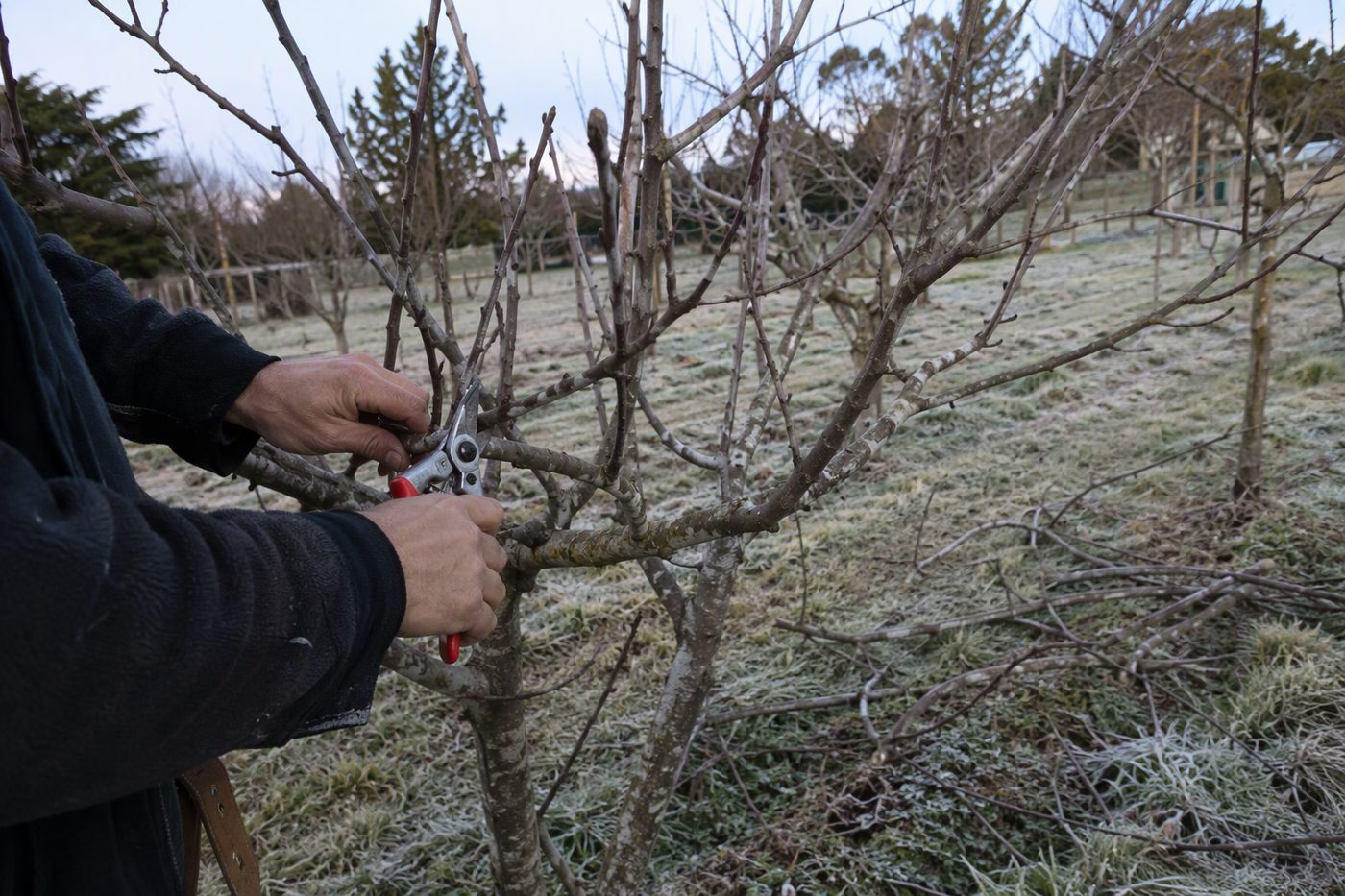
Don't waste money on cheap tools. They'll rust and break. Here's what I carry into the orchard every winter and what each tool earns its keep on.
The Bunnings Fiskars 12" Bypass Pruner at $34.95 AUD earns its keep on small branches up to about a thumb's thickness—roughly 15 mm across. That 12-inch overall length tucks into a back pocket during a Tasmanian orchard walk but still gives enough lever for fig, feijoa, and young stone fruit. The handles are glass-reinforced nylon, so they bounce when dropped on hard clay, though the spring clip will work loose after a season of hard use and needs a prod with a screwdriver. A replacement spring kit runs around $5. At this price, you can afford a second pair for the ute glovebox and still have change from a $50 note.
In my Tassie orchard the Fiskars pole pruner—$69.90 AUD from Amazon Australia—handles everything above shoulder height. The telescoping handle runs from 1.8 metres closed to roughly 3 metres extended, enough to reach the tops of my nine-metre 'Sturmer Pippin' without leaving the ground. Keeping both feet on the thick mulch means I don't turn a ten-minute prune into a broken collarbone; the neighbour who balanced a milk crate on a wheelbarrow shattered his wrist two winters ago doing exactly that. The bypass blade snips clean through limbs up to 32 millimetres, leaving a flat wound that sheds rain fast. In a damp Geeveston January that matters, because every torn stub is an invitation for silverleaf or brown rot to take hold. The anvil lopper on the same handle handles deadwood up to 38 millimetres, though I only use it for wood that's already lifeless — crushing live cambium is an open door for fungus. The aluminium shaft weighs under 2 kilograms, so I can work a full orchard row without my forearms seizing up. After each session I wipe sap off the cutting head with a rag dipped in raw linseed oil; a gummed-up blade pulls instead of shears, and a sticky saw tooth dulls twice as quickly. The pruner's cord-free design means I'm not untangling a rope from espalier wire while a wallaby watches with an expression of mild professional contempt.
For branches over 3 cm I reach for a Felco 2 Classic folding saw. The curved, 24-centimetre blade cuts on the pull stroke, which gives you better control when one hand is steadying a limb and the other is working around a ladder rung. The impulse-hardened teeth hold their edge through a full winter of shaping apples, feijoas and the mulberry that always escapes. I paid $129.00 AUD via Amazon Australia. That single purchase replaced a string of cheap saws that tore green bark and opened the door to silver leaf in the plums. A clean, closed wound heals faster and keeps rot out of the heartwood, and on 12 acres in Tasmania, where pruning cuts stay damp for weeks, that difference is the border between a productive tree and a declining one.
I learned the hard way not to prune in autumn on my 12-acre Tassie block. In May I tidied up three young apple trees, trying to get ahead of winter. The cuts bled sap and each tree pushed out a soft, sappy flush of new shoots. A run of minus-6°C frosts in July turned that regrowth to black sludge. Fungus tracked down through the cambium, and by August the bark was slipping. All three apple trees were dead before spring.
Autumn pruning forces new growth right when the tree's biology is pulling starches down into the root zone; in cool-climate Australia, that timing mismatch kills. In my paddock workshops I carry a pair of Felco No. 2 secateurs (about $90) and a Silky Gomtaro folding saw (roughly $70). I teach one hard rule: cut no more than 20% of the live canopy in any one year. Push past that and you starve the root system of the sugars it needs to push next season's growth.
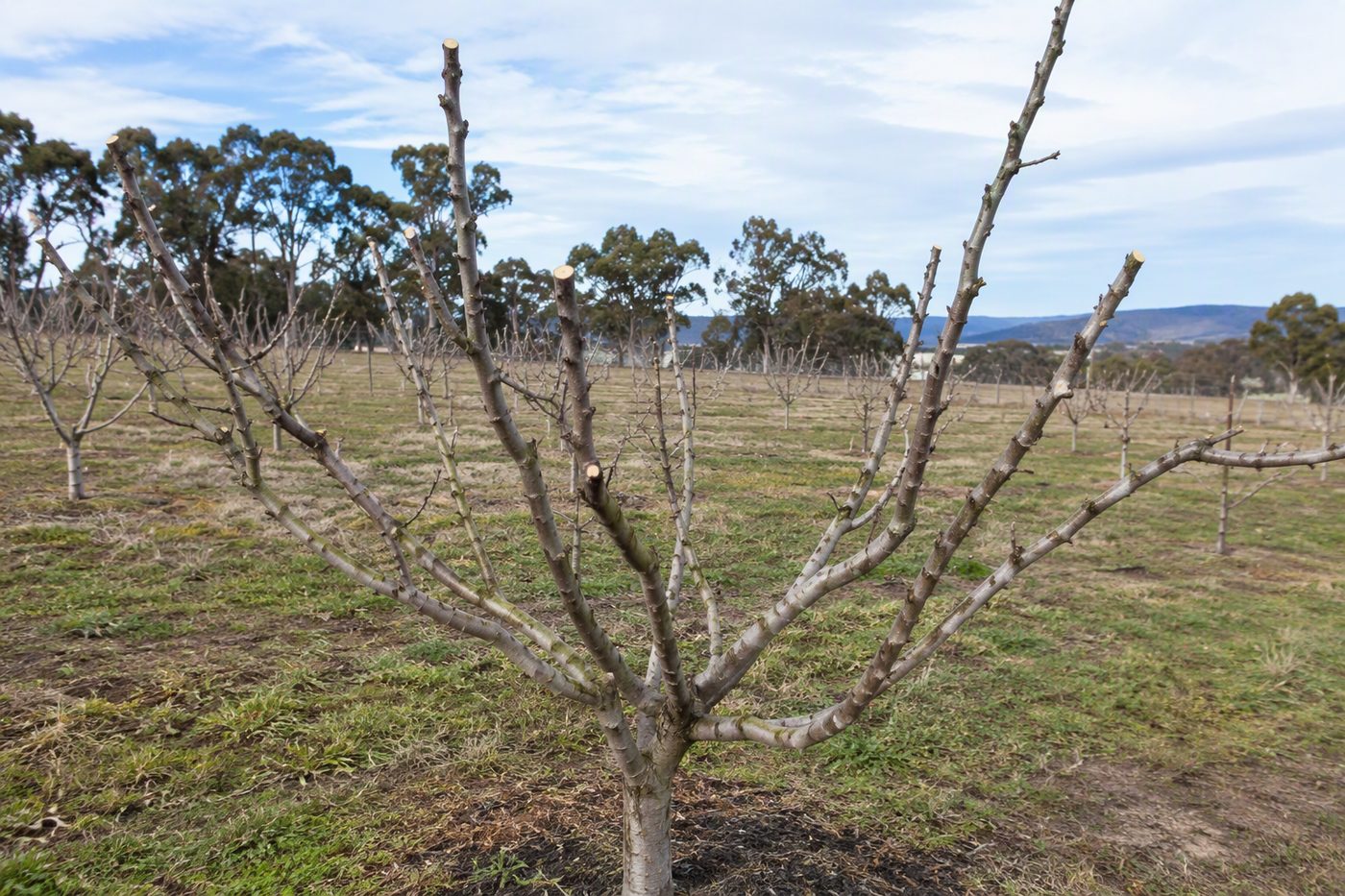
Most home orchardists can handle annual pruning on trees they can reach with a pole pruner. The job earns a professional when:
A qualified arborist carries commercial insurance for limb-fall damage and holds the licences your state requires for work near services. In Tasmania that's anyone charging for pruning over a certain dollar threshold; check the local register before you book. A bad ladder fall costs more than a decade of professional pruning, and a torn cambium from an over-enthusiastic amateur can take five years to grow out.
Pruning is simple. Do it right, and you'll get more fruit with less work. Do it wrong, and you'll spend hours fixing mistakes. Get the tools, time it right, and stop wasting your time.
One last thing the table doesn't show: chip your prunings straight onto the deep-litter chook run. Bare-rooted hens turn the carbon into manure and keep coddling moth larvae from overwintering in the pile. That feedback loop between a clean orchard floor and the egg-laying flock is what makes winter pruning on this place not just a chore but a full-system reset.
Worth a watch: How to PRUNE Fruit Trees in your Garden · Off Grid Athlete
I prune pome fruit like apples and pears in late winter, around late July through August, once the worst frosts have lifted but before the sap really kicks in. Stone fruit is the opposite—I do my apricots and plums in early summer, straight after harvest. The key is matching the timing to the type of fruit, not the date on the calendar.
Always bypass, never anvil. A bypass blade makes a clean cut that lets the tree compartmentalise the wound without inviting rot, whereas anvil pruners crush live tissue and leave a ragged edge that weeps sap for weeks. My go-to is a pair of Felco No. 2s—around $85 to $95 at the local rural supplier, with replacement blades under $20.
I'd strongly avoid it, especially in cold or wet conditions. Pruning a cherry or apricot in a wet June is asking for bacterial canker—the spores move in rain splash and enter straight through fresh cuts. I wait until early summer and prune immediately after harvest instead.
I don't, and I'd rather make a clean cut with sharp bypass secateurs and let the tree do its own healing. The ragged edges from blunt or anvil tools are what open the door to rot, not the absence of a dressing. Sharp tools, dry weather and the right season for that fruit type will do more than any tin of sealer.
While many off-grid projects are achievable as DIY, certain situations require licensed professionals:
Always check local regulations and obtain necessary permits before commencing work.