Sizing a generator for off-grid Australia: fuel choice, surge loads, battery-bank pairing, and the wiring rules that decide what actually works.
Surge maths, fuel choice, auto-start versus manual control, and the storage rules that decide what survives an Australian summer — the four calls a sparky who lives off-grid watches people get wrong.
The third inverter packed it in during a January run of days where the shed stayed above 40°C well past sundown. A modified sine wave unit rated 3000 watts peak, it let the smoke out the instant the pressure pump’s start winding pulled locked-rotor amps. The 2kW generator could not shove enough current through the inverter’s DC bus to cover that half-second spike, so the MOSFETs cooked. After the third one, the lesson was obvious: without a dedicated battery bank to handle the surge, firing a 2kW generator straight into an inverter just turns useful gear into scrap.
A single 100 Ah AGM on the DC rail would have soaked up the inrush and let the generator chug along at its steady two-kilowatt pace.
A Generator Is Safety Gear, Not a Luxury
Living off-grid means leaning on fuel when the weather turns. A heatwave that pins the shed above 40°C past sundown, a long dry spell, a storm week with the panels under smoke haze — sooner or later every remote property in outback Queensland, WA and the NT comes back to the genset. Choosing the right one comes down to four decisions: fuel type, sizing, control and storage.
That sequence is worth keeping in order. Pick the fuel to suit your block, size for the worst motor-start surge, decide how you will start it when it rains sideways, then sort storage before you pour the pad. Miss any step and you buy twice.
Fuel Choice: Diesel, Petrol or LPG
The fuel dictates running cost, engine life and how safely you can stockpile it on a bushfire-prone block.
Diesel — the heavyweight for permanent off-grid use
Running heavy machinery or multiple appliances year-round? Diesel earns its keep. It is more fuel-efficient than petrol, the engines last longer thanks to less wear on internal components (no spark plugs, no throttle bodies), and diesels hold up better in extreme heat. The trade-off is weight and bulk. A larger steel storage tank on site goes with the territory, and bulk delivery means council paperwork before the first fill.
Petrol — the versatile choice
Petrol excels as a portable or supplementary power source. Cheaper upfront, lighter, easier to move — good for camping, boat use and smaller weekend cabins. The catch is volatility. Let a petrol unit sit idle longer than 30 days without stabilizer and the fuel degrades to the point it will not fire cleanly.
Propane / LPG — the clean and safe option
A growing favourite among Australian off-gridders, mostly for storage safety. Very clean burning (less smoke), extremely stable in long-term storage, and it can hook straight into a large bulk tank buried away from the house. Running cost per kilowatt-hour is slightly higher than diesel.
Sizing: Calculate the Surge Before You Buy
The golden rule of generator sizing: never size a generator for your total appliance capacity. Size it for the starting current surge, which can hit three times the running power.
How to work out your real load
List every major item: fridge, freezer, lights, water pump, EV charger. Note their running watts — LED lighting might total only ~100W. The crucial step is finding the starting surge wattage for inductive loads like motors and compressors. A fridge that runs at 300W can surge to 800–900W on startup — and if you have two fridges, do not add both surges. Add the combined running watts plus the single worst starter. Total it: say 1000W of running loads plus a 500W surge allowance for the fridge. Buy capacity for the peak, not the average — at least a 1500–2000W unit so it rides through starts without labouring.
I learned this the hard way. The third inverter packed it in during a January run of days where the shed stayed above 40°C well past sundown. A modified sine wave unit rated 3000 watts peak, it let the smoke out the instant the pressure pump's start winding pulled locked-rotor amps. The 2kW generator could not shove enough current through the inverter's DC bus to cover that half-second spike, so the MOSFETs cooked. After the third one, the lesson was obvious: without a dedicated battery bank to handle the surge, firing a 2kW generator straight into an inverter just turns useful gear into scrap. A single 100 Ah AGM on the DC rail would have soaked up the inrush and let the generator chug along at its steady two-kilowatt pace.
Automation Versus Manual Control
Do you want to be walking outside mid-storm to pull a starter cord?
Transfer switches and auto-start: the set-and-forget approach
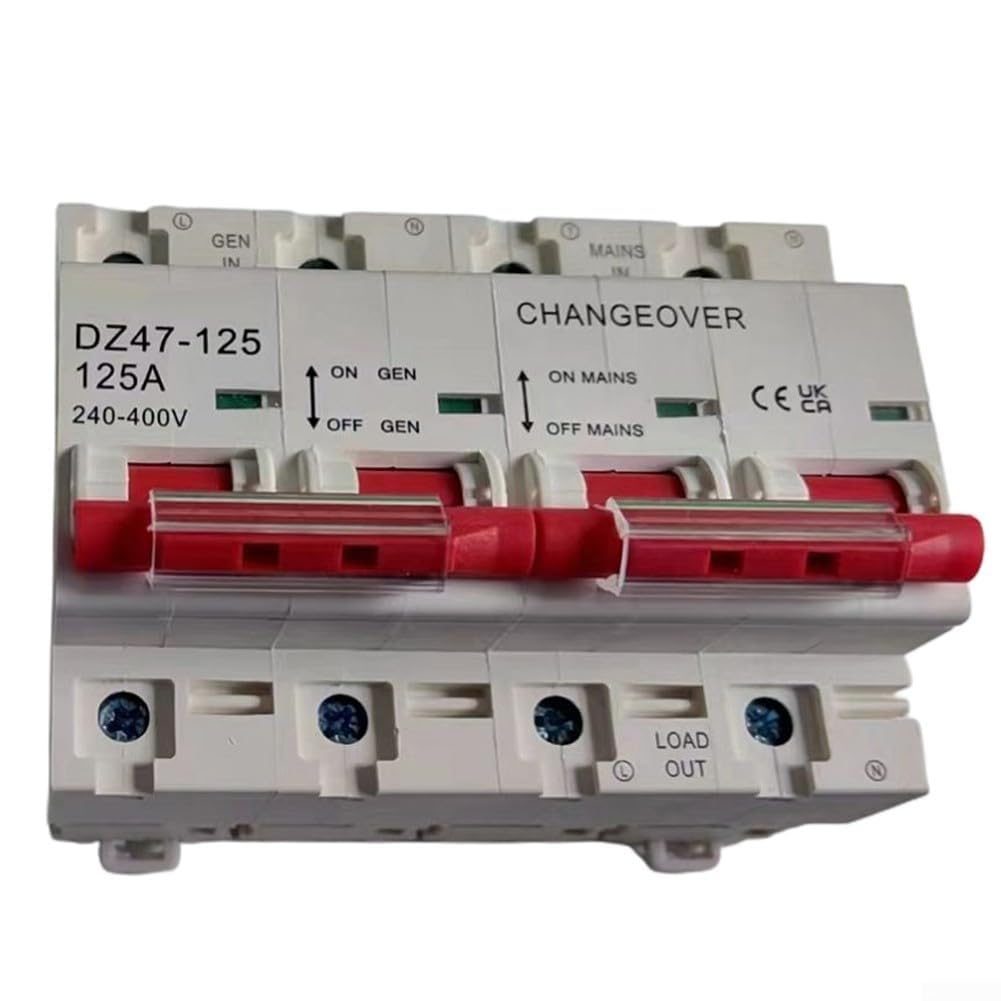
Standard for permanent off-grid homes. The transfer panel disconnects the house from grid power when voltage drops, then switches over to generator output once the supply settles at a stable ~50 Hz — Australia's mains frequency. Auto-start controllers (ATS) watch the battery bank's state of charge and fire up the genset automatically when solar and battery levels drop below critical thresholds. Essential for peace of mind when the shed is out of eyeshot.
Manual start
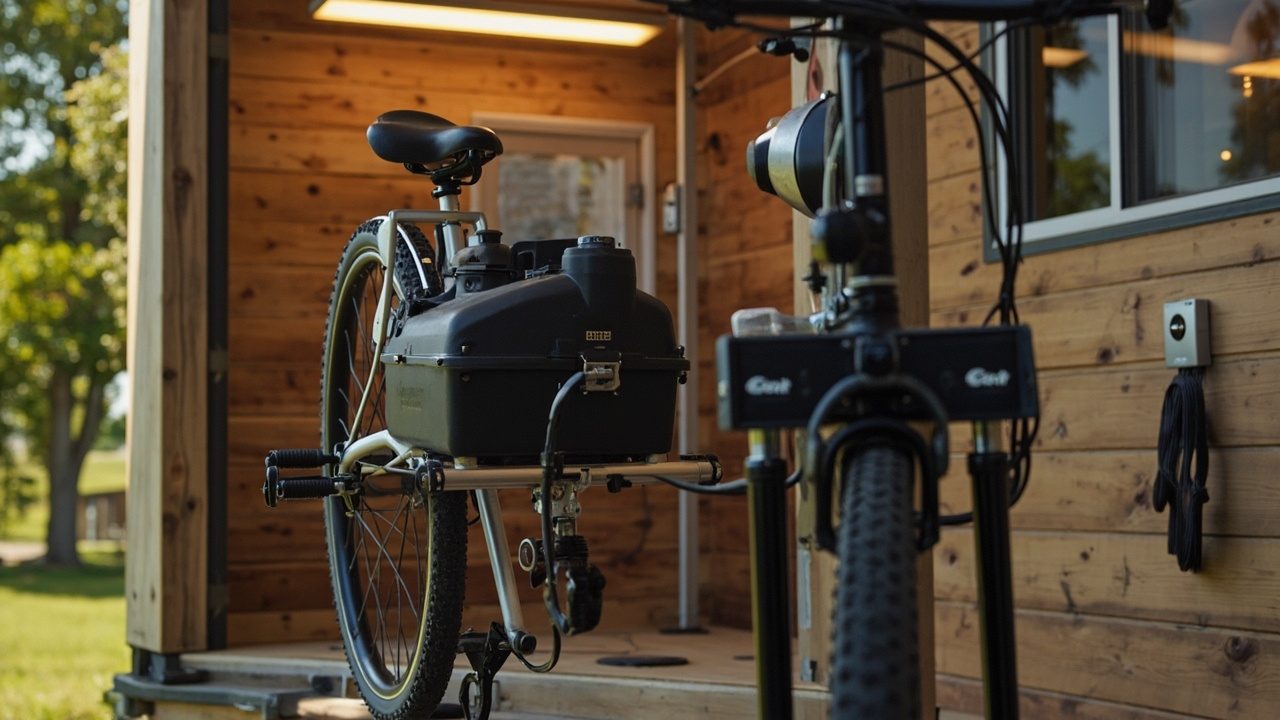
You start the engine yourself — key or pull-cord — then flip the changeover switch to connect generator power. Cheaper upfront (roughly $400–$600 fitted), but backfeeding the street through a dodgy connection can kill a linesman, which is exactly why the fixed-wiring side is licensed work.
Noise, Placement and Fire Season
In Australia's fire-danger season, noise and placement matter — for compliance as much as neighbourliness. Standard generators often sit at 60–70dB — loud-conversation level. Quiet or industrial models built for off-grid cabins usually run 52–58dB. A sound-attenuated enclosure or an acoustic shed can halve the decibels.
On placement, keep the unit well clear of doorways, openable windows and air intakes, with sensible clearance from boundaries and combustibles — most councils expect at least a metre, so check your local planning rules before you pour the pad.
Fuel Storage Rules
Storage law differs by fuel, and it bites hardest on diesel. Diesel can generally be stored on-site for residential use up to specific volumes without a licence, but bulk delivery tanks often require council approval. Petrol and LPG quantities are governed separately by state law — and whichever fuel you pick, your insurer will want the compliance paperwork anyway. Treat the storage rules as part of the purchase, not an afterthought.
Mains Voltage in a Central QLD Shed: I Call a Licensed Sparky
DIY limits
You can tackle a lot of off-grid work yourself — racking panels on a shed roof, bolting down battery racks, pulling DC cable through conduit. The dividing line gets drawn hard at 230 V AC fixed wiring. Under AS/NZS 3000, any connection to a switchboard, an inverter AC output, a generator changeover switch, or an underground mains cable requires a licensed electrician. In Queensland that means an electrical contractor with a QLD Electrical Licence, who will issue a Certificate of Testing and Compliance. Gas lines are licensed work, full stop. If the generator runs on LPG or natural gas, the bottle and pipe side of that installation belongs to a licensed gas fitter — it never joins the DIY pile.
Avoid backfeeding and voided insurance
I have pulled apart a mate's generator inlet wired straight into a shed sub-board with no interlock — backfeeding the street, smoke coming off a pole transformer two paddocks over. The fines start around $4000 for unlicensed electrical work, but the real sting is voided insurance. A straightforward inverter swap and compliance sign-off in central QLD tends to run $350–$500 in labour when the DC isolator is already in place and the mounting rail is sound.
Essential compliance and insurance
Switchboard upgrades, new underground mains, or a Form 4 inspection in Queensland — or the equivalent Certificate of Electrical Safety in Victoria, a CCEW in NSW — will see the invoice push past $1200. The Energy Safe Victoria and Electrical Safety Office inspectors do not accept photos of work; they want the paperwork trail. Your shed insurance is worthless without it.
Once the wiring leaves the territory of simple 12V DC additions — plugging in a solar panel lead, adding a fused USB socket, running a two-core cable to a spreader light — you hit the legal line drawn by AS/NZS 3000 and state electrical safety regulations. In Queensland that means any fixed installation operating above 50 V AC or 120 V ripple-free DC must be done by a licensed electrical contractor. A generator inlet socket on a shed wall, even a tidy Clipsal 56 series 15 A round-pin, counts as fixed wiring. The sparky who fits it will run the 2.5 mm² orange circ back to a dedicated RCBO in the board, test the earth-loop impedance, stake the MEN link where required, and issue a Certificate of Compliance. The job typically costs between $400 and $700 in central QLD, depending on cable distance and whether the existing board needs a bus-bar upgrade.
I have picked up enough home-brew changeover switches with bootleg male-to-male leads and floating neutrals to know that the real expense is not labour — it is the fire investigator and the Ergon claims officer.
High-voltage DC: where solar leaves the safe zone
A DC system crosses the safe voltage threshold the moment string open-circuit rises above 120 V. Under AS/NZS 5033 that tips you out of Extra Low Voltage and lands you in territory where an arc will self-sustain and will not quench until something melts. In a central Queensland shed, a 10-panel domestic string of common 40 V-class modules nudges 400 V at 25 °C air; on a frosty Longreach morning that same string will kiss 480 V before the charge controller wakes up. Commercial 1000 V strings are standard kit now and 1500 V arrays are marching across bigger rooftop and ground-mount jobs. Both demand a lockable DC isolator at the array, another within reach of the inverter, double-insulated solar cable, and every MC4 connector crimped with the right tool — not a pair of fencing pliers.
I have watched a 600 V arc jump a loose pin inside a rooftop isolator and chew a 50 mm aluminium rail halfway through before the bloke could hit the main breaker. The crater glazed black and reeked of ozone for a week.
Upfront cost is no mystery. A 6.6 kW array on Stramit purlins in the bush runs $4500–$5500 installed by a CEC-accredited crew, with the DC isolator, string fusing if the array has three or more parallel strings, and weather-proof junction boxes eating roughly $300 of the total. That buys you glass-on-panel, aluminium racking, and the right labels on the switchboard — no shortcuts.
Off-grid, the MPPT charge controller needs a Voc rating cold-adjusted to the site's lowest recorded temperature; miss that and a clear winter dawn will spike the input beyond the controller's silicon ceiling, releasing the magic smoke in silence. Every commissioning check involves a meter clamped across the string to confirm zero volts, the DC isolator padlocked off, and the other end of the cable taped until the panels are wired. High-voltage DC does not bluff — it will find the one dry joint you hurried six months ago, and it will do it on a Sunday afternoon when the nearest replacement rectifier is a week away on a truck.
Slabs, studs and truss loading: what holds the shed up holds you up
Every time you cut a C-section portal frame or bolt in a mezzanine, you are chasing load paths through a shed that was never designed for it. The common 6×9-m kit going up around central Queensland sits on columns at 3-m centres, runs 100×50×2.5 purlins, and pours a slab 100 mm thick with 25 MPa concrete over compacted fill. That slab looks solid until you drop a 300-kilo generator set onto it. Vibration travels straight down the hold-down bolts, and cracks kick off from the bolt holes if the edge distance drops below 50 mm — I have seen a hairline start at a dynabolt corner, follow the aggregate, and open up enough to let white-ant mud through in one wet season.
When you frame a lean-to off the side for a battery bank, the first thing you do is check the existing column footing. More than once I have dug down expecting a spread and found nothing but a 450×450 pad with barely 400 mm bearing on black soil; that pad was fine for a tin shed but it will not carry the extra eccentric load from a 200-amp-hour rack and a couple of blokes standing on the deck.
If you are fixing a generator inlet socket or transfer switch to a wall, the fixings matter just as much as the wiring. In a Queensland shed with 90×45 MGP10 pine studs and yellow tongue flooring, drilling a 25 mm hole dead-centre through a noggin for a cable run is fine as long as you keep 50 mm clear of the edges. That is straight out of AS 1684. But drill the same hole within 300 mm of a bottom plate in an external wall and you have just turned a load-bearing stud into a hinge point. I saw a bloke near Rockhampton cut a 40 mm notch in a 140×45 bearer to sneak his mains cable through the subfloor. The bearer held for two wet seasons then sagged 12 mm, enough to crack the tiles in the bathroom above. Fixing it cost him a restumper, new tiles and a second sparky to reroute the cable in conduit under the joists — a $2,800 job that started with a 15-minute shortcut.
Slab-mounted generators bring different grief. A 120 kg air-cooled diesel genset sitting on four 100 mm dynabolts into a 100 mm unreinforced slab can spall the concrete edge if the bolts are less than 75 mm from a free edge. I pour 1200 × 800 × 150 mm isolated pads with SL72 mesh, four vertical N12 bars in the corners, and cast M16 galvanised holding-down bolts on a 400 × 600 template. The pad sits on 50 mm of compacted road base and costs about $160 in materials and half a day with a mixer.
The alternative is a lightweight frame bolted directly to a shed floor that was poured at 85 mm instead of the spec'd 100 mm. I have seen that slab flex under a 90 kg single-cylinder set during a storm, vibrating the metering board enough to crack a terminal block. That board was on the same wall as the house-entry neutral link and the shock risk came from a broken MEN connection nobody noticed until the next RCD test. The cause was a 15 mm slab shortfall the concretor hoped nobody would measure.
Anything that changes the load path through a roof truss will void the truss manufacturer's certification. A 10 mm threaded rod for a chain block might only weigh a kilo, but if you hang it from the bottom chord of a truss that was designed for 0.25 kPa ceiling load plus a central point load of zero, you can buckle the top chord under wind uplift. In a standard 900 mm-deep timber truss spanning 9 metres, the bottom chord is usually 70×35 MGP10. The allowable hole diameter in that member is 12 mm and it must be drilled on the centreline, never in the middle third of the span. I carry a $30 endoscope to check what the last bloke left behind before I hang a fire-rated gland plate near a truss. Even an extra 20 kg solar battery mounted to the web with coach screws can push the load combination past the design limit if the roof gets hit by a tropical low. The physical evidence is a nail plate that has pulled out by 2 mm — enough to fail an insurance assessment.
Up here in Central Queensland, I keep a dusty folder of Form 4s in the glovebox — old habit after 22 years wiring sheds and solar arrays. Under the Electrical Safety Act, any hard-wired backup circuit falls into the same bucket as a house switchboard. Even a simple 15 A inlet socket and a manual changeover switch in the shed means the whole job sits with a licensed electrical contractor who works to AS/NZS 3000 and then lodges a Certificate of Testing and Safety (Form 4) with the Electrical Safety Office.
Dangerous suicide lead fines
I have seen blokes cop on-the-spot fines for running a suicide lead into a power point during a blackout, and the inspector did not care that it was "only for a few hours." The lead itself is a double-male cord — live pins exposed the moment the generator coughs into life, and backfeeding the street kills a linesman's isolation point.
Council approval for permanent enclosures
If you mount the generator inside a permanent enclosure, the local council will almost always want a building approval for the structure — standard Queensland Development Code kicks in when the shed is over 10 m² or within 900 mm of a boundary. I knock up a treated-pine plinth with flywire vents to keep the cane toads out, but the moment it gets a roof and hard-fixed sides, the council calls it a Class 10a building. The notice-of-work fee is about $35, and the sparky's labour with certification will typically run $600–$900 on top of the hardware.
Treat permits as part of the build
That buys you an afternoon of cable trenching, a weatherproof inlet box with a screw-cap lid, and a changeover switch roughed into a sub-board. Skip the paperwork and you give your insurer an easy out when a fire starts at the changeover switch. I treat the permit stage as part of the build, not something to dodge — same as checking the dipstick before you swing the engine over.
Where This Leaves You
That is the whole decision tree. One honest afternoon with a pen: list your real loads, find the worst motor-start surge, and buy for the surge — not the sticker sum. Put a battery bank between the genset and the inverter so the spike has somewhere to go, automate the start if the shed is out of sight, and store the fuel like the fire rules matter, because on this continent they do. Anything touching 230V AC fixed wiring — inlet sockets, changeover switches, ATS controllers — lands on the sparky's invoice, not yours. Get that sequence right and the generator becomes what it should be: the boring machine that hums through the heatwave while the panels do the daytime lifting.
⚠️ SAFETY WARNING: Working with electrical systems, structural modifications, or gas installations carries inherent risks. If you are not confident in your abilities, always engage a licensed professional.
I like that he walks through connecting a 100Ah AGM battery to a 160W panel and a DC‑DC charger, showing the correct fuse sizing and Anderson plug wiring that mirrors the shed wiring steps I cover in the guide. It's a no‑nonsense run‑through that fills the gap between theory and hands‑on work.— Dave Miller
Frequently asked questions
Why does my inverter keep blowing when I run it off a generator?
Nine times out of ten it's the start-up surge that kills it, not the running load. When something like a pressure pump kicks in, it pulls locked-rotor amps for a split second, and a small generator can't shove that through the inverter's DC bus fast enough. That's exactly what cooked three inverters in my shed before I sorted it.
Can I run an inverter straight off a small generator without batteries?
I tried that and it cost me plenty. The problem is the generator alone can't deliver the half-second spike that motor loads like pressure pumps need, so the inverter's internals end up absorbing the surge and letting the smoke out. A battery bank in the middle is what gives that spike somewhere to go.
Do I need a battery bank for off-grid power if I've already got a generator?
Yeah, the battery bank isn't just storage — it's the shock absorber for the whole system. When a big inductive load starts, the batteries take the hit instead of the inverter. I learned that one the hard way after burning through three modified sine wave units in a row.
What size generator do I need for a shed in central Queensland?
Forget the headline wattage for a minute and look at what your biggest motor needs to start, not just to run. In my own shed, a 2kW generator looked plenty on paper but couldn't deliver the locked-rotor current the pressure pump demanded. Match the genny to the worst surge you'll see, not the average load.