By Dave Miller· off-grid sparky · 22 years wiring solar, batteries and sheds in central QLD
“After burning two tanks of petrol in a 2010 diesel generator trying to run my shed, I finally learned that 50 litres of diesel is the only efficient fuel for off-grid life.”
Generators are most efficient at 70-80% load. Running them at 20% load? You're burning fuel like a dingo on a sugar rush.
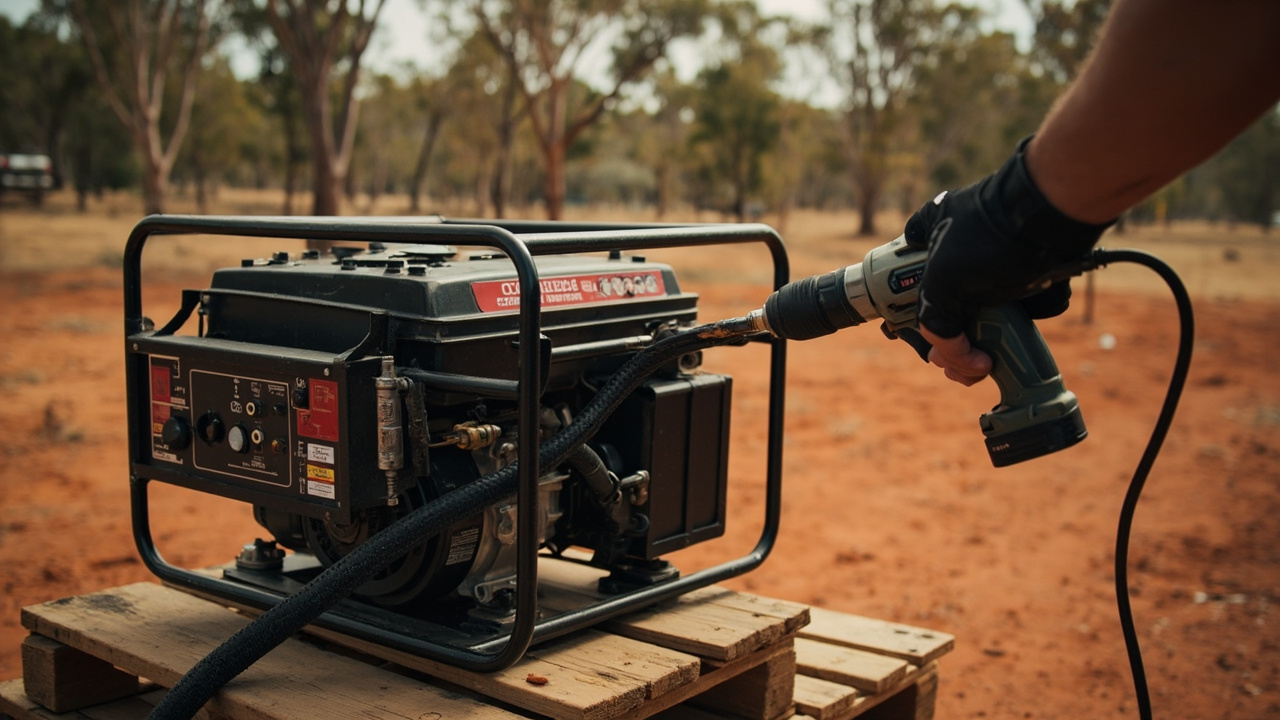
Generator powering a power tool in rural Australia
Calculate your load: Add up all appliances (watts). Example: 2kW fridge + 1kW pump = 3kW total.
Don't run the generator for 5 minutes to power a single 100W light. Use solar or batteries instead.
Group loads: Run the fridge, pump, and lights together. Don't stagger them.
Use a digital watt meter (like the EnerVest model) to track real-time consumption. $120 from Aussie Solar.
Carburetor Tuning: Fix the Cheap Stuff First
Most generators die from a dirty carburetor. Not a $500 engine rebuild. Fix this yourself in 10 minutes.
Hand adjusting carburetor mixture screw on generator
Remove the air filter. Spray carb cleaner (like CRC 22-22) into the carb throat. $15 at Supercheap Auto.
Adjust the idle screw: Turn clockwise until it just stops. Then back off 1/4 turn. Don't overdo it.
Check the fuel line: Replace if cracked. $8 at Bunnings.
Never run the generator on empty. It gums up the carb. Top up before the tank hits 1/4.
Practical Tips (No Bull)
Best fuel: Use 91 RON petrol. 95 is a waste. Diesel generators? Stick to 100% diesel. No mixing.
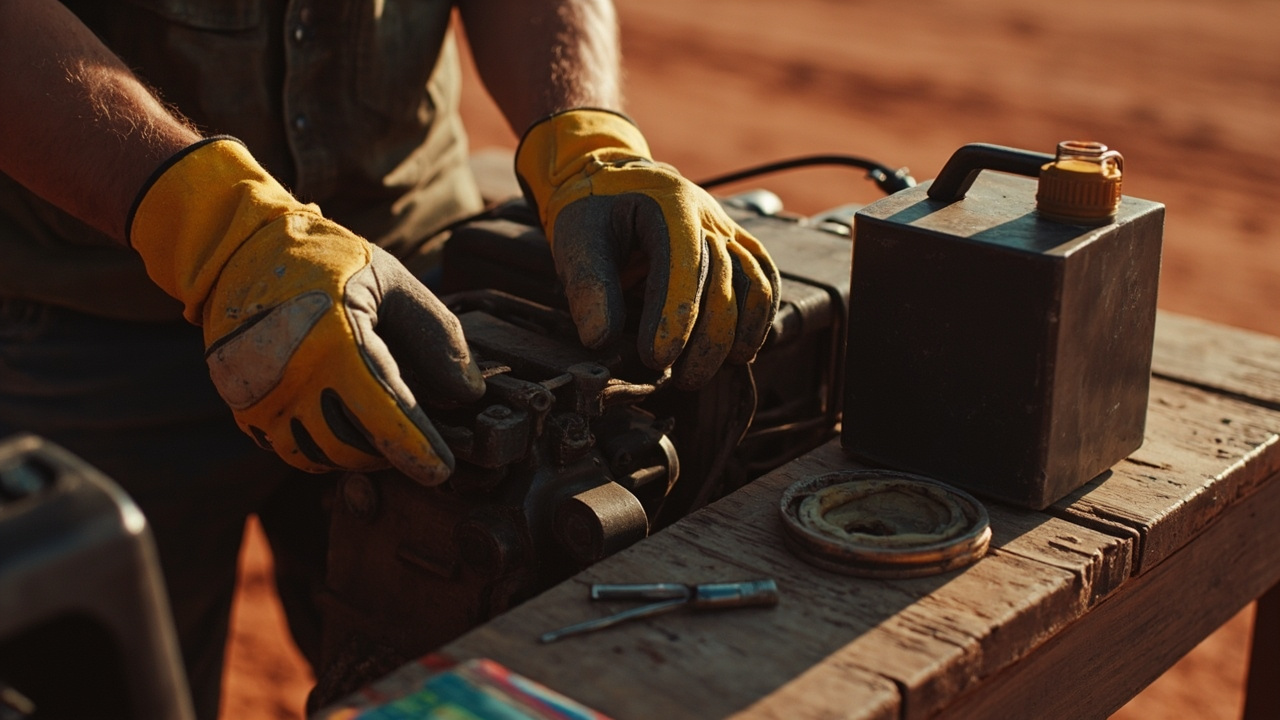
Gloved hands fine‑tuning generator fuel valve
Storage: Fuel degrades in 3 months. Add Stabil ($12 at Woolworths) to extend life. Don't use old fuel.
When to replace: If tuning doesn't fix rough idling after 3 attempts, get a new carb. Genuine Parts sells rebuild kits for $45. Same price as a new one.
Real savings: Optimised load + clean carb = 20-30% less fuel. For a 5kW generator running 4 hours/day, that's $150+ saved monthly.
Bottom Line
Don't let your generator be a fuel guzzler. Tune it. Load it right. Use the right fuel. Save cash. That's all. No more excuses.
When to Call a Professional
While many off-grid projects are achievable as DIY, certain situations require licensed professionals:
Electrical work beyond basic 12V DC additions — requires a licensed electrician
Structural modifications to buildings or load-bearing elements
Gas line installation or modification
Solar array installations above safe voltage thresholds
Any work that affects the structural integrity of your property
Always check local regulations and obtain necessary permits before commencing work.
⚠️ SAFETY WARNING: Working with electrical systems, structural modifications, or gas installations carries inherent risks. If you are not confident in your abilities, always engage a licensed professional.
They run each generator on a fixed load and log fuel use over an hour, so you get real numbers on which model sips fuel. The video also covers runtime and noise, which are key when you’re figuring out how big a generator you need for off‑grid living.— Dave Miller