By Jenny Mills· rural nurse & homesteader · health, safety, law and the paperwork of going bush
“After dosing my nephew too aggressively with a homemade cough syrup, I learned that a teaspoon of honey is not a reliable substitute for precise millilitre measurements.”
Medicinal Syrups for Off-Grid Aussies: Honey, Glycerin & Dosing
No pharmacy runs. No panic. Just straight-up syrup making. Done.
When the power is out and the nearest pharmacy is a long drive away, a small shelf of well-made medicinal syrups covers a surprising amount of ground. Honey-based, glycerin-based, and sugar-based syrups are simple herbal preparations that sit in the middle ground between a quick infusion and a long tincture: they don't take days, and they keep for months.
This article covers how to make them, how to dose them, and when to stop fiddling with a stovetop and call a professional instead.
What a Medicinal Syrup Actually Is
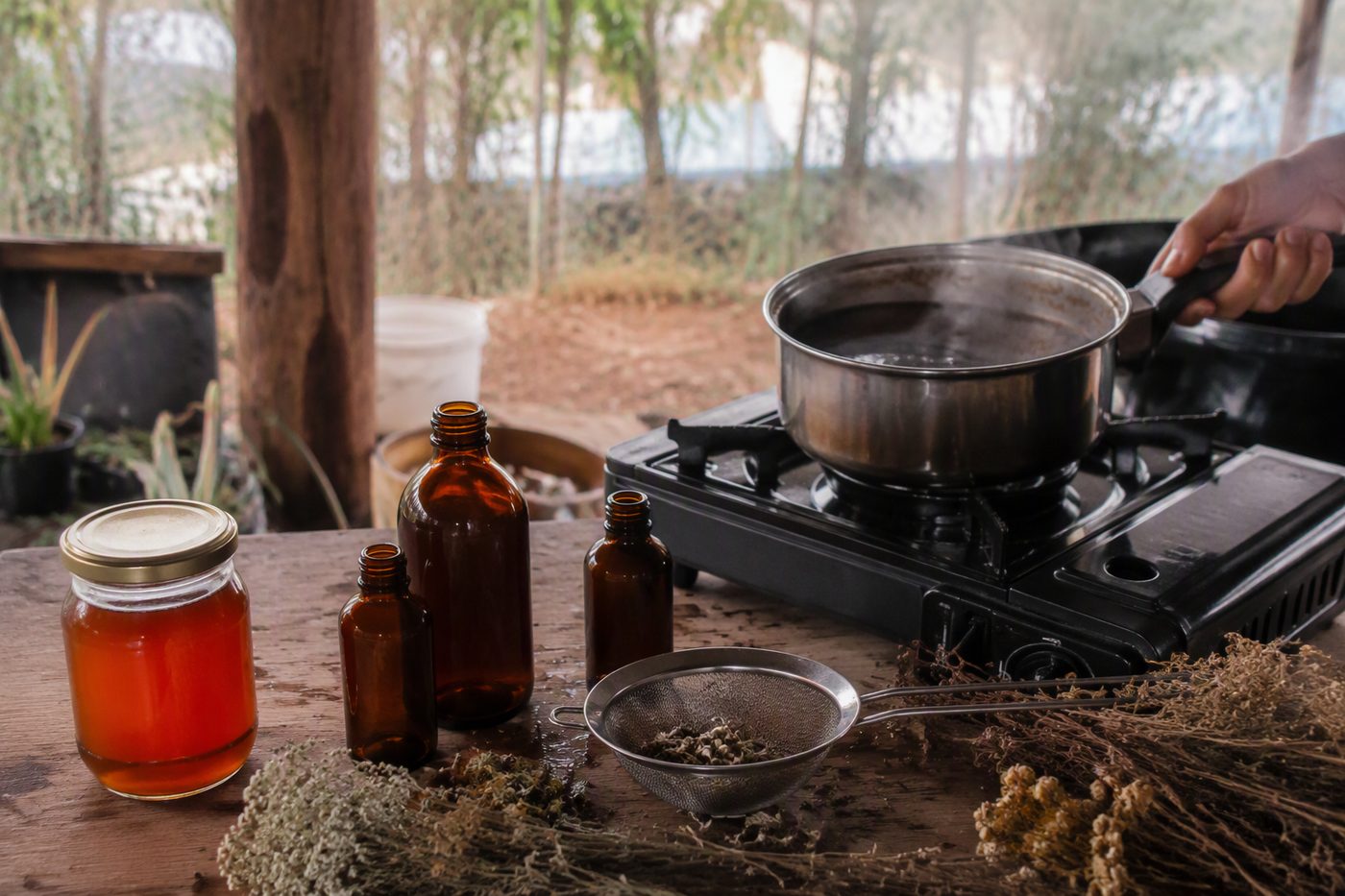
A syrup is a concentrated water-based extraction of plant material (a decoction or reduction) combined with a preservative — usually sugar, honey, or glycerin. In practice, that means you simmer herbs in water, reduce the liquid down, and then preserve it with a sweetener.
The benefit is the trade-off: compared with fresh infusions (short shelf life) and alcohol tinctures (longer prep, alcohol content), syrups offer a reasonable balance of production time and shelf life, and can be kept for several months depending on storage conditions.
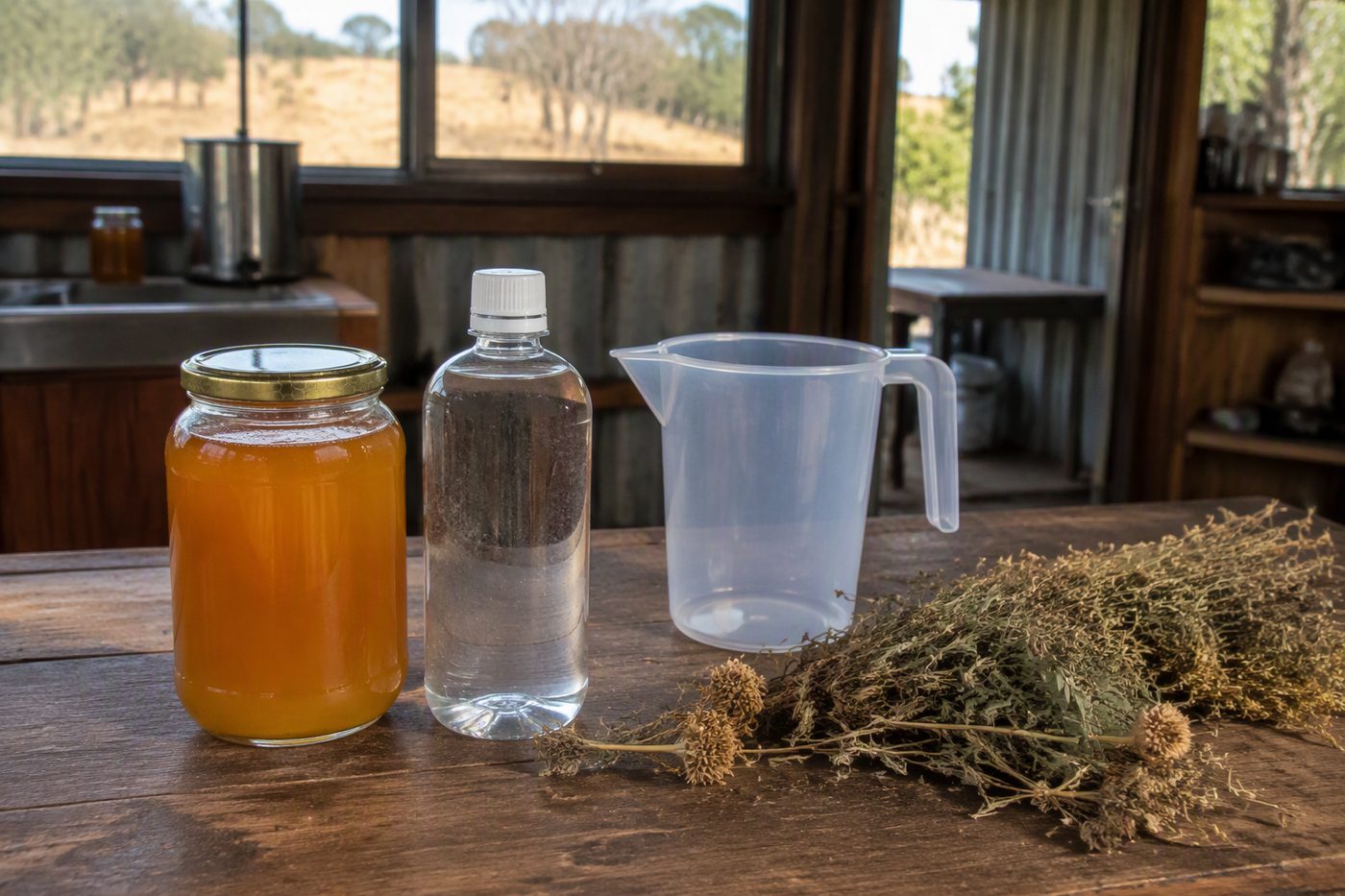
You can also add pre-made liquid concentrates (alcohol, vinegar, honey, or glycerin extracts) directly into a finished syrup, which is useful when you want the preservative qualities of one medium combined with the extraction power of another.
Specs and Requirements at a Glance
Parameter
Specification / Guideline
Dried herb ratio
30–100 g dried plant per 1 L water
Fresh herb ratio
~500 g fresh plant per 1 L water
Water density (for reduction maths)
~1 g/mL
Glycerin : honey swap
1:1 by volume
Adult dose (general)
~1 teaspoon or less per 150 lb adult
Child dose
Less than adult; scale down by weight
Added-sugar ceiling (AHA guidance)
Women ≤6 tsp/day, men ≤9 tsp/day, children 3–6 tsp/day
Storage
Cool, dark; refrigerate for longest life
Best vessel
Glass bottles/jar with tight lid, sterilised
The Three Sweetener Choices
Honey
Honey brings antibacterial, anti-inflammatory, and antioxidant properties and is famous for soothing sore throats. Raw, unpasteurised honey is preferred for medicinal work because heat processing damages the enzymes and reduces the antibacterial and anti-inflammatory effects.
One well-known folk formula is the honey-and-onion cough syrup: onion provides the antioxidant quercetin, sulfur compounds, and acts as an expectorant to help clear mucus; the honey soothes the throat. Standard method (Rosemary Gladstar's approach): gently warm the honey so the onions release their sulfur compounds, then strain. Onions also contain electrolytes, which help maintain hydration during illness.
Important caveats: honey is not safe for babies under 1 year of age due to infant botulism risk. Honey is also generally unsuitable for diabetics. If you're managing blood sugar, switch the preservative.
Glycerin (Glycerine)
Vegetable-sourced glycerin is colourless, odourless, sweet, water-soluble, and is metabolised in the liver, so it doesn't trigger the insulin spikes associated with table sugar. That makes it the standard swap for diabetics, for kids, and for anyone wanting a vegan syrup.
You can replace honey with glycerin in an herbal syrup at a 1:1 ratio by volume.
The catch: large amounts of glycerin can draw water out of the body and increase fluid loss, eventually leading to dehydration. Dose it accordingly — this is a preservative, not a beverage.
Sugar (including vegan alternatives)
Plain sugar works fine and produces the longest-keeping syrups because of the high osmotic pressure. For those avoiding refined sugar, coconut sugar (also called coconut nectar) comes from the sap of the coconut tree and contains 17 amino acids plus minerals and B vitamins — a reasonable upgrade if you're set up to source it.
If you're dosing daily, keep the AHA limits in mind: no more than 6 teaspoons of added sugar per day for women, 9 teaspoons for men, and 3–6 teaspoons for children. A typical adult dose of 1 tsp of syrup can carry a meaningful fraction of that budget.
Making a Basic Syrup: Method
This is the workflow for a straightforward herb-and-water preparation.
Measure. Use the herb:water ratio from the table above. Weigh dried herbs; weigh or roughly chop fresh herbs.
Stage the plant material. Tougher parts (roots, seeds, berries, mushrooms, bark) go in at the start so they get the full simmer. Tender parts (leaves, flowers) are added later so they don't cook down to nothing.
Decoct. Simmer covered until the liquid is concentrated. Use the 1 g/mL water density to estimate how much has boiled off — a litre of water that now measures 600 mL has lost 400 g of water through evaporation.
Add aromatics correctly. Aromatic herbs with volatile active ingredients (think thyme, eucalyptus, rosemary) should be added after removing the pot from the heat, with the lid on, and left for 2–3 hours to cool. Direct boiling drives off the oils you want to keep.
Strain. Strain through muslin or a fine sieve. Squeeze the plant material to recover as much liquid as possible.
Add preservative. While the concentrate is still warm (not boiling), stir in honey, glycerin, or sugar. Standard ratio is roughly 1 part sweetener to 1 part concentrate, but adjust by taste and intended shelf life — more sweetener means longer keeping.
Bottle. Decant into sterilised glass bottles with tight lids. Label with contents and date.
Store. Cool, dark place; refrigerate once opened.
Dosing: How Much, and How
The average dose for most herbal syrups is about a teaspoon or less for a 150-pound adult, with less for children.
A few practical rules:
Measure, don't guess. Use a proper measuring spoon or, better, an oral syringe marked in millilitres. Kitchen teaspoons vary wildly.
Hold in the mouth briefly. Keeping the syrup in the mouth for a short time before swallowing allows it to mix with saliva, which may increase the speed and completeness of absorption of the active ingredients.
Dilute if needed. Syrups can be diluted in water or juice for easier consumption or to better discern the taste, particularly for children.
Space the doses. Spread doses through the day rather than taking the day's worth at once. This keeps blood-sugar impact lower (relevant if you've used honey or sugar) and keeps the active ingredients circulating more steadily.
Storage and Shelf Life
Syrups can be kept for several months depending on storage. A few points worth knowing:
Higher sugar/glycerin ratios extend shelf life. A syrup at 1:1 is more robust than one at 1:2.
Refrigeration buys you months. A cool cupboard is fine for short-term storage but expect a shorter window.
Glass only for long-term storage. Honey and some herb constituents can react with metals; plastics can leach over months.
Label everything. Date, herb, and ratio. If a syrup smells off, ferments, or grows mould, bin it.
Safety: When to Call a Licensed Professional
Home-made medicinal syrups are useful, but they are not a substitute for medical care. Stop self-treatment and contact a licensed health professional if any of the following apply:
Symptoms include blood (in sputum, vomit, urine, or stool), a high or persistent fever, shortness of breath, chest pain, or rapidly worsening illness.
The patient is an infant under 1 year old (honey-based syrups carry a botulism risk; get paediatric advice).
The patient is diabetic, pregnant, immunocompromised, on regular medication, or has a known allergy to any plant in the syrup.
A cough or cold has not improved within a reasonable window, or is getting worse rather than better.
A child is dehydrated, lethargic, or not feeding.
You are unsure whether a herb is appropriate for a given person or condition.
If the situation is an emergency — call 000. Off-grid doesn't mean off-network; carry a charged mobile or a UHF radio at minimum.
Frequently Asked Questions
How long does a homemade medicinal syrup last?
Several months, depending on storage. Cool, dark, refrigerated conditions in sterilised glass extend that window further. Higher sweetener-to-liquid ratios also help.
Can I just swap honey for glycerin?
Yes — glycerin replaces honey in an herbal syrup at a 1:1 ratio. This is the standard swap for diabetics, for vegans, and for anyone avoiding blood-sugar spikes.
Is honey safe for everyone?
No. Honey is not safe for babies under 1 year of age due to infant botulism risk, and diabetics should generally avoid it. Glycerin-based syrups are the usual substitute in both cases.
How much should I take?
A typical adult dose is about a teaspoon or less for a 150-pound adult, with less for children — scaled down by body weight, not by guesswork. Use a proper measuring spoon or an oral syringe.
Do I need to refrigerate the syrup?
Refrigeration extends shelf life significantly and is recommended once the bottle is opened. Unopened, a high-sugar syrup in a cool, dark cupboard will keep for a reasonable period.
What's the difference between a syrup and a tincture?
A tincture uses alcohol (or vinegar) as both the extractant and the preservative, and keeps for years. A syrup uses water for extraction and sugar, honey, or glycerin for preservation, keeps for months, and is generally easier to give to children and to people avoiding alcohol.
The video walks through a garlic cough syrup recipe with a clear honey‑to‑garlic ratio and shows how to strain, bottle, and store it without refrigeration, matching the honey‑based dosing and storage guidance in the guide.— Jenny Mills