
By Jenny Mills · rural nurse & homesteader · health, safety, law and the paperwork of going bush
“I lost a day's work and nearly lost a limb before realising my kit lacked the one thing that saves lives in the bush: a tourniquet.”
Essential Medical Supplies for Australian Remote Properties | 2026 Edition
By Jenny Mills · rural nurse & homesteader · health, safety, law and the paperwork of going bush
“I lost a day's work and nearly lost a limb before realising my kit lacked the one thing that saves lives in the bush: a tourniquet.”
When you're an hour or more from the nearest hospital, a well-stocked first aid kit stops being a nice-to-have and becomes critical infrastructure. I've rebuilt my property kit twice over the past decade after realising each time that I'd over-packed bandages and under-packed the things that actually matter in remote Queensland: haemorrhage control, snake bite management, and reliable pain relief. This guide is what I keep on hand at Beecher now, and what I'd recommend to anyone running a block, station, or off-grid property anywhere in Australia.
Common medical risks in remote outdoor settings include snake bites, sprains, cuts, burns, allergic reactions, and trauma such as fractures or injuries requiring a tourniquet. Your kit has to assume that professional help may be hours away — McCormacks 4WD notes that in remote outdoor locations, immediate medical help may be hours or over a hundred kilometres away, which is exactly the situation a rural property sits in every day. That changes the calculus: you prioritise items that buy time over items that provide comfort.
It also changes your training needs. Medical training should cover CPR, treating wounds, managing fractures, addressing minor ailments, and handling life-threatening conditions including snake bites and severe bleeding. A kit without that training is just a box. More on training below.
The components below are what I'd consider the non-negotiable baseline for an Australian off-grid property. Pair your medical kit with basic training in CPR, wound care, fracture management, snake bite first aid, and severe bleeding control — the kit only works if you know how to deploy it.
| Category | Essential Items | Notes |
|---|---|---|
| Haemorrhage control | CAT-style tourniquet (1–2), haemostatic gauze, heavy-duty trauma dressings, compression bandages | Tourniquets are used for severe limb bleeding where pressure bandages are not sufficient. Use a tourniquet only for severe limb bleeding when pressure bandages are insufficient. |
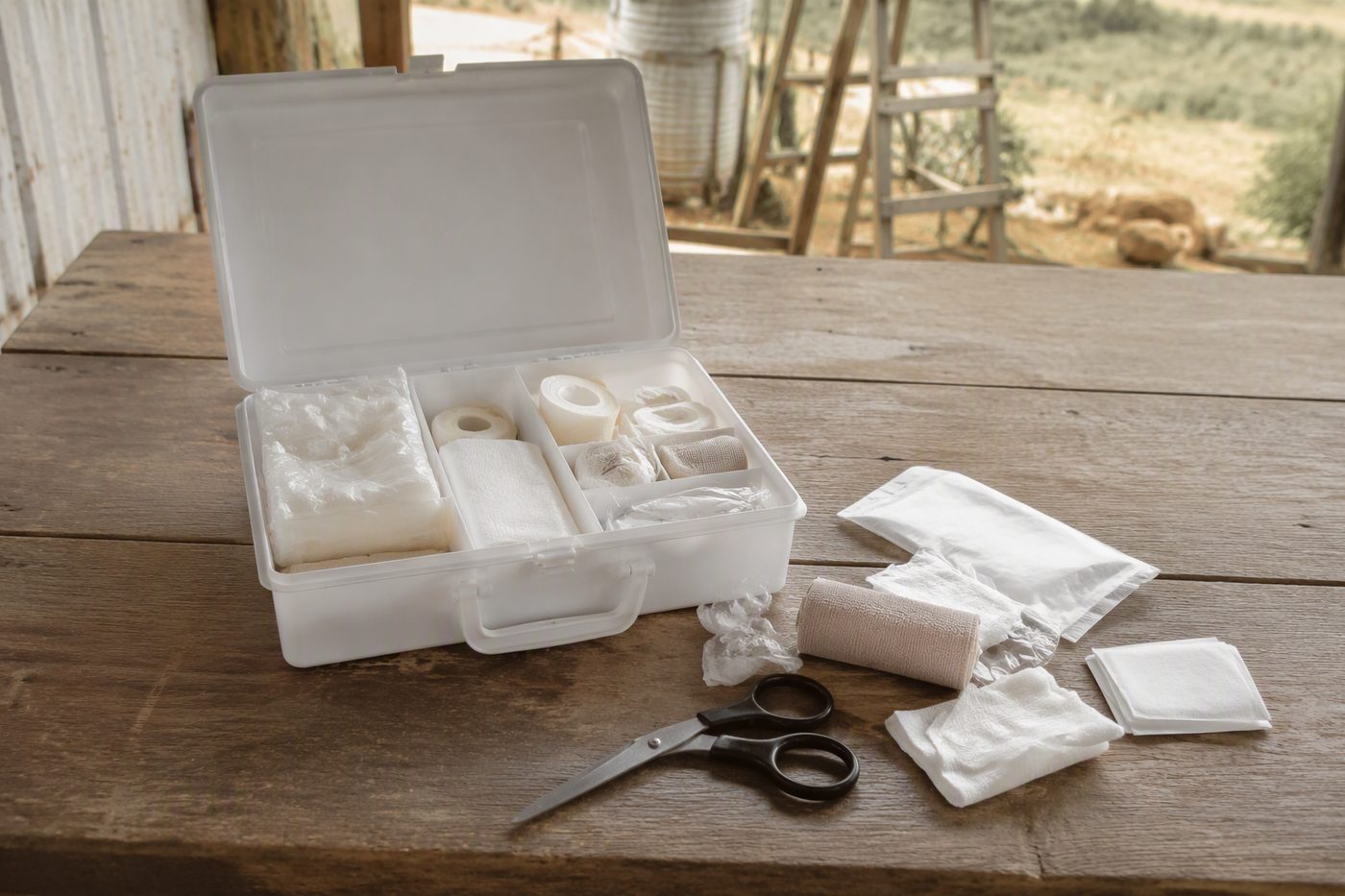
| Wound care | Assorted sterile gauze pads, conforming bandages, adhesive dressings, surgical tape, steri-strips | Stock multiple sizes; rural cuts are usually dirty and larger than expected. |
| Antiseptics & irrigation | Chlorhexidine wipes/solution, plus copious potable water or sterile normal saline for irrigation | For dirty wounds irrigate with copious potable water or normal saline first; chlorhexidine can be used on intact peri-wound skin, but is not a substitute for mechanical irrigation of contaminated wounds. |
| Fractures & sprains | SAM-style malleable splint, triangular bandages, elastic wrap, instant cold packs | Splints are used for immobilising fractures or sprains. |
| Burns | Burn gel, sterile burn dressings, clean cling wrap | Burns are disproportionately common around generators, hot engines, and campfires. |
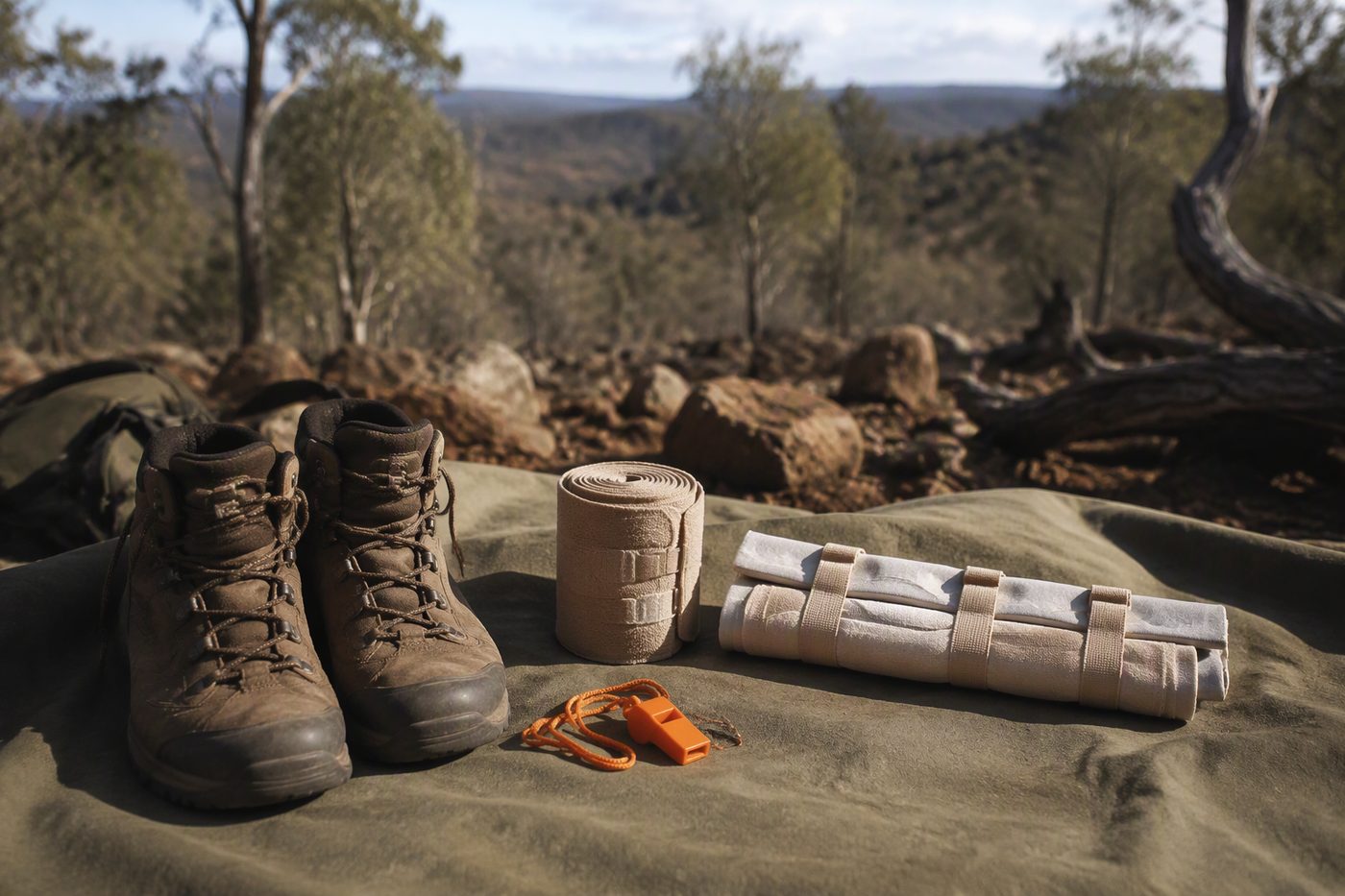
| Snake bite | Wide elasticised bandage (10–15 cm) suitable for pressure-immobilisation, marker pen, splint | Do not buy a generic "snake bite kit" — most are old-style incision/suction kits. The only kit item recommended by the Australian Resuscitation Council is a wide elasticised bandage (10–15 cm, at least 4.5 m long) suitable for pressure-immobilisation — not a kit with a scalpel, suction device or tourniquet for snake bite. Confirm current technique with the Australian Resuscitation Council or Queensland Health at time of purchase. |
| Allergies | Antihistamines, prescribed epinephrine auto-injectors for known sufferers | Carry prescribed epinephrine auto-injectors and personal allergy medication if you have known severe allergies. |
| Pain & fever | Paracetamol, ibuprofen, electrolyte replacement sachets | Rotate stock; see storage notes below. |
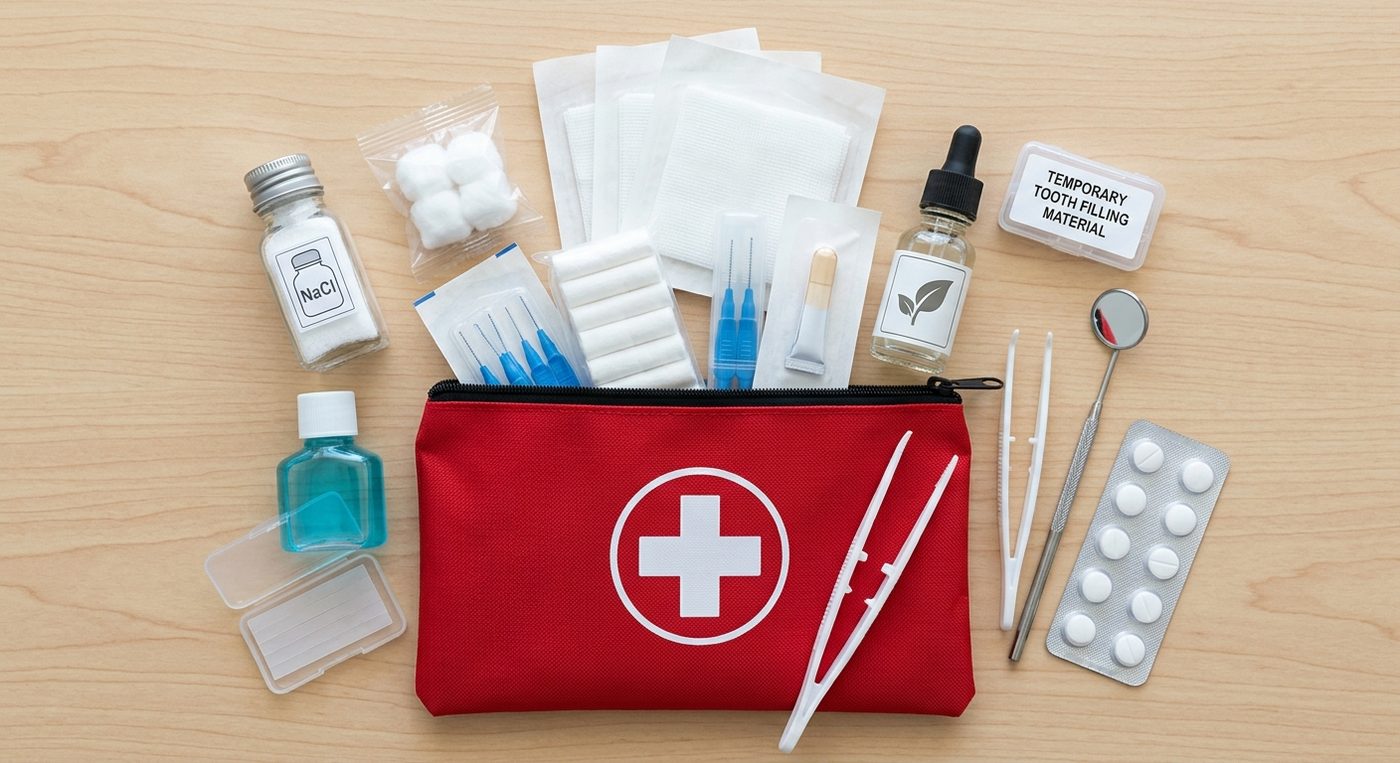
| Tools & utilities | Trauma shears, tweezers, safety pins, digital thermometer, gloves (nitrile, multiple pairs), CPR face shield, headlamp, waterproof notebook | Don't underweight the tools; they let everything else work. |
Medications degrade in heat. Store the kit in a hard, labelled case in a cool, shaded spot — not in the back of a ute tray and not in a metal shed roof. Do not store the kit in a vehicle cabin or shed roof where temperatures exceed ~30 °C; medication expiry assumes proper storage conditions, and heat exposure can strip potency well before the printed date. Tablets and wipes tolerate Australian conditions better than liquids and suppositories do, which is why I'd lean towards tablet paracetamol and ibuprofen over syrups for primary stock.
Keep medications in a sealed waterproof bag inside the kit, and add a silica desiccant sachet to reduce moisture damage to tablets and dressings. Replace the desiccant when saturated.
I'd recommend rotating stock every six months. Set a recurring calendar reminder. At each rotation, check expiry dates on all medications, inspect dressings for moisture damage or yellowing, test that batteries in headlamps and any electronic devices still hold charge, and restock anything used or opened. A kit you haven't touched in three years is a kit full of expired gear.
Inside the kit, keep a laminated card with:
A second copy of the emergency contact card should live in your wallet or phone, separately from the kit — because the kit may be the thing that's out of reach when you need the phone.
Central Queensland sits in brown snake and taipan country, and the recommended first-aid response for Australian elapid bites is pressure-immobilisation, not the old "cut and suck" methods still circulating in folk memory. The pressure-immobilisation technique involves applying the bandage as distal as possible on the bitten limb (fingers or toes) and wrapping proximally up the limb over the bite site, covering as much of the limb as practical with even firm pressure, then splinting the limb and keeping the patient still. Do not delay pressure-immobilisation to preserve skin residue for identification; clinical identification is based on syndrome and the bandage should not be removed for that purpose. Transport to hospital as the priority.
Practical kit implications:
Mark the bite site with a pen so clinical staff can find it under swelling.
A CAT-style tourniquet is one of those items that most people leave out until they need one and then can't find it. Buy at least one, mount it where you can reach it from the driver's seat or the workbench without rummaging, and if you have multiple adults on the property, keep a second pack on the ute and a third in the workshop.
Tourniquets are used for severe limb bleeding where pressure bandages are not sufficient. They're not for mild bleeding, they're not for nosebleeds, and they're absolutely not for snake bite. Apply directly to bare skin, 5–7 cm proximal to the wound (not on a joint); do not apply over thick clothing — fabric reduces effective pressure and can shift. Tighten until bleeding stops, and record the time of application. Do not loosen the tourniquet without medical guidance. If definitive care is delayed, reassess the patient but keep the tourniquet in place until handover. A patient with a properly applied tourniquet is in better shape than a patient who has bled out while someone fumbled around looking for one.
If you only own one, train with it. Read the instructions, watch current Australian Resuscitation Council or St John Ambulance Australia videos, and practice on a leg or arm so you can apply one in under 30 seconds without thinking. The product only works in hands that have used it before.
The best kit in the shed is dead weight if you don't know what to do with it. At minimum, every adult on the property should:
Add remote-area or wilderness first aid training if you're more than an hour from definitive care. The cost is small compared to the alternative.
A first aid kit is for buying time, not for replacing professional medical care. Call 000 immediately for:
For non-urgent but professional issues (wound infections, persistent rashes, chronic condition flare-ups), contact your GP. For matters requiring regulatory advice — workplace first aid compliance, commercial vehicle kits, or property insurance requirements around first aid provision — engage a licensed workplace health and safety consultant or your insurer directly.
I'm not endorsing specific kit brands here, partly because my evidence base for this article didn't include pricing or comparative reviews, and partly because the right answer depends on what you're already carrying. Specialist retailers such as McCormacks 4WD at 2 Knox Street, Sandgate QLD, 4017 (phone 07 3269 3294) have partnered with CampBoss to offer specialised first aid kits, including a new first aid kit and a modular first aid kit, designed for outdoor adventurers and families. The CampBoss modular first aid kit allows users to tailor contents based on specific risks, trip duration, and group size, balancing weight with essentials — which is exactly the principle I'd apply when building a property kit from scratch.
For everything else, building the kit from pharmacy, camping, and automotive suppliers part by part is fine and often cheaper; just be honest about whether you'll actually assemble it that way or whether you'll leave half the items on the shopping list.
How often should I actually replace dressings and medications?
I'd rotate stock every six months. Anything past expiry goes out, anything opened and possibly contaminated gets replaced, and the kit gets resealed with a fresh desiccant.
Do I need a snake bite kit if I'm not in the bush?
If you're on a rural Australian property, yes. The whole point of being off-grid is that you are, effectively, in the bush. Snakes don't respect fence lines.
Is a tourniquet really necessary, or is direct pressure enough?
Tourniquets are used for severe limb bleeding where pressure bandages are not sufficient. For mild to moderate bleeding, direct pressure is correct. The reason you carry a tourniquet is for the cases where direct pressure doesn't work — those are the ones that kill people.
Should I include antibiotics in my kit?
No. Antibiotics require a prescription, an indication, and a clinical assessment. Stocking them encourages misuse. See a GP.
What's the one item people most often forget?
A second tourniquet, and a CPR face shield. People remember the bandages and forget the things that only matter when things go properly wrong.
Is it worth doing a remote area first aid course?
If you're more than an hour from a hospital, yes. The techniques for prolonged care, evacuation decisions, and improvised splinting aren't in the standard one-day course.
While many off-grid projects are achievable as DIY, certain situations require licensed professionals:
Always check local regulations and obtain necessary permits before commencing work.
Worth a watch: Basic First Aid Training UK (Updated 2023) · First Aid Guru
I split it into a few buckets in the article — a ute kit for everyday cuts and grazes, medications that follow Australian guidelines, and a separate bush kit I grab for serious bleeding and fractures. The idea is to build it up over time rather than trying to tick every box in one trip to the chemist. Have a read through the sections and prioritise what your patch and your family actually need first.
Yes, and I've got a whole section on it because a kit without the skills to use it is dead weight. After years working as a remote-area nurse out here west of Gympie, I reckon training matters more than what's in the bag. Get it done before you're the one someone has to ring.
I've broken down what I actually spent on mine in the cost section, so you can see where the money goes. You don't have to do it all at once — mine was built up over time, and I point out the bits worth splashing out on first. The cheap stuff often isn't worth it, as the tourniquet story shows.
Not really — I learned that the hard way and wrote up the story in the article. Mine snapped on me out here and I ended up ringing the ambos, which is the opposite of the point. Spend the money on one that's actually built for the job, and I'll show you what I carry now in the serious bleeding and fracture section.