By Jenny Mills· rural nurse & homesteader · health, safety, law and the paperwork of going bush
“After losing my front tooth to a fall and waiting six hours for the nearest dentist, I now carry a specific extraction kit and a written treatment plan for every bush trip.”
Off-Grid Dental Care Mastery
When the nearest dentist is four hours down a dust road, your dental kit is the first responder. This guide packs a working bush kit for exactly $142.50 — clove oil, dental wax, temporary fillings — walks through cracked-molar and knocked-out-tooth first aid step by step, and marks the point where self-treatment must stop and the drive to town begins.
When you're 200 km from the nearest dentist and a molar cracks on a chicken bone, theoretical knowledge becomes worthless and a checklist becomes gold. This guide covers what to keep in the medical cabinet, how to handle the common dental emergencies, and the hard line where home care stops and a professional is required. Everything below sits within the limits of what an off-grid operator in Central Queensland can reasonably do with portable kit and standard supplies.
Scope and Limits of Off-Grid Dental Care
There's a clear ceiling to self-treatment. I can stabilise, store, and buy time. I cannot place a permanent restoration, perform root canal therapy, or manage a spreading infection with prescription antibiotics (in Australia, S4 antibiotics require a script from a registered practitioner). Anything beyond first response is a holding action until you reach a clinic or a mobile dental service can reach you.
The CDC's Guidelines for Infection Control in Dental Health-Care Settings — 2003 apply to all settings where dental treatment is provided, including non-traditional sites that use portable equipment. If you're running anything beyond a clean rinse, follow standard precautions: gloves, mask, eye protection, and sterilised instruments.
Common Dental Emergencies and First Response
Knocked-Out (Avulsed) Tooth
A knocked-out tooth has a 30–60 minute window for successful reimplantation. That window starts the moment the tooth leaves the socket, so the clock is already running.
1. Handle the tooth by the crown only — never touch the root.
2. If dirty, gently rinse it without scrubbing. No soap, no chemicals, no scrubbing.
3. If feasible, reinsert the tooth into the socket and hold it in place with gentle pressure (bite on clean gauze).
4. If reinsertion is not feasible, place the tooth in milk, saliva, or a dedicated tooth preservation solution. Milk is the most practical off-grid option — most refrigerators carry UHT long-life milk as a backup anyway.
5. Seek professional care immediately. This is not a "wait and see" situation.
Severe Toothache with Swelling, Fever, or Difficulty Swallowing
A severe toothache accompanied by swelling, fever, or difficulty swallowing can indicate an infection or abscess requiring immediate attention. Untreated dental infections can spread to surrounding tissues and potentially become life-threatening. This is the scenario where you drop everything and arrange transport or evacuation. Difficulty swallowing or breathing changes is a red flag for Ludwig's angina or similar deep-space infection — that's an ED visit, not a dental appointment.
For pain management while you arrange care: saltwater rinses (1 tsp salt in 250 mL warm water), cold compress externally, and over-the-counter ibuprofen per label directions (contraindicated if there's kidney impairment, active GI bleeding, or relevant drug interactions).
Cracked, Chipped, or Fractured Teeth
Small chips in teeth might not constitute emergencies if they are not painful. Larger tooth fractures that expose the tooth's inner layers demand immediate attention. Treatment for cracked or fractured teeth may include dental fillings for minor fractures; anything beyond that needs a dentist.
What you can do off-grid:
Rinse with warm saltwater to keep the area clean.
If there's a sharp edge irritating the tongue or cheek, a small amount of dental wax (orthodontic wax) or even a piece of sugar-free chewing gum can cover it temporarily.
Do not use super glue, epoxy, or candle wax to repair a tooth or crown. Cyanoacrylate is not approved for intraoral use, doesn't bond reliably to wet tooth structure, and can damage soft tissue. Same goes for plumber's tape, which can trap bacteria against the tooth.
Lost Filling or Crown
Clean the area, check that the crown or filling isn't aspirated, and store the crown in a clean container. Temporary dental cement from a pharmacy can hold a crown in place for days or weeks. Clove oil (eugenol) on a cotton pellet can soothe exposed dentin — it's the one traditional remedy that has actual analgesic and mild antiseptic properties.
Soft Tissue Injuries
For cuts to the lip, cheek, or tongue:
Rinse with saline or clean water.
Apply pressure with sterile gauze for 10–15 minutes.
Cold compress externally to reduce swelling.
If bleeding doesn't stop after 15 minutes of direct pressure, or if the wound is gaping, seek professional care. Sutures may be required.
Tools and Supplies: What to Stock
Specifications Table — Off-Grid Dental Kit
Item
Purpose
Notes
Examination gloves (nitrile, powder-free)
Infection control
CDC standard precautions
Sterile gauze (5x5 cm, 7.5x7.5 cm)
Pressure, packing, cleaning
Multiple packs
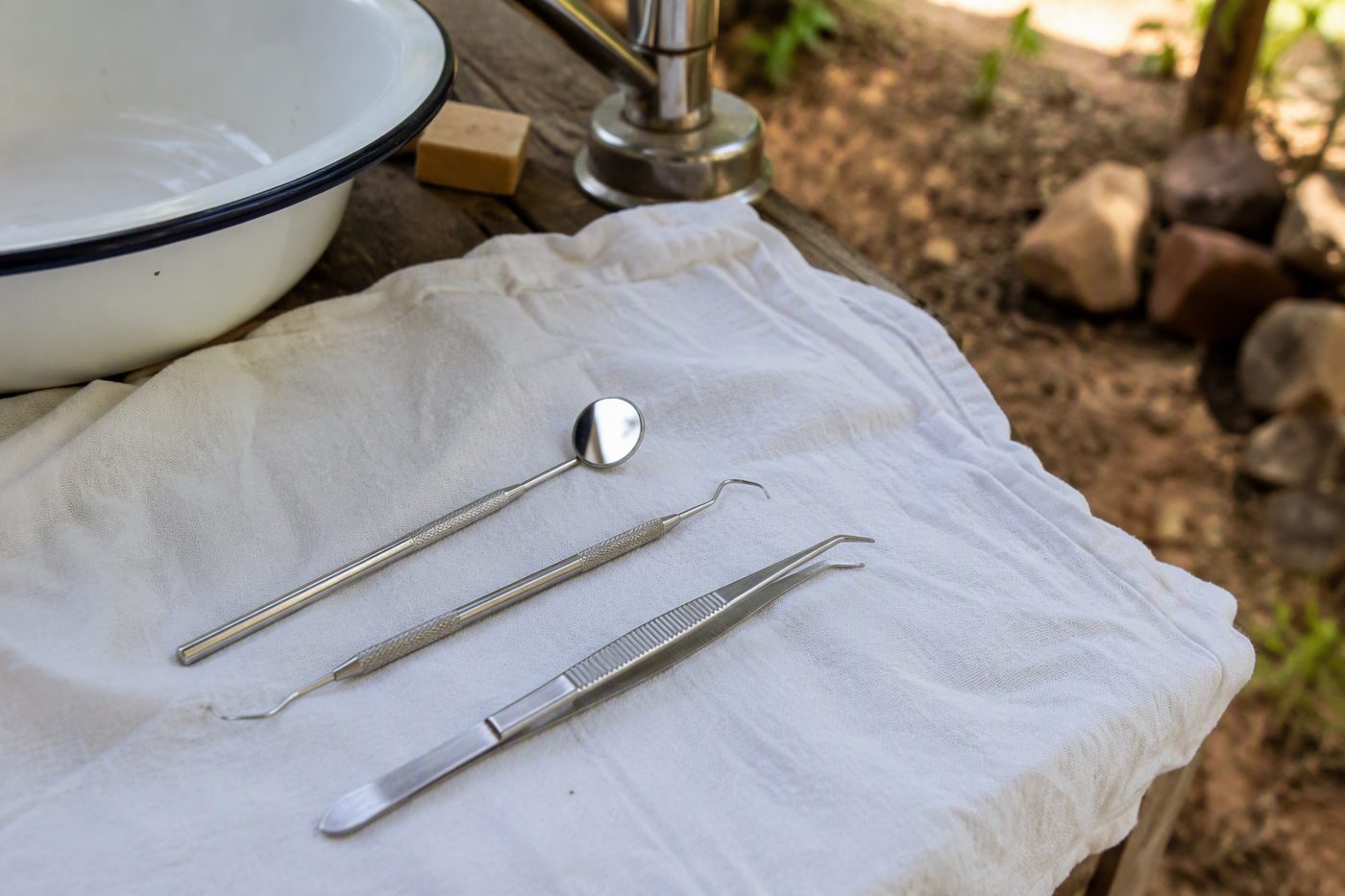
Dental mirror (small, autoclavable if possible)
Visualisation
Stainless steel preferred
Dental explorer/probe
Detect cavities, check margins
Single-ended, autoclavable
Tweezers (fine-tipped)
Handling debris, small objects
Stainless steel
Saline solution (sterile, 0.9% NaCl)
Irrigation, storage medium for avulsed tooth
500 mL bottles; check expiry
Milk (UHT long-life)
Tooth storage medium if saline unavailable
Keep backup carton in rotation
Temporary dental cement
Recement crowns, fill small defects
Pharmacy item
Orthodontic wax
Cover sharp edges, brace irritation
Pharmacy item
Clove oil (eugenol)
Topical analgesic on exposed dentin
Small bottle; dilute if sensitive
Ibuprofen (200 mg tablets)
Pain, inflammation
Per label; check contraindications
Paracetamol (500 mg tablets)
Pain
Per label
Salt (table)
Saltwater rinses
1 tsp per 250 mL water
Small LED headlamp
Illumination
Spare batteries
Mirror-on-handle (dental type)
Self-inspection
Useful for upper molars
Sharp scaler/curette
Calculus removal (experienced hands only)
Risk of enamel damage
The list runs about AUD $80–$120 from a pharmacy plus an online dental supplier, depending on brand. Replace consumables on a two-year rotation; check expiry on saline and medications.
When to Call a Licensed Professional
The drop list in my planning notes flags the items that always require escalation. Here's the practical translation:
Any avulsed tooth. Reimplantation success drops sharply after 60 minutes.
Any signs of spreading infection: facial swelling, fever, difficulty swallowing, difficulty opening the mouth, swelling under the tongue or in the neck. These are ED presentations, not "wait for the dentist to open Monday."
Fractures exposing the inner layers of the tooth (dentino or pulp), identifiable by visible pink/red inside the tooth, severe pain on temperature changes, or bleeding from the tooth itself.
Persistent bleeding that doesn't stop after 15 minutes of direct pressure.
Suspected jaw fracture: misalignment, inability to close the bite, numbness in the chin or lower lip.
Any dental work performed off-grid that needs definitive treatment — temporary fixes buy time, not outcomes.
In remote Australia, that means RFDS coordination, Royal Flying Doctor Service telehealth consults, or driving to the nearest regional hospital with an ED. If you're in Central Queensland, that often means Rockhampton Hospital (public ED) or arranging private dental care once stable. Mobile dental services do exist but coverage is uneven; check what's available in your shire before you need it.
Prevention: The Actual Best Strategy
In my experience with off-grid systems, the cheapest dental emergency is the one that doesn't happen. Prevention is more reliable than improvisation.
Water and oral hygiene:
Fluoride toothpaste twice daily. The fluoride concentration matters more than brand loyalty; standard 1000–1500 ppm is fine.
If your rainwater tank is the only source and you have no fluoride supplement, consider fluoride tablets or a fluoride-containing mouthwash. Australian tank water is typically fluoride-free unless your catchment is near specific mineral deposits.
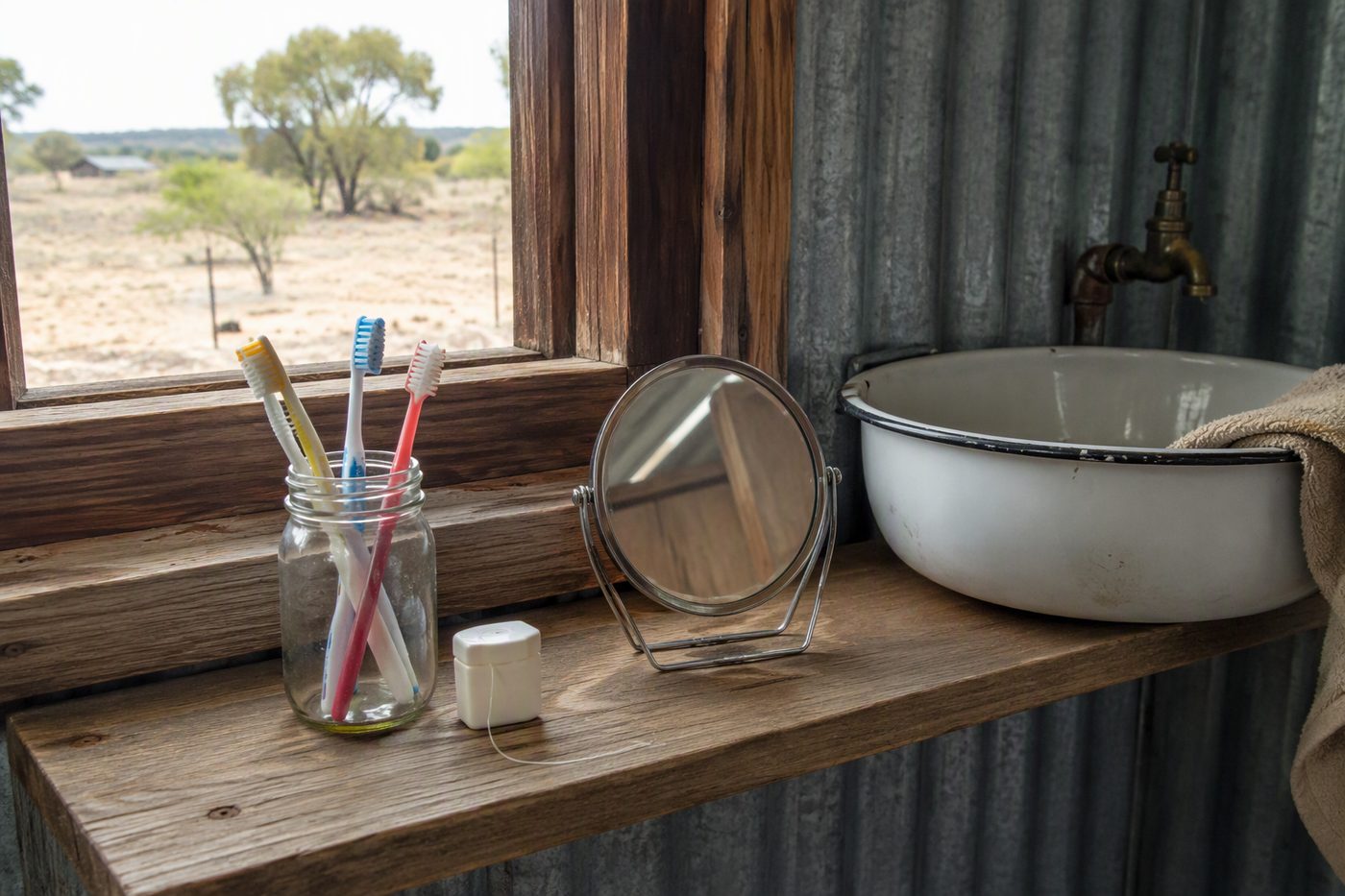
Floss or interdental brushes daily. The cavities that ruin weekends form between teeth.
Diet:
Limit free sugars. The World Health Organization recommends less than 10% of total energy intake from free sugars, with a conditional recommendation below 5%. That's roughly 6 teaspoons (25 g) per day on a 2000 kcal diet for the lower target.
Don't sip sugary drinks over hours. The pH stays low for the duration of exposure.
Don't brush immediately after acidic food or drink — wait 30 minutes so the enamel can reharden.
Protective gear:
Mouthguard for any activity with impact risk: fencing, chainsaw work, horse handling, four-wheel bike riding. A custom-fitted mouthguard from a dentist costs more than a boil-and-bite from a chemist, but the fit and retention are better.
Helmet with face protection for grinding or angle-grinder work.
Regular check-ups:
Even remote Australians should plan a dental visit at least annually, ideally twice yearly. Coordinate with trips to town or when a mobile service passes through. Catch small problems before they become abscesses at 2 am.
Sterilisation and Hygiene in the Field
The CDC's 2003 guidelines focus on standard precautions that apply across all dental treatment settings. Translated for off-grid use:
Gloves for any intraoral contact. Change between patients (yes, even family members).
Eye protection and mask if there's likely splatter — drilling, scaling, irrigation.
Instrument cleaning: wash in warm soapy water, then soak in a bleach solution (1:10 household bleach to water for 30 minutes), rinse thoroughly, air dry. Alternatively, a small benchtop autoclave works if you have reliable 230V power and want to match clinic standards.
Surface disinfection between uses: household bleach wipes or isopropyl alcohol 70%.
If you're running a non-traditional setup — say, a hygiene session in the shed before a muster — the guidelines still apply. Portable dental programs often operate in challenging settings such as hallways, gymnasiums, or other high-traffic areas; the same infection control standards hold regardless of location.
FAQ
Can I use super glue to fix a broken tooth or crown?
No. Cyanoacrylate (super glue) is not approved for intraoral use. It doesn't bond reliably to wet tooth structure, can damage soft tissue, and may trap bacteria. Use pharmacy temporary dental cement or cover a sharp edge with orthodontic wax until you can see a dentist.
How long do I have to reimplant a knocked-out tooth?
Knocked-out teeth have a 30–60 minute window for successful reimplantation. The sooner the tooth is back in the socket (or stored in milk, saliva, or saline), the better the odds. After 60 minutes the prognosis drops significantly.
Is it safe to pull my own tooth?
Generally not. Extraction without proper assessment risks retained root fragments, infection, and uncontrolled bleeding. The only situation where self-extraction is sometimes considered is a very loose deciduous (baby) tooth — adult teeth require professional care even if they look ready to come out.
What about antibiotics — can I stockpile amoxicillin for dental abscesses?
In Australia, antibiotics are Schedule 4 (prescription-only). Stockpiling without a script is not legal, and using them without diagnosis risks masking a spreading infection or selecting for resistance. If you suspect an abscess, this is a professional-care scenario.
Does bottled or tank water need fluoride supplementation?
Australian rainwater and most bottled waters are low in fluoride. If you have no reticulated fluoridated water supply, discuss fluoride supplementation with a dentist or GP. Standard fluoride toothpaste provides topical benefit; systemic supplementation is a separate decision.
Can I use a Dremel or rotary tool for dental work?
Not recommended. Without proper training, water cooling, and visualisation, rotary tools can cause irreversible damage to enamel, dentin, or pulp. The risk-reward ratio is poor; stabilise and seek professional care.
The Filling That Let Go: A Mirror, a Mirror Handle, and Two Hours on a Dust Road
While many off-grid projects are achievable as DIY, certain situations require licensed professionals:
Electrical work beyond basic 12V DC additions — requires a licensed electrician
Structural modifications to buildings or load-bearing elements
Gas line installation or modification
Solar array installations above safe voltage thresholds
Any work that affects the structural integrity of your property
Always check local regulations and obtain necessary permits before commencing work.
⚠️ SAFETY WARNING: Working with electrical systems, structural modifications, or gas installations carries inherent risks. If you are not confident in your abilities, always engage a licensed professional.
It covers practical ways to keep your own health and relationships on track while running a solo practice. That's something you need when you're hours away from any backup.— Jenny Mills
Frequently asked questions
What do you do when you crack a tooth miles from a dentist?
First thing is don't panic and don't swallow any bits. Give the area a gentle rinse with clean water, and if you've got it, pack the broken tooth with a bit of gauze or cotton to keep it clean. If you're bleeding, firm pressure with a clean cloth usually sorts it until you can get to a proper chair.
Can you actually pull your own tooth with pliers?
I won't say never, because I've done it myself with a pair of Bunnings pliers at last light when there was no other option. But it's a last resort, not a first choice, and you need to be honest about whether you can really see what you're doing and grip the right bit. If the tooth is still solid in the gum or you can't get proper hold of it, stop and get to a dentist instead.
What should I keep in a bush dental kit?
Mine lives in the ute and it's built around the basics: a small mirror and mirror handle so I can actually see what I'm working on, clean water for rinsing, gauze or cotton for packing, and a decent pair of pliers as a last resort. Throw in some pain relief and any temporary filling material you can lay your hands on. The whole point is having it within arm's reach on a dust road, not three days' drive away.
How do I know when to stop self-treating and drive to the dentist?
If the bleeding won't stop with pressure, if the swelling's spreading up your face or down your neck, or if you've got a fever with it, you're done self-treating and you need to be on the road. Same goes if you can't actually see what you're doing or the pain's getting worse instead of better after a day or so. A long drive is still better than an infection that takes hold while you're waiting it out.