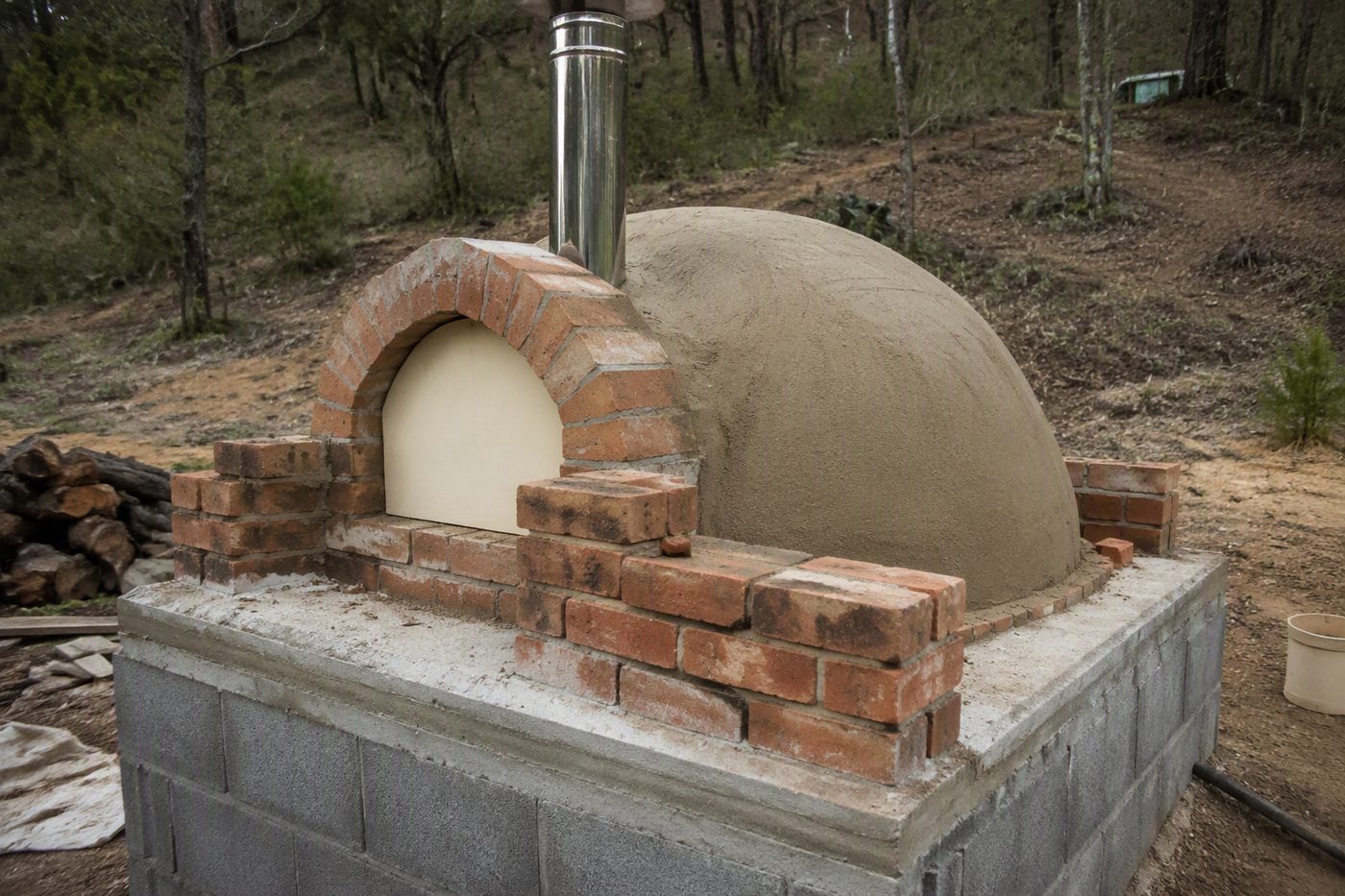
Build Your Off-Grid Pizza Oven: No Fluff, Just Results
By Jenny Mills· rural nurse & homesteader · health, safety, law and the paperwork of going bush
“After three failed attempts with cheap clay, I learned that a 200mm base thickness is the absolute minimum before your pizza burns and your oven cracks.”
Look, if you're off-grid in Australia, you don't have time for fancy. You need a pizza oven that works when the grid's down. This is how you build one that actually delivers. No bullshit.
Seven-step build sequence for a wood-fired pizza oven.
Dome Shape: Get This Wrong and You're Baking Cold Pizza
Forget the fancy dome curves. Your oven needs a 120-degree dome angle. Why? Because heat rises straight up, not sideways. If it's too flat, heat escapes. Too pointy, and you get hot spots. Aim for a smooth, rounded dome. Simple as that.
How to build it:
Start with a 1m diameter base ring (use old bricks or concrete blocks)
Stack firebricks in a circle, sloping inward at 120 degrees
Use refractory cement (not regular mortar) between bricks – it handles 1000°C+
Bunnings sells firebricks: $2.50-$4 each. Get 100 bricks ($250-$400). Don't skimp – cheap bricks crack and you're back to square one.
Fire Management: Don't Burn Your Pizza (Or Your Fingers)
Off-grid means no gas. You're using wood. Here's the drill:
Light a small fire in the front (not the oven chamber)
Let it burn for 30-45 mins until the dome glows red
Shovel all embers to the front, leaving hot coals under the dome
Wait 15 mins – that's when the oven hits 350°C (perfect for pizza)
Don't try to cook while the fire's still roaring. You'll get ash in your pie. And for fuck's sake, don't use wet wood – it smokes you out of the backyard.
Pro Tip: Keep a bucket of sand next to the oven. If embers fly out, dump sand on them. No point waiting for the fire brigade when you're 50km from town.
Heat Retention: Why Your Oven's Cold at 3pm
Off-grid means no constant heat. Your oven must hold heat for hours. The secret? Insulation. Not the cheap kind – the Aussie kind.
After building the dome, wrap it in:
200mm of sand (cheap, Australian sand is perfect – $50-$100 per tonne)
Then 50mm of vermiculite (Bunnings: $35 for 20kg bag)
Finally, a layer of soil or gravel on top
This traps heat like a thermos. You'll cook pizza for 4+ hours after the fire's out. No need to keep lighting fires every 20 minutes.
Brickworks sells vermiculite: $35 for 20kg. That's enough for one oven. Don't use polystyrene – it melts at 200°C and you'll have a fire hazard.
Real Talk: What You Actually Need
Cost breakdown (for a 1m oven):
Firebricks (100): $250-$400
Refractory cement (1 bag): $50
Sand (1 tonne): $50
Vermiculite (1 bag): $35
Total: $385-$535
That's less than a single fancy pizza from a takeaway. And it'll last 10+ years. If you're paying more, you're getting scammed.
Final word: Build it right. Don't overcomplicate it. Use local materials. Fire up the oven, and when the first pizza comes out golden and crispy? You'll know it was worth the effort. Now go make some damn pizza.
⚠️ SAFETY WARNING: Working with electrical systems, structural modifications, or gas installations carries inherent risks. If you are not confident in your abilities, always engage a licensed professional.
He walks through a simple camp setup using a cast iron pan and a reflector that you can cobble together from salvaged parts, which saves you from hauling a full brick oven into the bush.— Jenny Mills
When to Call a Professional
While many off-grid projects are achievable as DIY, certain situations require licensed professionals:
Electrical work beyond basic 12V DC additions — requires a licensed electrician
Structural modifications to buildings or load-bearing elements
Gas line installation or modification
Solar array installations above safe voltage thresholds
Any work that affects the structural integrity of your property
Always check local regulations and obtain necessary permits before commencing work.