Off-Grid Beekeeping in Australia: A Complete Guide
Pollination, honey, and self-sufficiency — here's how to keep bees on your off-grid Aussie property without the expensive mistakes.
By Fiona Gallagher· permaculture designer · food, animals and preservation on 12 acres in Tassie
“After losing my first two hives to the wet Tassie winter, I now know that 12 acres of permaculture means protecting bees from rain, not just feeding them sugar.”
Bees are the single best investment you can make on an off-grid property. One hive pollinates your entire food garden, produces honey for eating and selling, and requires minimal inputs once established. But getting it wrong at the start costs you $500 and a colony of bees.
Why Keep Bees Off-Grid?
Pollination: One strong hive boosts fruit and vegetable yield by 30-60%. If you're growing food, bees pay for themselves.
Honey: A productive hive yields 20-40kg of honey per year in good conditions. That's $300-600 worth at farm-gate prices.
Resilience: Bees are low-input livestock. They don't need daily feeding, housing, or milking. They basically look after themselves.
No noise, no smell: Unlike chickens or goats, neighbours won't complain about bees.
1. Hive Types — Choose Once, Live With It
Langstroth (Recommended for Honey Production)
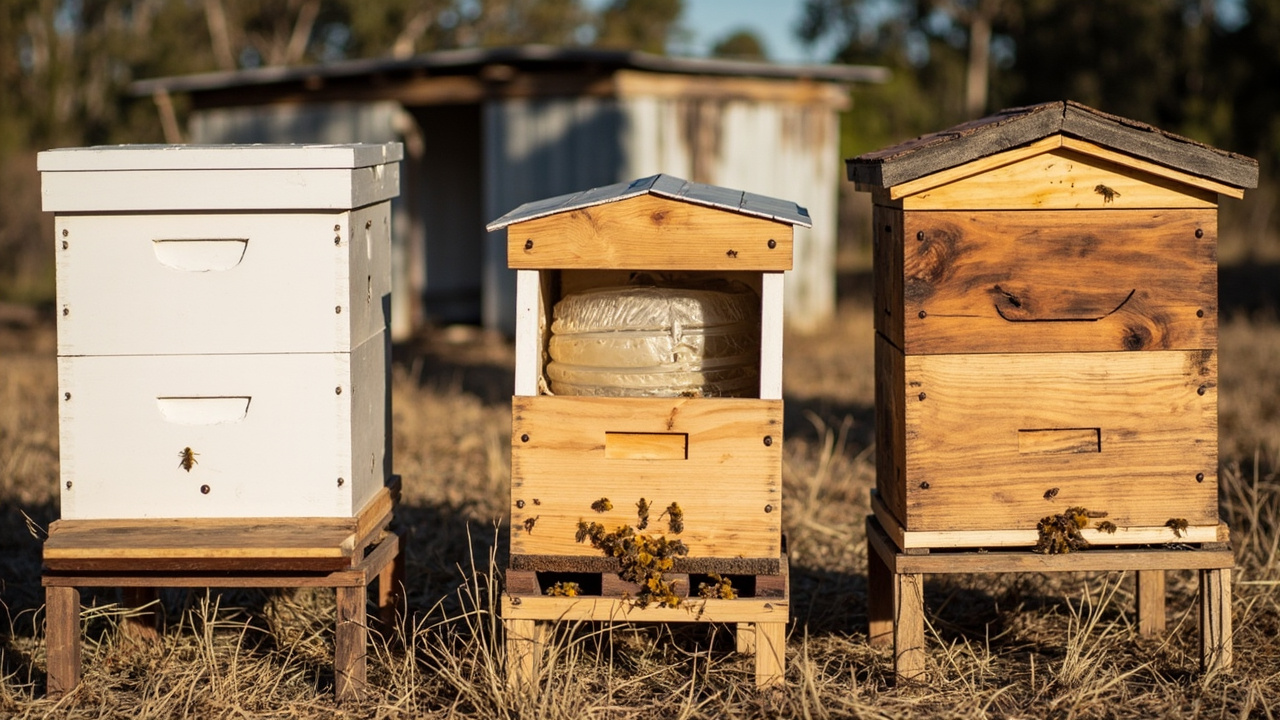
The industry standard in Australia. Modular boxes with removable frames. Best for honey production and easy management.
Langstroth, Flow, and top bar hives compared
Pros: High honey yield, easy to inspect, widely understood, parts everywhere
Cons: Heavy boxes (full super = 30-40kg), requires two people for harvests
Cost: $350-$600 for a basic setup (two boxes + frames + base + lid)
Top Bar Hive (Recommended for Simplicity)
Horizontal design with individual bars instead of frames. Lighter work, lower cost, but less honey per hive.
Pros: No heavy lifting, cheap to build DIY, minimal equipment
Cons: Lower honey yield, harder to inspect, not standard
Cost: $200-$400 DIY, $400-$700 purchased
Flow Hive (The New Kid)
Langstroth-style with built-in honey harvesting. No extractor needed — honey drains from the frame like a tap.
Pros: Harvest without opening the hive, less disturbance to bees
Cons: Expensive ($600-$900), heavy like Langstroth, still new so long-term durability unknown
Cost: $600-$900 for a full setup
Recommendation: Start with a Langstroth or Top Bar. Flow Hive is great but not worth the premium for beginners. Get your first hive from a local supplier, not overseas (biosecurity risk).
2. Essential Equipment
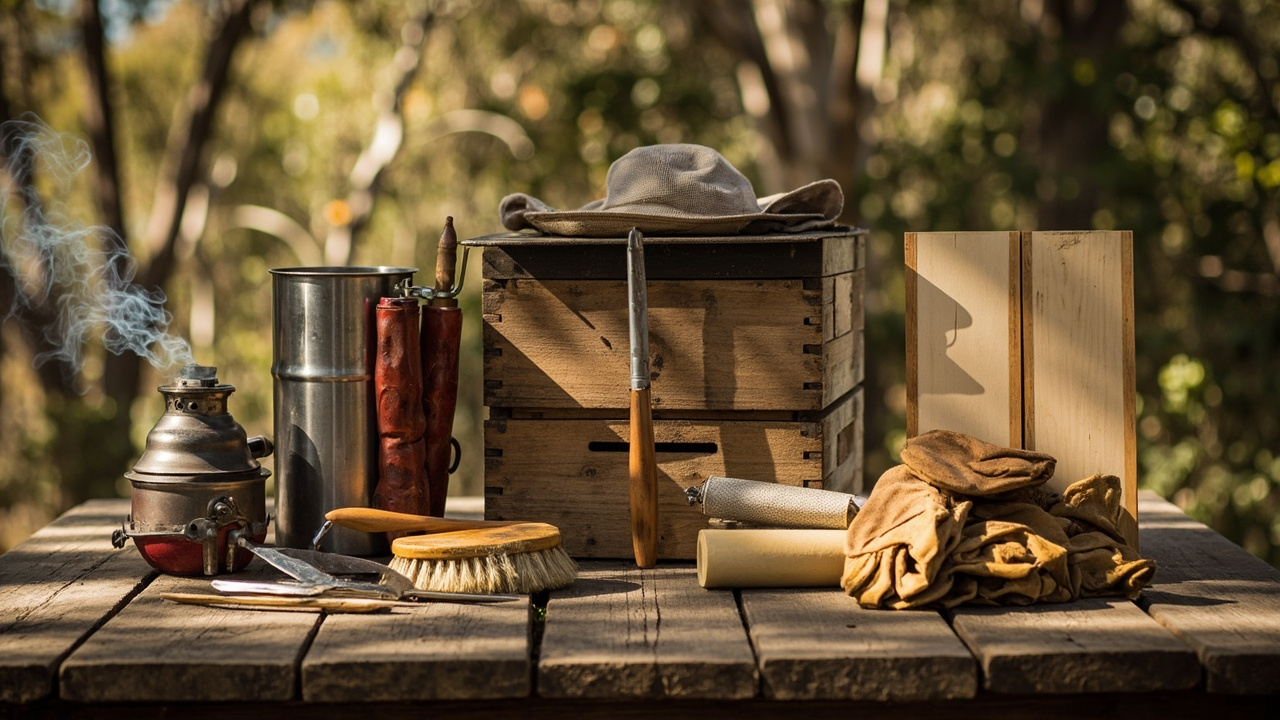
Bee suit with veil: $80-$180. Don't cheap out — a stinger through the veil is no fun.
Smoker: $35-$70. Calms bees. Use dried eucalyptus or cardboard.
Hive tool: $10-$20. Pries apart s
Essential beekeeping tools laid out ready
ticky frames. Essential.
Gloves: $25-$50. Leather or nitrile-dipped. Goatskin lasts longer.
Frame grip: $15-$25. Makes handling sticky frames much easier.
Australian Suppliers: Dadant Australia (dadant.com.au), Beechworth Beekeeping Supplies, Valblum Apiaries. Avoid cheap overseas equipment — it doesn't meet Australian biosecurity standards.
3. Getting Started — Don't Buy Bees Before Reading This
Register with your state: In Australia, you must register as a beekeeper with your state Department of Agriculture. Cost: free to $50/year depending on state. This is legally required.
Position the hive: North-facing (in southern states), 50-100m from your house, sheltered from wind, with space to work behind the hive. Bees fly up and away from the entrance — don't point it at your neighbour's pool or outdoor entertaining area.
Source your bees: Buy a nucleus colony (nuc) from a local breeder — 4-5 frames of bees + a laying queen. Cost: $180-$350. Don't buy packaged bees (imported, higher failure rate).
Install in spring: September-November in southern Australia. This gives the colony time to build up before winter.
4. Seasonal Management (Southern Australia)
Australian seasons are opposite to the northern hemisphere. Here's what to do and when:
Season
Months
Key Tasks
Spring
Sept-Nov
Inspect weekly, add supers, watch for swarming, feed sugar syrup if needed
Summer
Dec-Feb
Monitor honey stores, provide water, harvest excess honey, check for beetles
Autumn
Mar-May
Reduce entrances, treat for varroa (if detected), combine weak hives
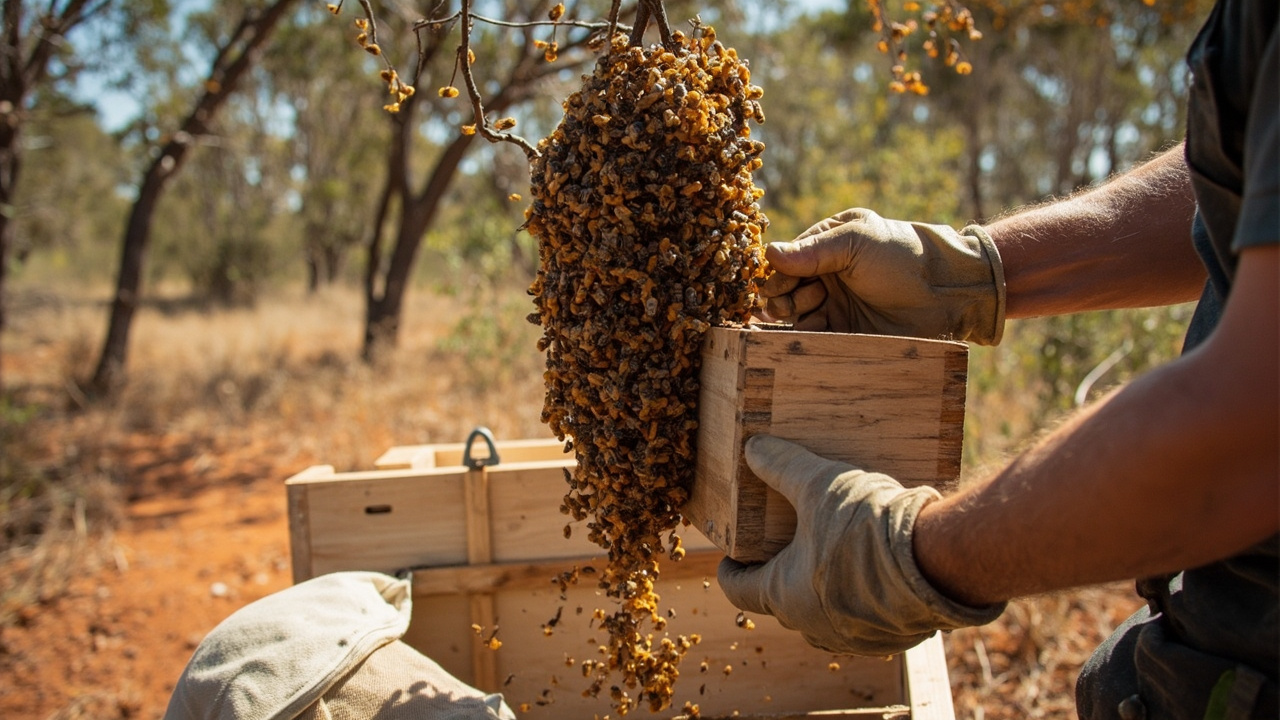
Swarming is how bees reproduce. Left unchecked, your colony splits and half your bees leave. Here's how to manage it:
Catching a swarm into a nuc box
Give space: Add supers before the hive gets crowded. A crowded hive = swarm preparation.
Split the hive: Before swarming season, make an artificial split. Take 2-3 frames of brood + bees and put them in a new box with a new queen cell or mated queen.
Clip the queen: Clip one wing so she can't fly. This prevents the primary swarm. You'll need to manage the queen cells that still develop.
Regular inspections: During spring, inspect every 7-10 days. Look for queen cells (peanut-shaped, hanging from frames). Destroy surplus cells or use them to make splits.
Varroa Mite: While varroa hasn't established in Australia at the time of writing, it remains the single biggest threat to Australian beekeeping. If you detect unusual brood patterns, crawling bees, or dead bees at the entrance, contact your state bee inspector immediately.
6. Honey Harvesting
Don't harvest until the honey is capped (wax seal over the cells). Partially capped honey has too much moisture and will ferment.
Check readiness: 80%+ of frames in a super should be fully capped.
Extract: Use a radial extractor ($300-$800 for a 3-frame unit). Spinning it out without an extractor is possible but messy — use a crush-and-strain method for top bar hives.
Filter: Strain through a fine mesh filter. Settle for 24 hours. Bottle.
Yield: A strong Australian hive produces 20-40kg per year. A weak hive might give you nothing. Don't take honey from a first-year hive — they need it to survive winter.
7. Registration and Legal Requirements
In Australia, beekeeping is regulated at the state level. You must:
Register as a beekeeper with your state agriculture department
Use disease-free equipment (no importing old hive components)
Maintain a maximum of hives appropriate for your land size (check local council rules)
Report any notifiable diseases to your state bee inspector
Registration is free in most states. It's not optional — unregistered beekeeping can result in fines.
8. Setup Costs (Real Numbers)
Item
Cost (AUD)
Langstroth hive (2 boxes + frames)
$350-$600
Bee suit + veil + gloves
$130-$230
Smoker + hive tool
$50-$90
Nucleus colony
$180-$350
State registration
$0-$50
Total start-up cost
$710-$1,320
One hive pays for itself in 2-3 years through pollination benefits and honey sales. After that, it's pure profit.
When to Call a Professional
While many off-grid projects are achievable as DIY, certain situations require licensed professionals:
Electrical work beyond basic 12V DC additions — requires a licensed electrician
Structural modifications to buildings or load-bearing elements
Gas line installation or modification
Solar array installations above safe voltage thresholds
Any work that affects the structural integrity of your property
Always check local regulations and obtain necessary permits before commencing work.
He walks through hive setup, swarm control and a simple honey extraction method using basic gear, which fits straight into an off‑grid Aussie setup without needing expensive equipment.— Fiona Gallagher
Frequently asked questions
Do I need to register my beehives in Australia?
Most states and territories require you to register your hives with the relevant agriculture authority, and I walk through what's needed in each one in the legal section. There are also rules around marking hives and keeping records that catch a lot of beginners out. Skip it and you can cop a fine, or worse, lose your hives in a disease purge.
How much does it cost to start beekeeping off-grid?
The setup costs section breaks down the real dollar figures so you've got a proper budget before you commit. You can start modest with just the essentials and build up your kit over the seasons. Where you save and where you really shouldn't skimp — I cover that too.
When do you harvest honey in southern Australia?
You're generally looking at late spring through to autumn, but it shifts around depending on your local conditions and what the bees are foraging on. The seasonal management section explains how to read capped frames so you know the honey is properly cured and ready. Pull too early and you'll end up with runny honey that ferments in the jar.
What do I do if my bees swarm?
Swarming is just how colonies reproduce, and the article covers how to head it off before it happens — giving the hive enough room, splitting strong colonies early, that sort of thing. If they do swarm, you can sometimes catch a cluster if it settles nearby, but there's a knack to it. I've also written about when it's smarter to ring a professional than have a crack yourself.