Look, if you're off-grid in Australia and your compost smells like a dead possum in a hot car, you're doing it wrong. Turning isn't optional – it's the difference between usable soil and a smelly landfill. Here's how to do it right, without wasting your time or cash.
By Fiona Gallagher· permaculture designer · food, animals and preservation on 12 acres in Tassie
“After three failed attempts on my Tassie clay, I learned to turn my 1200-litre compost heap every seven days to stop the dreaded anaerobic sludge.”
Comparison table of four compost turning methods by effort, speed and best use case.
Tools: What You Actually Need (No Fancy Gear)
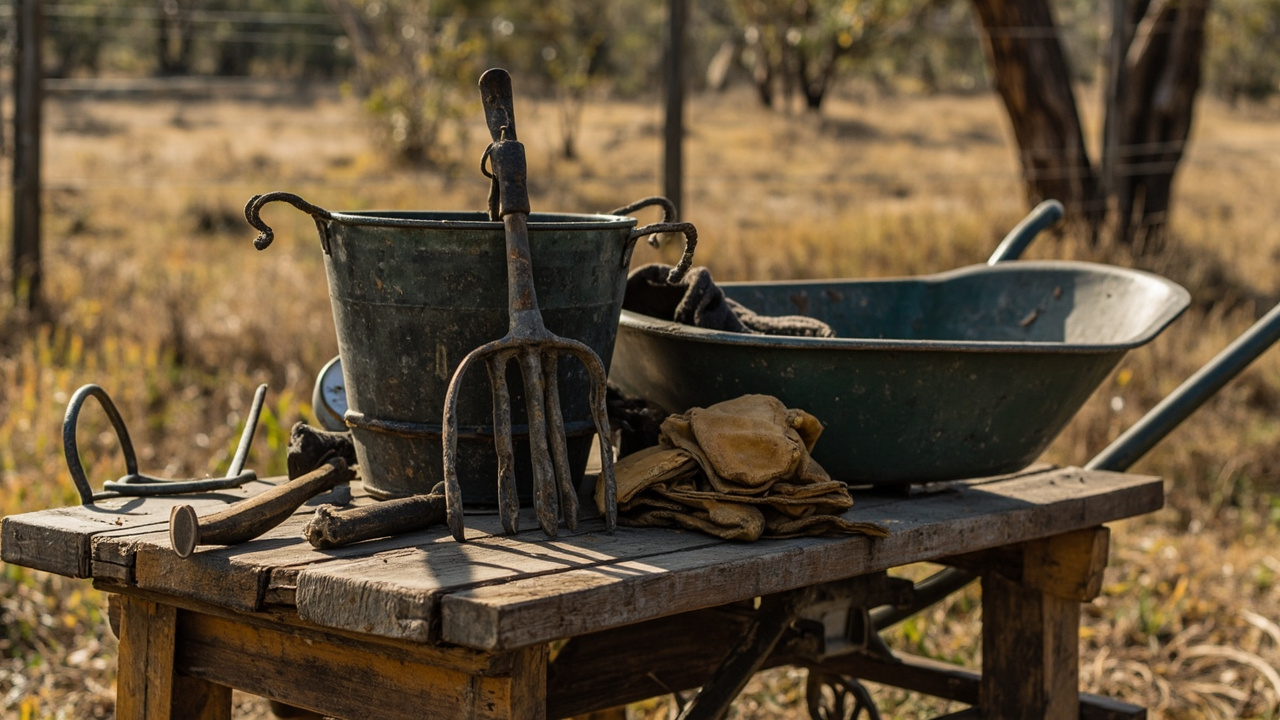
Forget those $200 aerators. You need:
Simple composting tools on a weathered wooden bench
Sturdy garden fork (Bunnings: $15-$25). The cheap steel ones work fine. Avoid plastic – they snap in the heat.
Shovel (Mitre 10: $12-$18). For moving big chunks.
Wheelbarrow (Bunnings: $45-$75). Non-negotiable. You'll thank me later.
Old broom handle (from your shed). For poking holes if you're lazy.
No need for fancy tools. If you're buying a $300 "compost turner", you're being ripped off.
Frequency: How Often to Turn (The Truth)
Turn your pile when it's:
Hot (over 50°C) – turn immediately. If it's not hot, it's not working.
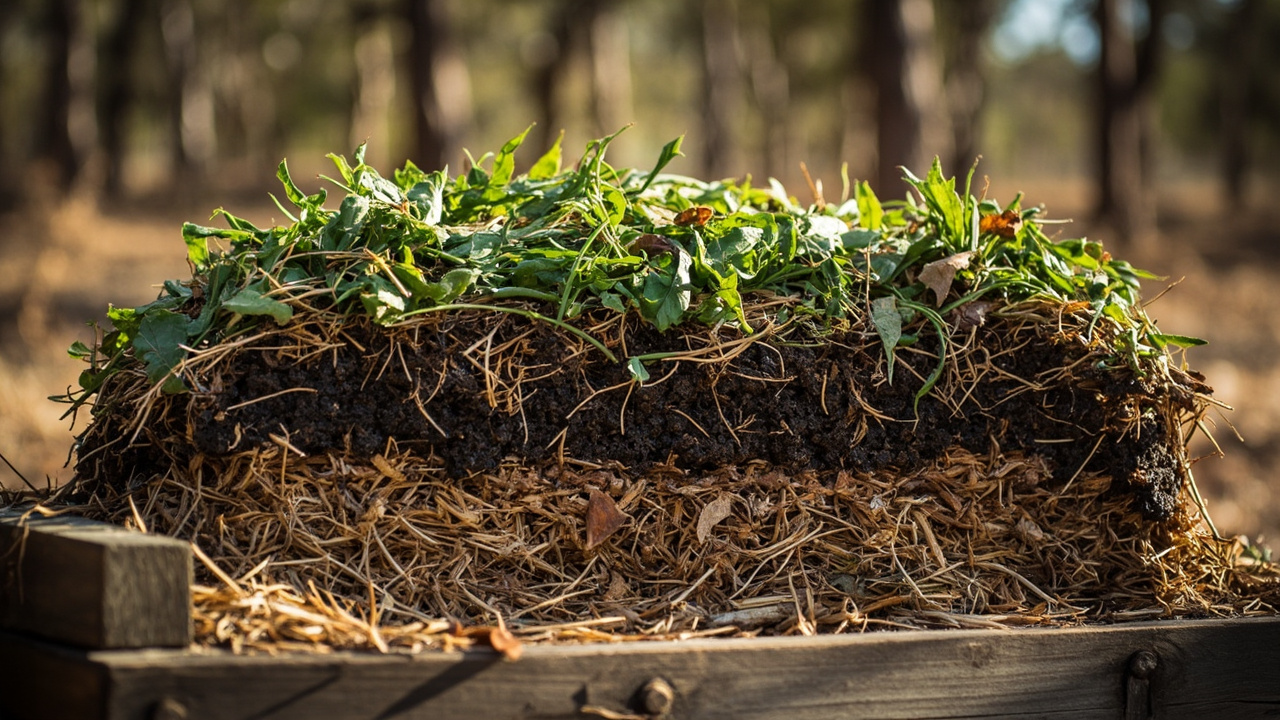
Close-up of compost layers: greens and browns
g>Smelly (rotten eggs, ammonia) – turn now. That's anaerobic bacteria dying.
Stuck (looks like a solid block) – turn it. No exceptions.
Most Aussies turn once every 7-10 days in summer. In winter, maybe every 2-3 weeks. If you're turning weekly and it's still smelly? You've got the wrong mix.
Carbon-Nitrogen Management: The Simple Bit
It's not rocket science. You need:
Greens (nitrogen): Veg scraps, coffee grounds, fresh lawn clippings. Don't overdo it – 1 part greens to 2 parts browns.
Browns (carbon): Dry leaves, straw, shredded paper. Too much = slow rot. Too little = stink.
Rule of thumb: If your pile smells like a swamp, add more browns. If it's dry and not heating up, add greens. No measuring – just eyeball it.
Pro Tip: When turning, mix in extra dry leaves (from your eucalyptus tree) if it's too wet. If it's too dry, add a bucket of veg scraps. Done.
Australian Suppliers & Pricing (indicative prices)
Bunnings Warehouse
Garden fork: $18.95
Wheelbarrow: $59.95 (basic steel) Stock up when they're on sale – usually every 3 months.
Mitre 10
Shovel: $14.95
Straw bales (for browns): $12.95 (10kg bag) Get straw from the farm section – cheaper than the garden aisle.
Local Council
Free dry leaves in autumn (ask at your local depot). Don't waste time buying them – they'll give them away.
What Not to Do (The Bloody Obvious)
Don't turn when it's wet – you'll make a mud soup. Wait for a dry day.
Don't add meat/dairy – it attracts rats. End of story.
Don't ignore the smell. If it stinks, turn it. If you don't, your off-grid dream dies.
Final word: If your compost isn't hot, smelly, or turning into black gold in 6-8 weeks, you're not doing it right. Adjust the greens/browns, turn it, and stop overcomplicating it. Simple. Australian. Works.
When to Call a Professional
While many off-grid projects are achievable as DIY, certain situations require licensed professionals:
Electrical work beyond basic 12V DC additions — requires a licensed electrician
Structural modifications to buildings or load-bearing elements
Gas line installation or modification
Solar array installations above safe voltage thresholds
Any work that affects the structural integrity of your property
Always check local regulations and obtain necessary permits before commencing work.
I like that the video walks through turning the pile every three days for three weeks and shows how to mix in biochar at the end, which gives you fast, high‑quality compost without any extra gadgets.— Fiona Gallagher