Homemade Diesel Fuel: Biodiesel, WVO & Black Diesel for Old Engines
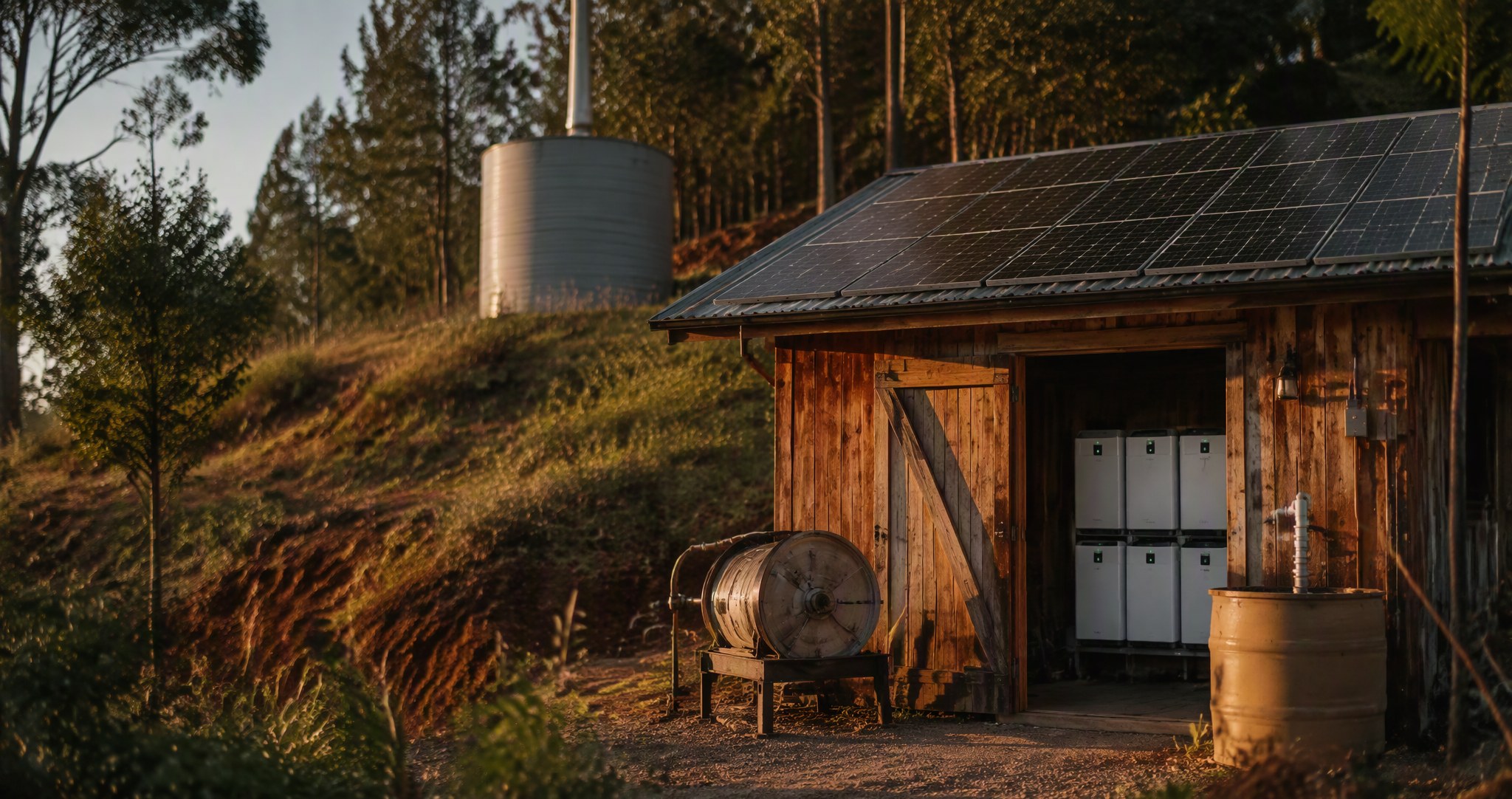
The servo is 45 minutes away, the drum in the shed is three-quarters empty, and the generator doesn't care about either of those facts, it drinks when it drinks. Out here, diesel isn't a commodity. It's a supply chain with one link, and that link is you.
Here's the thing most city folks never learn: a diesel engine built before about the mid-90s is one of the most tolerant machines ever made. Mechanical injection, low compression-heat sensitivity, no computers counting microns. People have run them on filtered chip-shop oil, on homebrew biodiesel, on kerosene mixes, even on strained waste engine oil, sometimes for hundreds of thousands of kilometres. This article is the honest version of that craft: seven fuels that actually work in older diesels, the workflows to make each one properly, the gear that survives the job, and the risks nobody selling you a "conversion kit" will mention.
Everything here assumes an older engine with mechanical injection, the tractor, the old ute, the stationary Lister clone spinning your generator. If your daily driver is a 2019 common-rail anything, close this tab and keep buying bowser fuel; there is nothing for you here but expensive lessons. The kit-cost reality for the rest of us: a first filtering rig lands at a couple of hundred dollars, a full homebrew setup at a few hundred more, and the totals update to your store's currency. Let's get into it.
TL;DRThe short version
Full reasoning, seven complete workflows, honest downsides and the law below.
MethodHow we chose
- The processes are the documented, boring-standard ones. Every workflow here is the method the homebrew community has settled on over two decades, Journey to Forever, the Duda Diesel guide, university ag extensions, not something we invented last week.
- Every product verified live on Amazon, 31 Aug 2026. Ratings, review counts, prices and images checked on the live listings; anything thin on reviews, priced at silly RRP, or unconfirmed on your local store gets flagged in its card.
- The honest version or nothing. Every fuel and every product here has a failure mode, and we name it. Where the honest answer is "don't", common-rail engines, road-tax grey zones, petrol in diesel, we say don't.
01 · Know your engineGround rules: what your engine will actually tolerate
Diesel fuel tolerance comes down to one question: how is the fuel injected? Old engines use mechanical injection at modest pressures into a pre-chamber (indirect injection, IDI) or straight into the piston bowl (direct injection, DI). Those systems were engineered when fuel quality was a suggestion, not a specification. Their tolerances are loose, their pumps are rebuildable with a spanner, and the pre-chamber in an IDI engine effectively pre-heats each gulp of fuel, which is why a 1982 Mercedes 300D will digest warm vegetable oil that would kill a modern engine in a week.
Modern diesels are the opposite. Common-rail systems run at 1,800-plus bar through injector holes measured in microns, with tolerances finer than the particles in "filtered" chip oil. They need exact viscosity, exact lubricity, and zero water. High-pressure pumps run on the fuel itself as their only lubricant. Feed a common-rail engine anything homebrewed and you are not saving money, you are pre-paying for a five-figure fuel system. Same verdict for anything with a DPF or under warranty: not a candidate, full stop.
Here's the compatibility map. These are community-consensus outcomes, not manufacturer approvals, no manufacturer approves any of this:
| Engine family | Injection | WVO blend | B100 biodiesel | Two-tank SVO | Black diesel |
|---|---|---|---|---|---|
| Mercedes OM616/617 (240D/300D, '68–85) | IDI, mechanical | The classic | Yes (Viton lines) | The classic | Small % only |
| Toyota B/2H/1HZ (Land Cruiser 40–105) | IDI/DI, mechanical | Yes | Yes | Yes | Small % only |
| Perkins 4.236/6.354 (tractors, masseys) | IDI/DI, mechanical | Yes | Yes | Yes | Small % only |
| Ford/International 6.9/7.3 IDI ('83–94) | IDI, mechanical | Yes | Yes | Yes | Small % only |
| GM 6.2/6.5 Detroit ('82–2000) | IDI, mechanical | Yes | Yes | Yes | Small % only |
| Cummins 4BT/6BT 12-valve ('89–98) | DI, mechanical | Blends fine | Yes | With heat | Small % only |
| Lister/Petter & clones (stationary gennies) | DI, low-rpm mechanical | The genny favourite | Yes | Yes | Small % only |
| Early VW 1.6/1.9 IDI ('80s–90s) | IDI, mechanical | Yes | Yes | Yes | No |
| TDI (PD/unit injector) ('98–2006) | DI, high-pressure | No | Blends only | No | No |
| Common-rail anything (D-4D, Ranger, modern utes) | Electronic, 1,800+ bar | No | B5–B20, maker limits | No | No |
| Anything with a DPF (~2007+) | No | B5–B7 max | No | No |
Two more ground rules. First, rubber: biodiesel and hot veg oil eat natural rubber and nitrile seals for breakfast. Anything plumbed before about 1995 may need its fuel lines and pump seals swapped to Viton/FKM, cheap insurance against a slow weep becoming a fire. Second, the generator is the perfect test bed: it runs at steady load, it lives at home, and a trashed injector pump on the Lister is a learning experience, not a walk to town. Prove every batch in the genny before it goes near the ute.
Not sure what your generator habit actually costs in fuel? Run your real numbers first:
Backup Generator CalculatorMonthly fuel litres and dollars for your runtime, size the problem before you solve it. Open free tool →02 · The gatewayFuel 1: Filtered WVO blends
Waste vegetable oil, the stuff the local chippy pays someone to take away, is the gateway drug of homebrew fuel. Chemically it's a triglyceride, same as diesel's energy content per litre, just roughly ten times more viscous and carrying a payload of crumbs, water and free fatty acids. The craft is simple: get the junk out, then thin it down with diesel. No methanol, no lye, no titration. This is where every sensible person starts, because the mistakes cost you filters instead of engines.
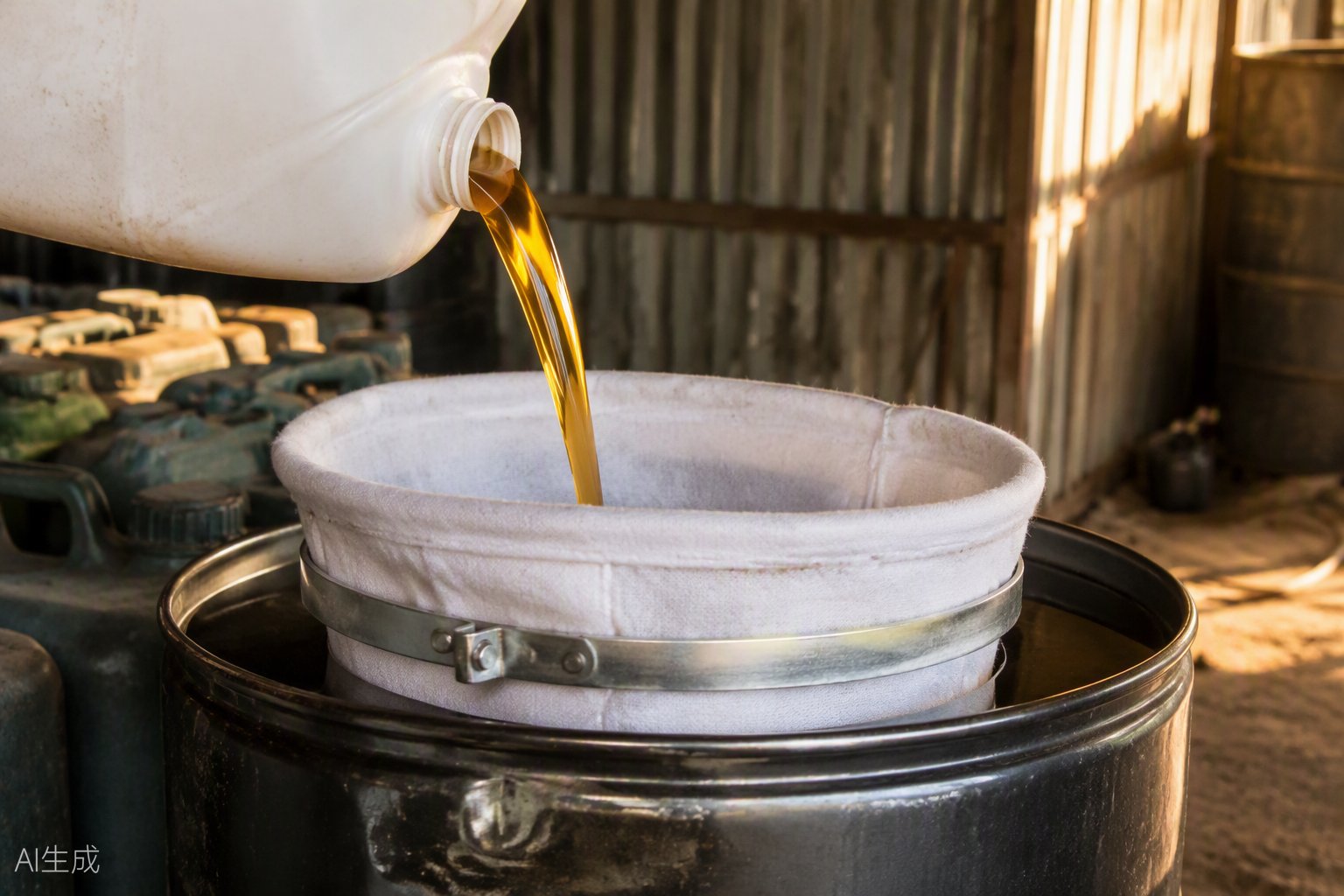
The sourcing ritual: ask at the takeaway shop, bring clean sealed cubes, take the oil they were going to bin, and never make their mess your problem. Fish-and-chip oil (canola, sunflower, cottonseed) is gold. Hydrogenated stuff that sets like candle wax at room temperature is not, walk away. Back at the shed, the oil gets time, warmth and progressively finer barriers:
The WVO chain. Patience at step 2 is free; skipping it costs you every downstream filter.
How much can you blend? The community consensus, earned over millions of kilometres: 10–20% WVO into diesel runs in almost anything warm; 50% is the sweet spot for old IDI engines in an Australian climate; brave souls run 75% in summer with a heated filter. Start at 10% for a month, watch the fuel filter, step up. Cold mornings are the enemy, thick oil plus a cold start is how rings coke and injectors foul, which is why anything past 50% really wants the two-tank treatment in Fuel 3.
The gatekeeper: RA micron-screen fuel funnel
Every litre you handle gets poured at least twice, and every pour is a chance for crud to hitchhike. This funnel's stainless screen catches the chips, the batter flakes and the dead flies before your drum does, and it's sized sensibly, chainsaw tank to tractor filler. Owners keep one in the ute and one on the drum, which tells you the use pattern. The honest con: the screen loads up and isn't immortal, so treat it as a consumable with a two-season lifespan.
The first pass: 50-micron felt filter socks
Drop one of these into a drum rim, pour warm oil through, and gravity does your first real filtration for the price of a pub chip. Felt catches the fines that mesh lets through, and at this price a really foul batch of oil can have its own dedicated sock without grief. WVO folks have run this exact stage for decades. The con: cold thick oil crawls through felt like it's thinking about it, warm the oil first, or rig a simple clip frame and let it take all night.
The muscle: rotary hand drum pump
Unless you enjoy tipping 200 kg drums at 6am, you need a way to move oil between vessels. This aluminium rotary pump is rated by the maker for diesel, kerosene and engine oil, viscosity-wise, WVO is in family, and the three-piece suction tube fits everything from a 20-litre pail to a full drum. No power, no flat batteries, no drama. The honest cons: the review count is still thin, and rotary vanes hate grit, always pump after the sock, never before.
The full stop: Goldenrod 496 Water-Block
The Goldenrod has guarded farm fuel tanks since before I was born, and the tractor forums are full of thirty-year veterans of the things. The see-through bowl shows you exactly what your fuel is hiding, and the water-block element progressively strangles the flow as it gets wet, so water announces itself at the pump instead of in your injectors. Biodiesel brewers plumb them on the dispensing line as the final bouncer. The con: the polymer bowl is the consumable part, keep a spare bowl and a 496-5 element on the shelf, because the day you need one is a Sunday.
Blend in the drum, not the tank. Pump your filtered WVO into a clean drum, add diesel, roll it gently to mix, and let it stand a day before it goes anywhere near a vehicle. If anything drops out, and on early batches, something always drops out, it drops out there, where you can see it, not in the ute's tank.
03 · The chemistry setFuel 2: Biodiesel, done properly
Biodiesel is what happens when you stop negotiating with vegetable oil's viscosity and change the molecule instead. React the triglyceride with methanol and a lye catalyst (transesterification, if you're taking notes) and it splits into glycerin, which drops out the bottom, and fatty acid methyl esters: a thin, clean-burning fuel that meets the same ASTM D6751 spec as the commercial B5/B20 blends at the bowser. Done properly, an old diesel runs it neat, starts better on it than on straight veg, and it smells like a chip fryer at full noise, which never stops being funny.
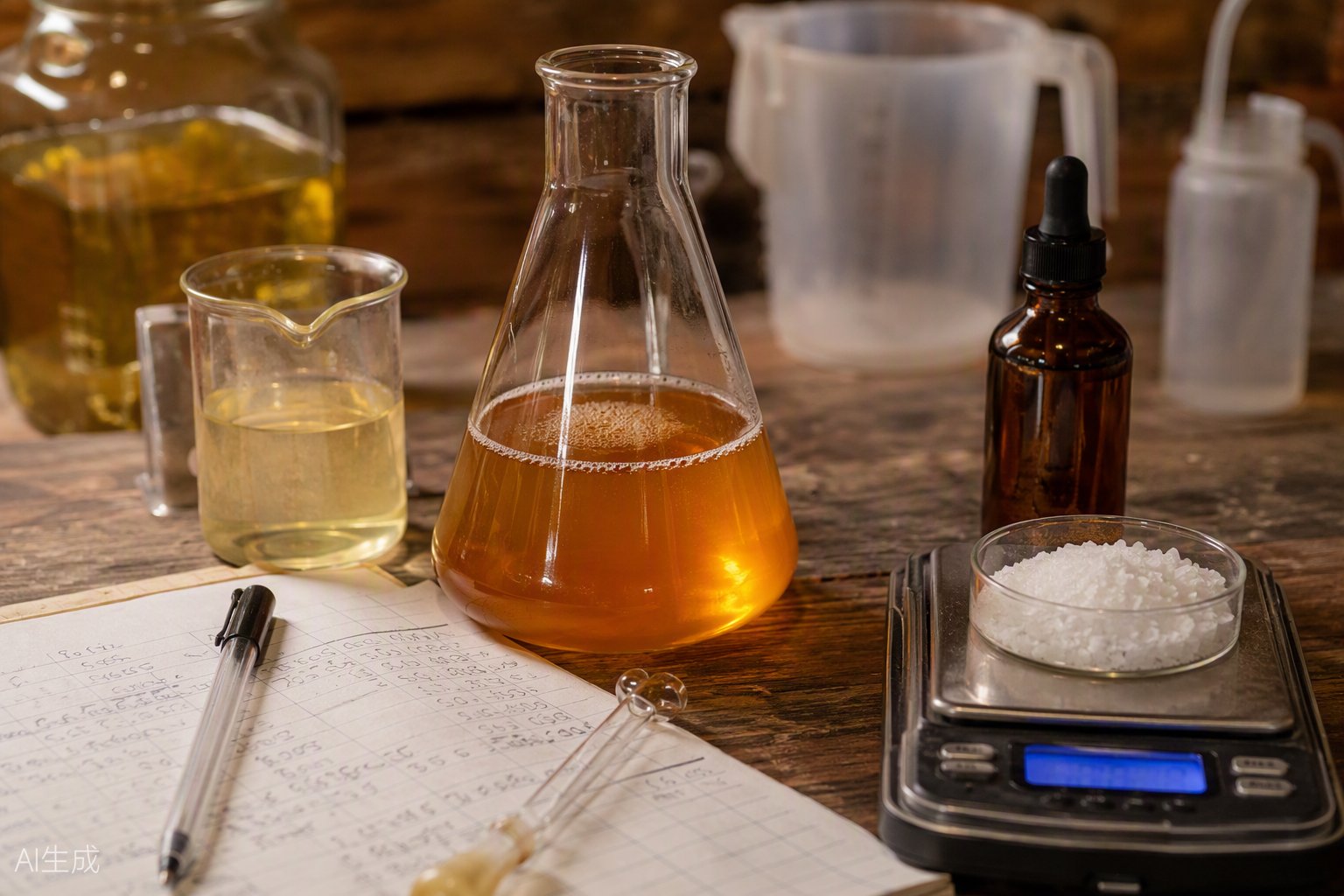
Done badly, it makes soap, glop, and sad engines. The difference between the two outcomes is discipline at five points: dry oil, an honest titration, accurate grams, proper temperature, and testing before you wash. This is real chemistry with a toxic, flammable alcohol and a caustic catalyst, the safety kit in the safety section is part of the process, not an accessory.
The homebrew-standard single-stage base process, per the Duda Diesel guide and Journey to Forever. High-FFA oil (titration above ~5) wants the two-stage acid-base process: same books, one chapter further.
The 1-litre test batch (learn on this before you touch a drum)
| Feedstock | Dry, filtered WVO, 1 litre, warmed to 50–55 °C |
| Methanol | 200 mL (20% of oil volume), racing/chemical supplier; keep sealed, it's hygroscopic |
| Catalyst | KOH: 7 g ÷ 0.91 purity ≈ 7.7 g, plus your titration number or NaOH: 5 g plus titration |
| Titration | 10 mL 99% isopropyl + 1 mL WVO + 2 drops phenolphthalein; add 0.1% NaOH solution until pink holds ~20 s; mL used = extra grams of catalyst per litre of oil |
| React | Add methoxide to the warm oil, mix hard 1 hour (shaken bottle or pump loop) |
| Settle | 12–24 hours; glycerin falls to the bottom |
| Prove it | 3/27 test → wash → dry → clarity check. Only then does it earn the drum |
Methanol is toxic, absorbed through skin, and burns with a near-invisible flame. Lye dissolves flesh, eyes first. Mixing them is exothermic, the container gets hot and the vapour is methanol. So: outdoors or forced ventilation, sealed goggles and lye-proof gloves, no ignition sources within metres, the respirator with organic-vapour cartridges on your face, and an ABC extinguisher at the door. Add lye to methanol, never the reverse, in two stages so the heat can bleed off. If any of that sounds excessive, this fuel isn't for you, and that's a fine answer.
The forgiving catalyst: Essential Depot KOH flakes
Potassium hydroxide is the catalyst most homebrewers settle on: it dissolves in methanol in minutes instead of ages, runs cooler doing it, and the glycerin by-product stays liquid and pourable, draining it isn't a chisel job. Essential Depot is the name the soap-and-biodiesel crowd has bought for years; this 2 lb tub is enough for roughly a hundred litres of oil at typical titrations, and the resealable HDPE container matters because KOH drinks moisture from the air. The honest con: it's about 90% pure, so divide your base catalyst by 0.9 or your batches drift, and reseal it the second you've weighed your grams.
The cheap catalyst: Boyer high-test lye
Sodium hydroxide is the budget path: cheaper per batch and about 99% pure, so no purity-correction maths on a Friday arvo. The Boyer/Red Crown high-test lye is food-grade, the crystals are consistent, and eighteen hundred reviewers use it for soap, pretzels and brew day. The trade-off is behavioural: NaOH releases more heat dissolving into methanol and takes longer, so mix it in two patient stages, and expect the glycerin layer to set harder than KOH's. Either catalyst makes fuel; KOH makes fewer excuses.
The titration tell: phenolphthalein 1%
Guessing catalyst grams is how batches turn to glop. Two drops of phenolphthalein turn magenta right at the pH where your titration ends, it's the traffic light that converts "used oil, probably fine" into an actual number of grams per litre. This Biopharm bundle ships a bench-sized dropper bottle plus a 250 mL refill, which is years of titrations. Lab-grade, consistent, and reviewers use it for exactly this. The con is housekeeping: it's alcohol-based, so it lives by the same no-flame rules as the methanol.
The honest grams: MAXUS 0.01 g pocket scale
Your catalyst dose per litre is a single-digit number of grams; being out by two grams is a 40% error and a ruined batch. A 0.01 g pocket scale is the cheapest accuracy you will ever buy, and this MAXUS has twenty-two thousand reviews behind it. Runs on AAAs, the tray doubles as a weighing boat, and it tares fast. The con: they drift a touch at the low end, re-tare between weighings and sanity-check it monthly against something known, like a fresh coin on the specs sheet.
The bench set: Karter borosilicate beakers
The 50 mL beaker is your titration cup, the 1000 mL is your sample and 3/27 vessel, and the ones in between handle isopropyl, warm oil and methoxide-adjacent duty without flinching, real 3.3 borosilicate, not soda glass that shatters at a stern look. Six sizes for seventeen bucks, and owners report years of hobby-lab abuse. The con: the printed graduations are indicative, not certified, measure with syringes for anything that decides catalyst grams.
The no-contact gauge: Etekcity 1080 IR thermometer
The reaction wants 50–55 °C: hotter wastes methanol to vapour, colder stalls the conversion. Point this at the processor wall and you know in a second, without cracking a lid over a hot caustic tank. It's one of the most-reviewed tools on Amazon full stop, and it earns its keep everywhere from the pizza oven to checking radiator flow. The con: IR reads surfaces, not liquid core, stir the oil before you trust the number, and take shiny-stainless readings with a grain of salt.
The cold-morning fixer: drum heater band
Wrap this around a drum and yesterday's honey-thick WVO becomes filterable in an hour or two; dialled back, it's also the gentle heat that dries finished biodiesel before polishing. The adjustable thermostat is the whole point, 50–60 °C for filtering duty, not a guessing game. Two honest cons: review count is still small, and it's a 120 V appliance, so Australian buyers need the local-voltage equivalent (the card links a local search for you). Never run any drum heater on a sealed drum, vent it.
The gentle wash: Chapin 1-gallon pump sprayer
Washing biodiesel is how you remove the residual soaps, catalyst and methanol, and the first wash must be a mist, because violent agitation turns the batch into an emulsion that takes days to break. Pump the Chapin up, fog the surface of the fuel, watch the water turn milky as it pulls the junk down. Over a hundred thousand reviews, made in the USA, and the seals and wands are genuinely available as spares. The con: dedicate one sprayer to wash water only, label it, and never let fuel touch it, the seals aren't Viton.
The polish: Pentek Big Blue housing
Finished biodiesel, or finished WVO for blending, gets a final trip through the 4.5" x 10" cartridge format the whole filtering world standardised on. A 5-micron cartridge then a 1-micron in series, gravity-fed warm, and what comes out is fuel you'd show off in a jar. The 1" NPT ports flow enough for gravity work, and the housing itself is a decades-proven design with the wrench in the box. The con: polypropylene and Queensland sun don't mix, mount it shaded, and depressurise before you crack the sump.
The lab glass: Ball quart jars
The humble mason jar is the homebrew lab's workhorse: 3/27 tests, settling tests, "is this batch dry yet" clarity checks, and the sample library of every batch you've made, lined up on a shelf like amber trophies. Glass doesn't care about methanol or hot oil, plastic cups cloud and dissolve. Wide mouth, so the turkey baster fits. The con is gravity: glass plus concrete floors equals a broom, so they live in a timber rack on the bench, not balanced on the drum lid.
04 · The committed relationshipFuel 3: Two-tank SVO, straight veg, daily-driver grade
If blending is dating vegetable oil, a two-tank conversion is marrying it. The logic: veg oil only misbehaves when it's cold and thick, so never let the engine see it cold. You fit a second, heated fuel system alongside the factory one. The engine starts on ordinary diesel; once coolant heat has brought the oil tank and lines up to temperature, you flip a valve and the engine drinks straight vegetable oil for the rest of the day. Before shutdown, you flip back to diesel for a few minutes to purge the injection system, so tomorrow's cold start is diesel's problem, not the veg oil's.
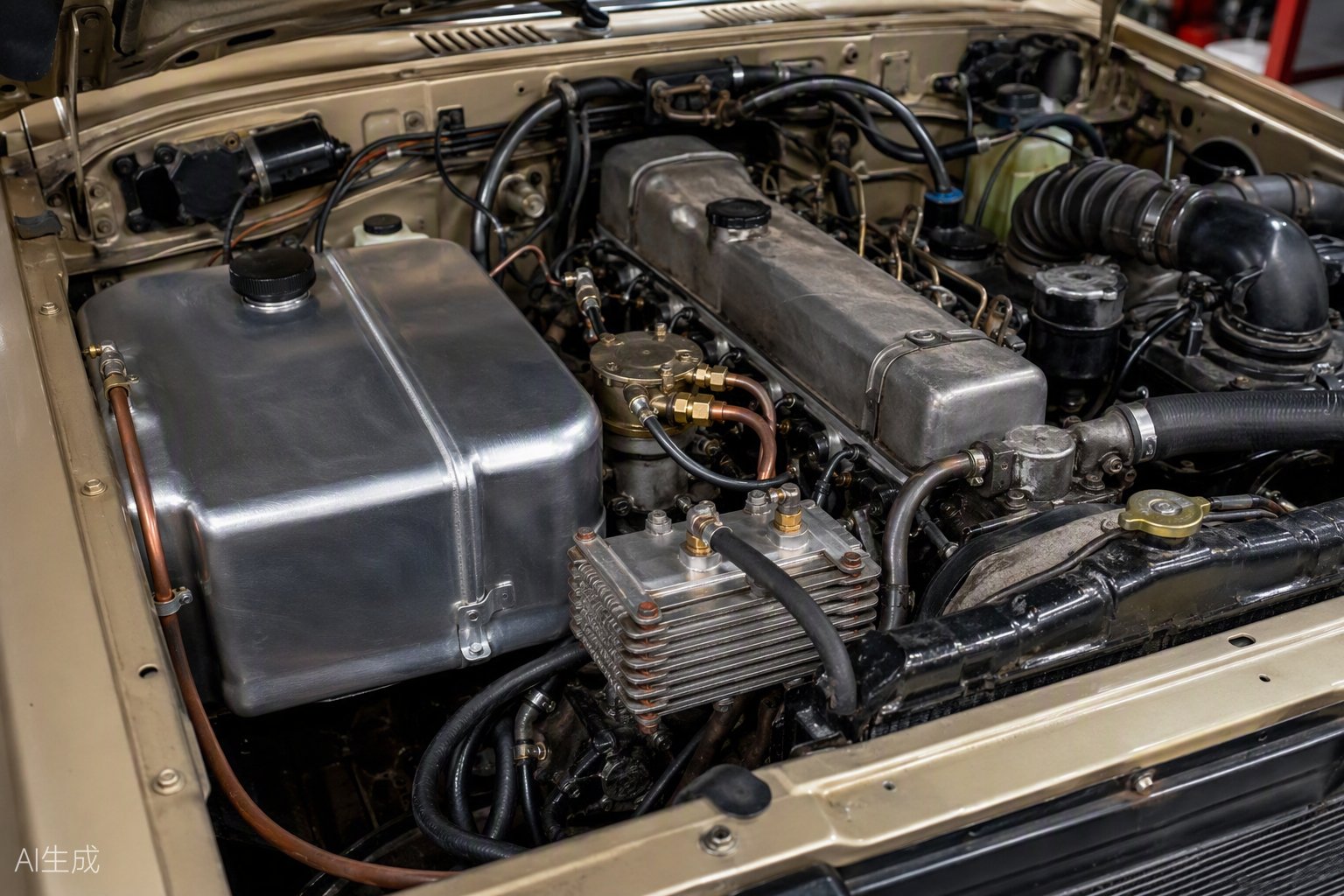
The classic twin-tank layout (Greasecar/Elsbett pattern). The return line switching with the feed is the detail cheap kits get wrong: mix return fuel across tanks and you've built a blending system, not a two-tank system.
The operating discipline is the whole religion: start on diesel, switch at temperature, purge before shutdown. Switch too early and thick cold oil cokes the injectors; forget the purge and the veg oil sitting in your pump and lines gels overnight into something with the consistency of toothpaste, and your morning becomes a tow followed by a fuel-system flush. Fit a fuel-temperature gauge at the filter and let the number, not optimism, decide when to switch. The reward for the discipline: fuel for the price of collecting it, and an engine that genuinely doesn't care.
One hardware truth before the parts list: everything in contact with hot veg oil, hose, seals, O-rings, needs to be Viton/FKM or metal. Natural rubber swells, nitrile weeps, and "fuel hose" from the bargain bin dissolves into a sticky lesson. Rebuild the injector-pump seal kit while you're in there; on a 30-year-old engine it was due anyway.
The seal swap: metric Viton O-ring kit
Viton (FKM) is the elastomer that shrugs off biodiesel, hot veg oil and heat, where nitrile and natural rubber give up within months. This 386-piece metric assortment covers the Japanese and European pumps, filter heads and fittings you'll touch on a conversion, and the included picks matter, pulling an old seal without gouging its groove is the difference between a reseal and a leak you chase for weeks. The con: sizes step coarsely at the big end of the kit, so measure your pump's seals before committing a Friday night to the job.
The plumbing: Gates Barricade fuel-injection hose
Barricade's barrier liner is rated for biodiesel and modern biofuel blends, this is the hose that stays a hose when everything else on the shelf turns to weeping licorice. It's fuel-injection rated, so lift-pump pressure and engine-bay heat are non-events, and fifteen feet re-plumbs a whole conversion with offcuts left for the genny. The con: it's stiffer than plain rubber, warm it before wrestling it onto barbs, and use proper fuel-injection clamps, not worm-drives that cut the cover.
The tell-tale: R12T water separator
Marine engines live in the wettest fuel environment there is, and the R12T is their standard answer: a spin-on 10-micron element over a clear bowl that shows water and crud at a glance and drains in seconds. On a veg conversion it goes upstream of everything, because warm oil holding dissolved water will happily drop it out right into your filter. Elements are stocked anywhere boats are sold, worldwide. The honest con: this listing is the affordable aftermarket assembly, not genuine Parker Racor, smear the bowl O-ring with grease at fitment and check for weeps after the first heat cycle.
The buy-once pump: Fill-Rite FR1204H
Every fuel in this article ends with the same chore: moving bulk liquid from drum to tank without spilling a litre of it across the shed floor. The Fill-Rite is the pump the farm is still using in a decade, cast iron, thermally protected, and factory-rated for diesel, kerosene and biodiesel to B20, which is the closest thing to a blessing a spec sheet can give your homebrew. Owners report seven-plus years of daily farm duty, and the limited lifetime warranty is real. The cons: it's pump-only (hose, nozzle and fittings are on you), and at this price the seventy-dollar clones will tempt you. They are not the same tool.
Every failed two-tank story starts with "I only forgot once." Build the habit on day one: destination in sight → flip to diesel → five to ten minutes → shutdown. Some builders fit a dash timer or a buzzer; the disciplined ones just never, ever skip it. Your call which kind you are, the injectors will grade your work.
05 · The controversial oneFuel 4: Black diesel, waste motor oil, honestly
Every property accumulates waste engine oil, and every fuel conversation around a fire eventually lands here: can you burn it in the old diesel? The honest answer is yes, people do, with real risks attached, and anyone who tells you it's free fuel is leaving out the fine print. Used oil carries soot, wear metals, acids and whatever else the engine donated. Filtered and centrifuged to a micron, blended conservatively (start at 10–20% into fresh diesel; 50% is the community's hard ceiling), old mechanical IDI engines will run it. They will also wear measurably faster: ash content abrades rings and injector tips, and nobody is doing oil analysis on your blend to tell you when it crosses the line.
Black diesel, no fairy tales. The contaminants you're fighting are abrasives and acids; the process is filtration discipline plus conservative blending, and even then it's a calculated trade against engine life.
Our position, plainly: we treat it as a generator-and-tractor fuel for engines we can afford to rebuild, at low blend ratios, and never in anything with an emissions system or a sentimental owner. Burning it in a purpose-built waste-oil heater is arguably the better use of the same oil, clean heat, no injector roulette. And note the legal box it sits in: waste oil as a road fuel fails both tax and environmental rules in most places; off-road stationary use is the grey-but-honest domain, and your state EPA has opinions worth reading first.
If you do it, do it with full information: settle for weeks, spin or heat-settle until the sample jar stays clean, filter to 1 micron absolute, blend low, add lubricity, and change the engine's oil filter at half intervals while you learn. Which brings us to the one product this section endorses without reservation:
The lubricity insurance: Stanadyne Performance Formula
Whatever you blend, veg oil, kerosene, black diesel, you are almost always reducing the fuel's lubricity and cetane, and the injection pump pays the difference. Stanadyne is the additive the diesel forums have sworn by for twenty years: lubricity plus cetane in one bottle, and owners report engines running measurably quieter and smoother within a few tanks. The 64 oz jug treats 250 gallons, so the cost per tank is pocket change against a pump rebuild. The honest con, from the sceptics' bench: owners of modern trucks report no measurable difference, its value case is exactly our use, old mechanical diesels and home-blended fuel, not a 2024 anything.
06 · The stretchersFuel 5: Kerosene, heating oil & winter blending
This one's less "making fuel" and more "knowing what's in the family." Kerosene (and its nearly-identical cousin, #1 diesel) burns fine in any diesel, and blending it into #2 diesel is the traditional cold-weather trick: a 70/30 diesel-to-kero mix lowers the gelling point meaningfully, 50/50 is the extreme-weather play. The trade-offs are real, kerosene carries about 5% less energy, a lower cetane number, and almost no lubricity, which is why winter blending should always travel with a lubricity additive. Also in the family: home heating oil and red/off-road diesel are chemically ordinary diesel wearing a dye, fine for the stationary genny, illegal for road use everywhere that dyes it, and the dye persists in your tank as evidence long after. Jet-A is basically fancy kerosene; same blending logic applies.
What about petrol in diesel, the bush trick grandad swore by? Grandad's 1962 tractor also had tolerances like a barn door. Petrol slashes the flash point (your fuel becomes meaningfully more explosive) and strips lubricity. On a pre-1970 engine at sub-10% in an emergency, the old-timers got away with it. On anything newer, and on this page: don't. Buy the anti-gel or blend the kero instead.
The blend partner: Power Service Diesel Kleen + Cetane Boost
If Stanadyne is the forums' favourite, Diesel Kleen is the truck-stop institution, Cummins-endorsed, and the bottle owners of half-million-kilometre original injectors credit as routine maintenance. It cleans injector deposits, adds the Slickdiesel lubricity that ULSD and home blends lack, boosts cetane up to six numbers, and the label explicitly blesses biodiesel blends, one of the few that does. The 64 oz treats 250 gallons. The cons, honestly: the silver bottle is not an anti-gel (that's the white Diesel Fuel Supplement, winter people want both), and it's thinly ranged outside the US, so AU and UK readers get a local search link rather than a dead listing.
Red diesel and marked heating oil are for off-road use only, and the marker dyes are designed to linger, dip a tank that's ever held it and the residue shows. Road-side fuel testing is a real thing in the UK and increasingly elsewhere, and "it was only for the tractor" requires the tank to back your story. Keep dyed fuel for the genny shed, and keep the ute's tank forever clean of it.
07 · The long gameFuel 6: Grow and press your own oilseed
Every other fuel in this article starts with someone else's waste. This one closes the loop: canola and sunflower are 35–45% oil by weight, they grow on a house block's worth of space, and a screw press turns a summer's strip of crop into next year's generator fuel. Figure roughly 500–1,000 litres of raw oil per hectare on backyard agronomy, not a business case, but a genuine resilience play: the fuel crop grows whether or not the truck from town does. The press cake that comes out the other end is high-protein stock feed, so the chooks and goats take their cut of the harvest too.
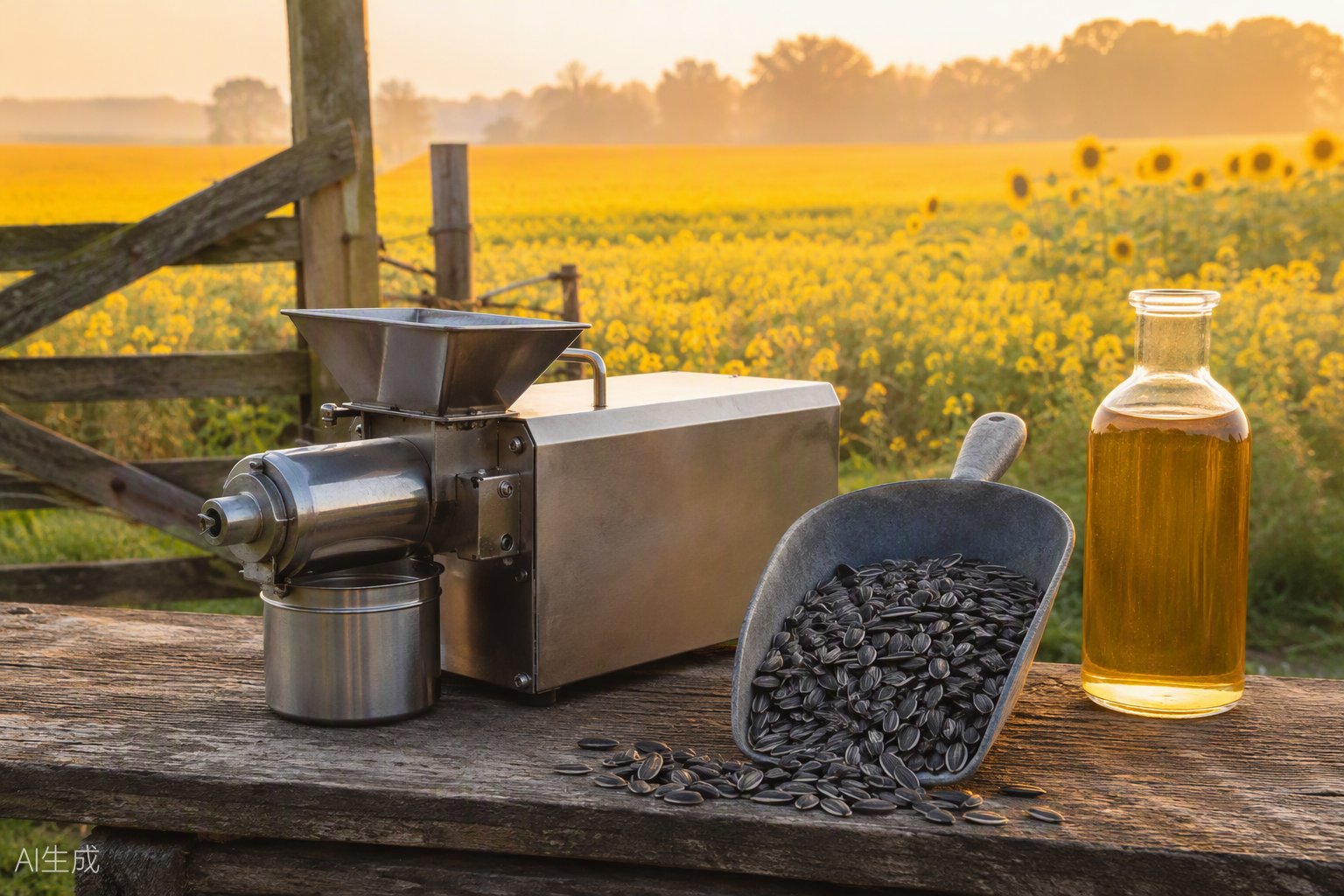
Cold-pressed oil is not ready fuel, it's a better class of feedstock. It still needs settling and filtering like any WVO (minus the chip crumbs), and then either the Fuel 1 blend treatment, the Fuel 3 two-tank treatment, or a trip through the biodiesel process, where fresh oil is a joy: no titration drama, low free fatty acids, textbook batches. If you're already growing grain, the grain milling guide covers the processing mindset; oilseed is the same self-sufficiency muscle on a different crop.
The one honest gap on this page: we can't point you at a specific oil press and call it verified. The category on Amazon is a lottery of thin ratings and QC roulette, nothing cleared our 4.4-star bar at check time. The card below is a deliberate search link, not a hidden ad: read the one-star reviews on anything before buying, favour stainless screws and real warranties, and treat the first press as a tuition payment either way.
08 · The YouTube one, de-hypedFuel 7: Plastic pyrolysis
Yes, the YouTube videos are real: seal waste plastic in a drum, heat it without oxygen, run the vapour through a coil in a water bucket, and a hydrocarbon oil condenses out and floats on top of any water in the jar. That is plastic pyrolysis, and it does make something an old diesel will burn. The part the thumbnails skip: what condenses is a mixed crude, not diesel. Gasoline-range fractions, diesel-range fractions, and a solid serve of paraffin wax, all in one jar. It is feedstock that needs settling, filtering and conservative blending, not fuel you pour straight in.
Feedstock discipline decides everything. HDPE, LDPE and polypropylene (oil bottles, tubs, plant pots, milk-crate plastic) give roughly half to most of a litre of oil per kilo. PVC is an absolute never (chlorine becomes hydrochloric acid and dioxins), PET is a never (poor yield, oxygenated junk), and unsorted kerbside plastic is a sorting job, not a resource. Then there is the wax: long-chain paraffins drop out as wax as the oil cools, which plugs filters and lines. That is why the engine-side rule is the same as every fuel on this page, start at 10 to 20 percent blended into real diesel, watch the filter, and prove it in the genny first.
Pyrolysis, de-hyped. The retort is a heated pressure vessel full of flammable vapour, so the safety bar is higher than biodiesel's: relief valve, oxygen-free purge, outdoors only, off-gas flared or plumbed back under the drum.
If your property already accumulates clean HDPE/PP and you enjoy the process, pyro oil is a legitimate blend stock for the genny and the tractor. If you are buying equipment to chase free fuel, the maths rarely beats the WVO chain: the chippy's oil needs no chemistry set at all. And the legal box is murkier than biodiesel's: thermally processing waste plastic sits in waste-handling territory for state EPAs, and the road-fuel excise question is identical to the rest of this page.
The ones people always ask about
Same question, different jar. Quick verdicts on the rest of the make-fuel rumour mill:
| Rumour | Verdict | The honest version |
|---|---|---|
| Biogas fumigation (stationary diesels) | Legit for the genny | Biogas through the intake with a small diesel pilot to ignite it; farms run gensets this way for decades. The waste calculator estimates your digester's gas yield. |
| Waste ATF & hydraulic oil | Same as WMO | Same family as waste engine oil: identical filtration chain, identical engine limits, identical black-diesel rules. |
| Tyre pyrolysis oil | Dirtier than plastic | Same retort idea, but sulphur and soot loads are worse. Black-diesel rules at best, and the smell is legendary. |
| Tallow & lard biodiesel | Works, gels early | Animal fats transesterify fine but the fuel has a high cloud point. Summer fuel or a blend component, not a winter solo act. |
| Wood gas | Different machine | Runs spark-ignition engines beautifully; diesels need a pilot diesel injection. Whole different build: see the wood gasification guide. |
| Diesohol (ethanol-diesel emulsion) | Skip it | Needs an emulsifier to stay mixed, separates in the tank anyway, and drops the flash point into petrol territory. |
| Transformer & mineral oil | Don't | It burns. The additives, the toxicity and the law make it a bad idea from every angle. |
08 · Trust, but verifyQuality control: the tests that save engines
Homebrew fuel doesn't fail loudly in the shed; it fails quietly in the injection pump. Three cheap habits catch every common failure before it costs you hardware:
1The 3/27 conversion test (biodiesel)
| Do | 27 mL methanol in a small jar + 3 mL of your settled, unwashed fuel. Shake hard for a few seconds, stand ten. |
| Pass | Goes clear within seconds, no oily drops floating or sinking, the reaction converted. Proceed to washing. |
| Fail | Cloudy, or oil beads appear, unconverted oil present. Keep the batch reacting (heat and mixing) and test again. |
| Why | Fully-reacted biodiesel dissolves completely in methanol; unreacted triglycerides don't. Ten seconds, near-zero cost, catches the one failure that glues up engines. |
2The water tests (every fuel, every batch)
| Hot-pan crackle | A few mL of oil on a hot plate or in a spoon over a flame. Crackles, spatters or hisses = water present. Back to heat-settling it goes. |
| Clarity check | Fuel in a glass jar against daylight. Biodiesel should be crystal, read text through it. Haze means water or soap; it does not go in the tank. |
| Settle test | Any blend stands in a jar for 48 hours. Anything that layers or drops sediment gets re-filtered, or the drum gets marked "genny only." |
3Storage rules (the fuel you made is not the fuel you stored)
| Full, sealed, dark, cool | Headspace is where condensation and oxidation live. Full drums, tight bungs, shade. |
| Biodiesel | Use within a few months, it absorbs moisture and oxidises faster than petro-diesel. |
| WVO blends | Months, sealed. Black-diesel blends: weeks. When in doubt, re-filter and re-test, it's free. |
| The boring details | Labelling, rotation, and drum discipline, the fuel storage guide covers all of it properly. |
One more QC habit worth its weight: prove every new batch in the generator first. A steady-load hour on the Lister will reveal a smoky, knocky or gutless batch at home, on your terms. The ute gets fuel that has already passed its exam. And if you want the tank levels watched while you're not home, that's a job for a sub-$50 sensor node, our ESP32 projects article has the tank-level build.
09 · The fine printSafety & the law
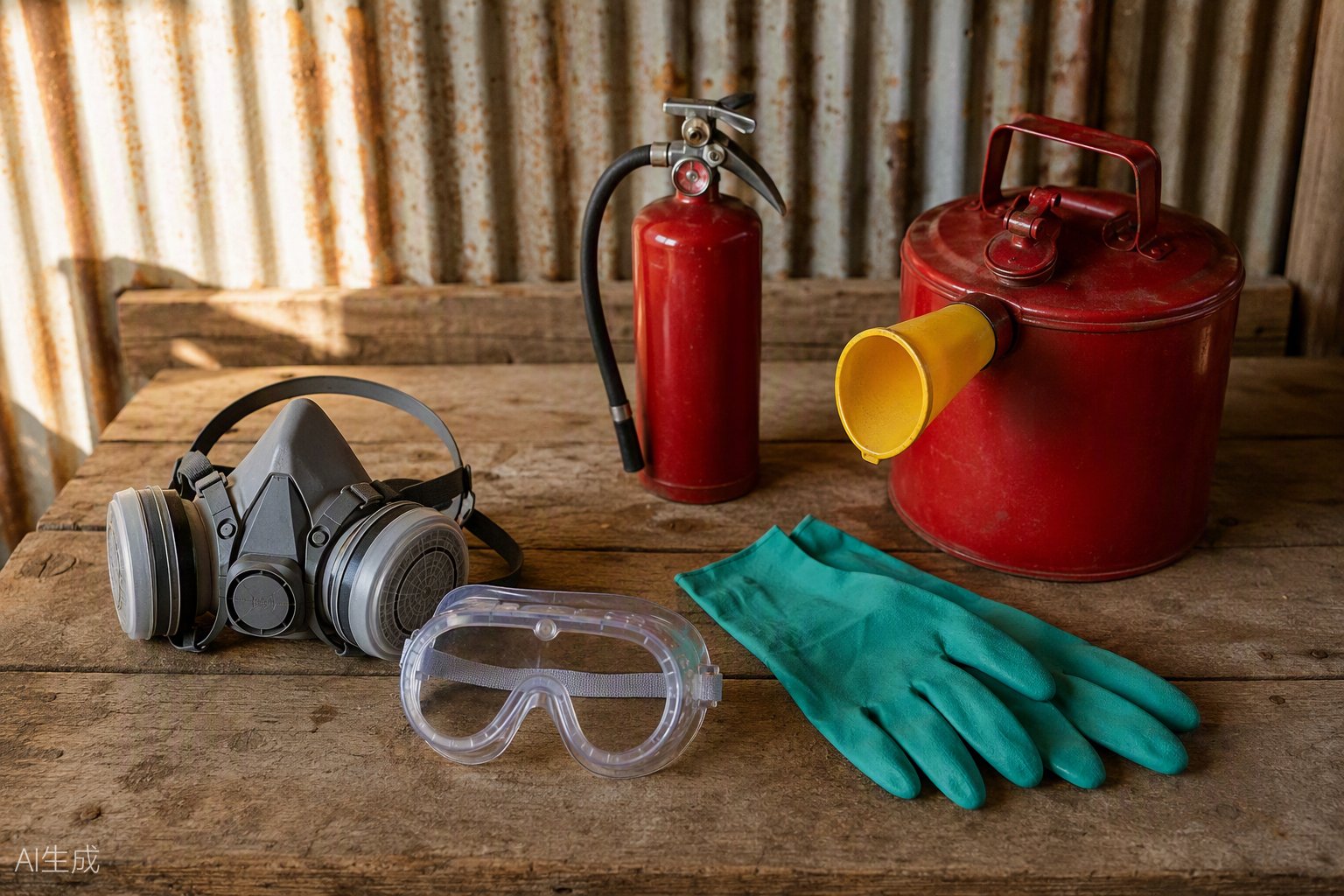
The physical side first. Everything in this article is achievable in a farm shed, and everything in it can hurt you if you get casual. Methanol is toxic through skin contact and burns with a flame you can barely see in daylight. Lye and methoxide dissolve skin and permanently damage eyes. Waste oil is a suspected carcinogen with chronic skin contact. Hot oil burns like hot anything. The rules that make this a hobby instead of a hospital visit: process outdoors or with real ventilation, sealed chemical goggles and lye-proof gloves whenever chems are open, the respirator with organic-vapour cartridges during methoxide work, long sleeves, an ABC extinguisher mounted at the door, and a bucket of clean water within arm's reach for skin contact. Methanol and blended fuel live in proper safety cans, never drink bottles, never milk jugs, never anything a thirsty person might pick up.
The face kit: 3M 6200 half-face respirator
The standard half-mask for a reason: eleven thousand reviews, comfortable enough to actually wear, and bayonet cartridges that swap in seconds. For methoxide mixing it's the minimum alongside the goggles, methanol vapour is not a "she'll be right" substance, it's a chronic-poison substance. The con: medium fits most faces, not all, and remember the mask is the backup plan, the plan is doing it outside in the first place.
The methanol filter: 3M 6001 organic-vapour cartridges
The 6200 is a face frame; these organic-vapour cartridges are what makes it a methanol respirator. Genuine 3M stock, and they double for paint-thinner and solvent days around the shed. The cons: cartridges are consumed by exposure hours, not calendar years, write the open date on them and store them in a zip bag between brew days, and the AU price was RRP-steep at check time, so local buyers may do better at a safety supplier.
The eye kit: Uvex Stealth goggles
Lye in an eye is not a rinse-and-forget injury, it's a hospital trip and potentially a permanently damaged cornea, which is why the goggles are the sealed kind, not safety glasses with gaping sides. The Stealth's HydroShield anti-fog is the coating owners say actually survives humidity, they fit over most prescription frames, and the price of admission is a pizza. The con: the neoprene band perishes first in shed heat, rinse it and store it in the shade.
The hand kit: LANON chemical gloves
Three pairs of 15-mil nitrile: one for chems, one for oil, one spare. Methanol, caustic and waste oil all absorb through skin, and the flocked liner means the gloves peel off without taking your skin's goodwill with them. The con: sweaty in a Queensland summer, keep a towel on the bench and swap pairs on long brew days rather than marinating your hands.
The door guard: First Alert ABC extinguisher
Methanol fires are nearly invisible and water doesn't fix a fuel fire, an ABC dry-powder extinguisher does. This one's all-metal valve, rechargeable, and backed by nearly forty thousand reviews. Mount it at the shed door so it's reachable while you're leaving, not while you're trapped. The con: it's the US listing, Australian and UK buyers need the local standards-equivalent (the card links a compliant local option), and your state fire rules for fuel-shed storage are worth ten minutes' reading.
The proper home: Eagle Type I safety can
Flame-arrester spout, self-closing lid, pressure relief, galvanised steel that outlives you, the Eagle is where methanol and blended fuel are allowed to live. The attached funnel means decanting isn't a splash-fest, and eight thousand owners rate it. The con: it's dear, painfully so outside the US, but it's the once-ever purchase, and the alternative (methanol in a soft-drink bottle) is the single most common fuel-shed disaster story there is.
Now the legal side, in plain terms, because nobody else will tell you straight. Making fuel for yourself is broadly legal; the friction is road use and fuel tax. In Australia, the ATO treats biodiesel as an excisable fuel, blending already-taxed components is fine without a licence, but manufacturing fuel (which homebrew biodiesel technically is) can trigger excise licensing, and road use of untaxed fuel is where you cross from hobbyist to defendant. In the UK, HMRC makes it easy at hobby scale: produce or use under 2,500 litres a year and you're an exempt producer, over that, register and pay. In the US, road use of homebrew biodiesel technically requires IRS registration as an alternative fueler, and waste-oil fuel has EPA entanglements; enforcement at farm scale is rare, but "rare" is not "never". The honest summary: off-road and stationary use is the safe harbour almost everywhere, the genny, the tractor, the pump. For the road-registered ute, read your local rules and make your own adult decision. We're a planning-tools site, not your accountant or your lawyer.
Never homebrew-fuel a modern common-rail or DPF-equipped engine. Never put petrol in diesel outside a genuine pre-1970 emergency. Never store methanol or fuel in drink containers. Never use dyed/rebated fuel on a public road. Everything else in this article is technique; those four are the line between a clever hobby and an expensive, dangerous mess.
The checklistThe full fuel-shed kit
Twenty picks that cover all seven fuels, in the order you'll meet them:
- RA micron-screen funnel, crud stops at the pour
- 50µ felt filter socks, the drum-rim first pass
- Rotary drum pump, move oil without power
- Goldenrod 496 Water-Block, water's full stop
- Essential Depot KOH, the forgiving catalyst
- Boyer high-test lye, the cheap catalyst
- Phenolphthalein 1%, titration's traffic light
- MAXUS 0.01 g scale, honest grams
- Karter beaker set, the titration bench
- Etekcity IR thermometer, no-contact temps
- Drum heater band, cold-morning fixer
- Chapin pump sprayer, the gentle mist-wash
- Pentek Big Blue, the polishing stage
- Metric Viton O-ring kit, seals that survive veg
- Gates Barricade hose, plumbing that won't melt
- R12T water separator, see your fuel's sins
- Fill-Rite FR1204H, the buy-once pump
- Stanadyne Performance Formula, lubricity insurance
- Power Service Diesel Kleen, injector cleaner
- The safety kit, respirator, cartridges, goggles, gloves, extinguisher, safety can
InteractiveBuild your kit, live total in your currency
Tick what you need. The starter filtering rig is pre-ticked; add the homebrew and safety gear as your ambitions grow. The total updates in your local Amazon pricing.
Snapshot prices from 31 Aug 2026 at your detected Amazon store. Where a pick isn't listed locally, its price shows as "n/a", so hit the card's button for today's live number.
Budget vs qualityWhat the setup costs
Three rungs, and none of them is wrong. The question is how far down the fuel rabbit hole you're actually going, because the gear follows the fuel, not the other way round.
| Tier | Rough total | What changes |
|---|---|---|
| First filter rig | ~$200 | Funnel, socks, drum pump, Goldenrod, test jars, Fuel 1 (WVO blends) fully operational |
| Homebrewer | ~$450 | Adds the titration bench, catalysts, wash and polish gear, and the full PPE kit, Fuel 2 (biodiesel) done properly |
| Full fuel shed | ~$1,100 | Adds the 12 V Fill-Rite, engine-side conversion hardware, additive, safe storage and the extinguisher, plus the processor build and first methanol drum (allowance included) |
The honest maths: the First filter rig pays for itself inside a few hundred litres of free chip oil. The Homebrewer tier makes sense when you're committed to biodiesel as a fuel, not an experiment, and note it includes the safety gear, because homebrewing without it isn't cheaper, it's just shorter. The Full fuel shed is for the property where diesel independence is infrastructure: the old tractor, the genny, the pump, and maybe the ute. Totals compute live from the product data above, in your store's currency; the third tier includes a cash allowance for the water-heater processor build and your first 20 litres of methanol, which aren't Amazon items.
Prices were checked on 31 August 2026. The product cards on this page localise pricing snapshots to your nearest Amazon store, Amazon prices change, so treat the button as the source of truth on the day.
AnswersFAQ
Will homemade fuel damage my diesel engine?
It can, and the risk lives in three places: water, fine particles, and acidity. Old indirect-injection engines with mechanical pumps are remarkably tolerant of clean, dry, properly made fuel. Modern common-rail engines are not tolerant at all. Filter properly, test every batch, start with small blend percentages, and never put any homebrew into a vehicle still under warranty or fitted with a DPF.
What's the easiest fuel to start with?
A filtered waste vegetable oil blend. Settle the oil, filter it to a few microns, and start at ten to twenty percent into ordinary diesel in an old mechanical-injection engine. There's no chemistry involved, the gear is cheap, and mistakes cost filters instead of engines. Biodiesel is the better finished fuel, but it's a real chemical process with real hazards, graduate to it.
Can a diesel run on 100 percent vegetable oil?
Yes, but not by just pouring it in the tank. Straight vegetable oil is roughly ten times more viscous than diesel, so it must be heated to thin it before injection. The proven way is a two-tank system: start on diesel, switch to heated oil once the engine is warm, and purge back to diesel before shutdown. Old indirect-injection engines, the Mercedes 300D is the famous one, handle this best.
Is making your own fuel legal?
Making it, generally yes. The tricky part is road use and fuel tax. In Australia, blending duty-paid components is fine but manufacturing fuel can require an ATO excise licence; in the UK, producers under a set annual volume are exempt from registering; in the US, road use technically triggers federal registration. Off-road and stationary use is far simpler everywhere. Check your local rules before fuelling a road vehicle, we're not your accountant.
How long does homemade fuel keep?
Filtered vegetable oil keeps for months sealed, cool and dark. Finished biodiesel is best used within a few months because it absorbs moisture and oxidises faster than petroleum diesel. Blended waste-oil fuel should be used within weeks. Everything stores better full, sealed, out of the sun, with the water drained off first, the fuel storage guide has the full rotation discipline.
Can you make diesel from plastic?
Sort of. Heating HDPE or polypropylene without oxygen (pyrolysis) yields a hydrocarbon oil that floats on top of any water in the condensate. It is a mixed crude, not diesel: expect wax, variable cetane and no lubricity additives. Settled, filtered and blended at ten to twenty percent into real diesel, old mechanical engines will run it. Never use PVC or PET, and treat the retort as the pressure vessel it is.
What does homebrew biodiesel cost per litre?
Excluding your labour and the processor build, the consumables, methanol at about a fifth of the batch, a few grams of catalyst, a little power, usually land at a fraction of bowser pricing, and the oil itself is typically free from a takeaway shop. The kit table above shows live totals in your currency. Your first batches are for learning, so make them one litre at a time.
Worth a watchWatch this
Player loads from YouTube only when you click it, so this page stays fast and tracker-free until then.
If you watch one thing before brewing, make it Graydon Blair's "Making Biodiesel From Waste Vegetable Oil" from Utah Biodiesel Supply. Graydon has taught more people to brew than anyone alive, and the video walks the full process, titration, methoxide, reaction, settling, washing, with the unhurried competence of someone who has made a thousand batches. When you're ready to go deeper, the channel's "Making Biodiesel: The Basics" playlist covers the chemistry and the testing in proper detail. Watch before you buy a single chemical.
That's the craft. Start with a drum, a sock and the chippy's waste oil this month; brew your first one-litre test batch when the safety kit arrives; and let the generator grade every batch before the ute tastes it. Diesel independence isn't a product, it's a workflow, and now you've got all seven.
Free toolsPlan the rest of the system
Fuel is one input into a bigger off-grid system. These free calculators do the maths for the rest of it, no signup, no email wall.