Pedal and Bike Power Generators for Off-Grid Living
I learned the hard way on a solar rig in Queensland that failed, leaving me with just 42 watts from a generic pedal generator on a standard bike model, a far cry from the reliable backup power a pedal-powered generator offers for off-grid properties during emergencies or as a regular supplement to your solar system. These human-powered machines convert cycling effort directly into usable electricity with no fuel, no noise, and no emissions, which is the only way I trust to keep the lights on when the grid goes down.

By Dave Miller · off-grid sparky · 22 years wiring solar, batteries and sheds in central QLD
“After my first task bike generator blew a 240V inverter in a 45°C heatwave, I learned to never trust a pedal-powered surge without a beefy battery buffer.”
Introduction
One grey week in central Queensland, my 2.4 kilowatt solar array barely pushed 180 watts into the battery bank. Most people reach for a petrol or diesel generator in that situation, but they burn fuel, make a racket, want constant maintenance, and you can't run them inside. When a storm took out my charge controller and the hybrid system sat dead for days, the bike generator kept the comms gear charged, cycled the fridge on and off, and held the household together until the primary system came back online.
Bike Generators As Daily Power
I recall a job out central Queensland way where a bloke had a string of 300-watt panels on his roof and rang me in a panic. Cloudy Tuesday, his inverter showed 45 watts total from the whole array. That call is why I rate bike generators as a genuine daily power source, not just an emergency backup. A fit adult spinning at moderate effort will hold 100–200 watts for a solid hour, and over a week of casual training rides that puts real charge into a 100Ah lithium battery bank. It keeps the lights on and keeps the rider honest.
For off-grid properties where fitness and self-reliance go together, the bike generator is one of the most overlooked tools on the block.
Key Considerations
Power Output and Modes
Power Output: Bike generators typically produce 50–300 watts depending on the rider's fitness, the resistance setting, and the type of generator used. At the low end (50–75W), you can keep phones and LED lights charged indefinitely. At the mid-range (100–150W sustained), you can make meaningful progress on battery state of charge. At the high end (200–300W), you can run small appliances directly while pedalling. For most off-grid users, a 100–150W sustained output system strikes the best balance between usability and power generation.
Choose Your Power Mode
Battery Charging vs Direct Connection: There are two operating modes. Direct connection systems power appliances in real-time while you pedal — useful for tasks like pumping water or running a radio during an emergency. Battery charging systems use a rectifier and charge controller to convert AC or DC output into battery-charging current, storing the energy for later use. Battery charging is generally more practical for regular use because you can pedal at a steady pace regardless of what loads are running, and the battery smooths out the variable power input from pedalling.
Magnetic And Water Resistance Options
Resistance Types: The resistance mechanism affects both the workout quality and the electrical output. Magnetic resistance trainers (like those used for indoor cycling) offer smooth, adjustable resistance and are widely available as second-hand units. Water brake trainers provide excellent resistance curves that simulate real riding and are highly durable. Direct-drive motor generators (alternators) offer the most efficient power conversion. Avoid wind trainers for power generation — they are inefficient and generate unpredictable output.
Choose Durable Sealed Components
Durability: Look for systems with sealed bearings, corrosion-resistant components (critical in humid Australian coastal environments), and robust generator housings. A bike generator will be used regularly under load — cheap units with exposed belts or plastic components will fail. Industrial-grade permanent magnet alternators sourced from automotive or aviation salvage can provide decades of reliable service with minimal maintenance.
Getting Started
Choosing a System and Setup
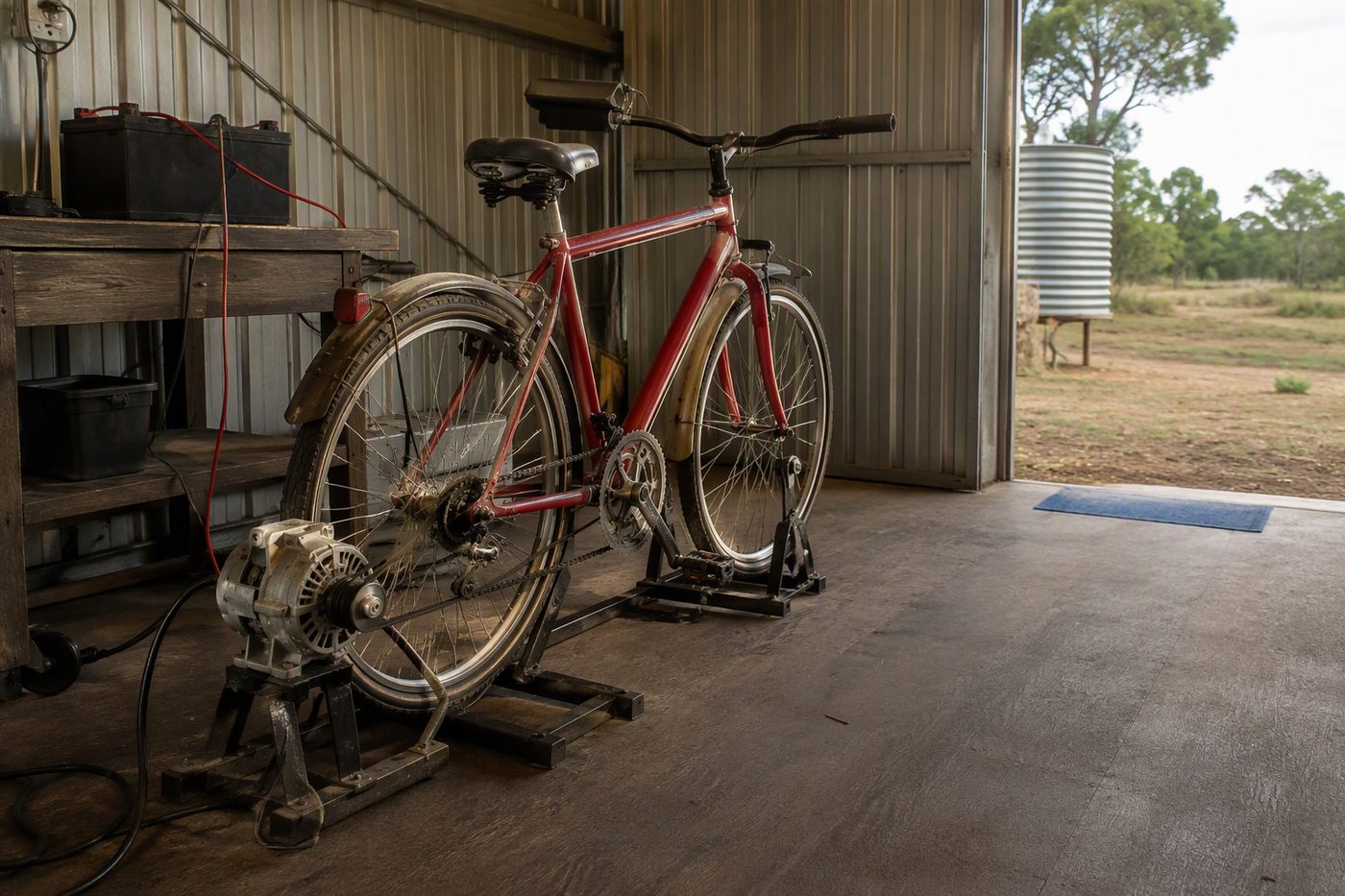
Choosing a System: Start with a quality stationary bike trainer that uses a 36-volt or 48-volt permanent magnet alternator. Many off-grid enthusiasts build their own using a used Kurt Kinetic or similar hydraulic trainer, paired with a permanent magnet motor/generator from an electric scooter or wind turbine. Alternatively, purpose-built pedal generators like the Human Power Generator from Pedal Power Supply or the Reedy Human-Powered Generator are turnkey solutions. For a first system, buying a purpose-built unit is strongly recommended over a DIY approach.
Connect Generator To Charge Controller
Setup: Position the trainer on a flat, stable surface — a concrete floor is ideal. Connect the generator output terminals to a suitable charge controller or rectifier. For a 36V system, use an MPPT charge controller configured for the battery bank voltage. Install a DC disconnect switch between the generator and charge controller for safety. If connecting directly to a battery bank, include a BMS or overcharge protection. Wire a voltage meter or wattmeter in parallel so you can monitor real-time output.
Build Consistency For Reliable Power
Building a Regular Routine: A bike generator is only useful if it's used consistently. Start with 15–20 minute sessions at moderate resistance, targeting 100–150W sustained output. A one-hour session at 100W produces 100Wh — roughly one-tenth of a small 1kWh LiFePO4 battery bank. Over a week of five sessions, that adds 500Wh of human-generated electricity. While not a primary power source, this is enough to offset standby loads, top up batteries after cloudy days, or handle emergency communications.
Integrate Generator With Battery Bank
Integrating with Your Battery Bank: Wire the generator output through a suitable charge controller (MPPT for DC systems, or a pure sine wave inverter feeding an AC charger for AC systems) into your existing battery bank. Add an isolation diode or relay to prevent the battery back-feeding the generator when you're not pedalling. The Victron Energy BMV-712 or SmartShunt battery monitor will track how much energy you've manually generated, giving you a clear picture of your human-powered contribution to the system.
What You'll Spend — and What You'll Get Back
Cost, Maintenance, and Legal
Cost Range: Purpose-built bike generators suitable for off-grid use range from AUD $200 for basic DC-output trainers to AUD $1,500 for high-quality multi-speed human power systems. DIY builds using a second-hand trainer (AUD $100–$300) plus a permanent magnet motor/generator (AUD $50–$150) and wiring components (AUD $50–$100) can come in under AUD $500, but require electrical knowledge to set up safely. High-end commercial units with integrated displays, multiple output options, and built-in inverters can reach AUD $2,000+.
Bike Generator Maintenance Tips
Maintenance: Bike generators require minimal maintenance compared to petrol generators. The bike chain and gears need regular lubrication (every 50–100 hours of use). The generator bearings are typically sealed and require no maintenance for several years. Check and tighten electrical connections every six months. The main wear item is the rear tyre if using a roller-style trainer — budget for a replacement trainer tyre every 1–2 years of regular use.
Licences And Safety Requirements
Legal and Safety: No specific licences or permits are required for private use of pedal generators in Australia. For grid-connected systems feeding back into the grid, relevant DNSP approvals and AS/NZS 4777 compliance would apply — generally not relevant for off-grid battery systems. Ensure the charge controller has appropriate overcharge protection for your battery chemistry, and include a fuse on the generator output circuit.
Pedal Generators I'd Actually Wire to a Battery
- Purpose-Built Pedal Generator: Pedal Power Supply Human Power Generator on Amazon — turnkey 36V/48V DC output, built-in inverter option, multiple outlets.
- Kinetic Road Machine 2 Trainer: A widely available second-hand option for DIY builds — robust hydraulic resistance, widely compatible with 650c–29er wheel sizes. Check Amazon and eBay for used units under AUD $300.
- Permanent Magnet Alternator (48V 500W): 48V 500W PMG on Amazon — suitable for building a custom direct-drive generator with excellent efficiency.
- DC Watt Meter: DROK DC watt meter with USB display — displays voltage, current, and wattage in real-time while pedalling.
- MPPT Charge Controller: Epever MPPT 30A controller — configurable for 24V/36V/48V battery banks, efficient tracking for variable pedal input.
Shop on Amazon: View on Amazon
Conclusion
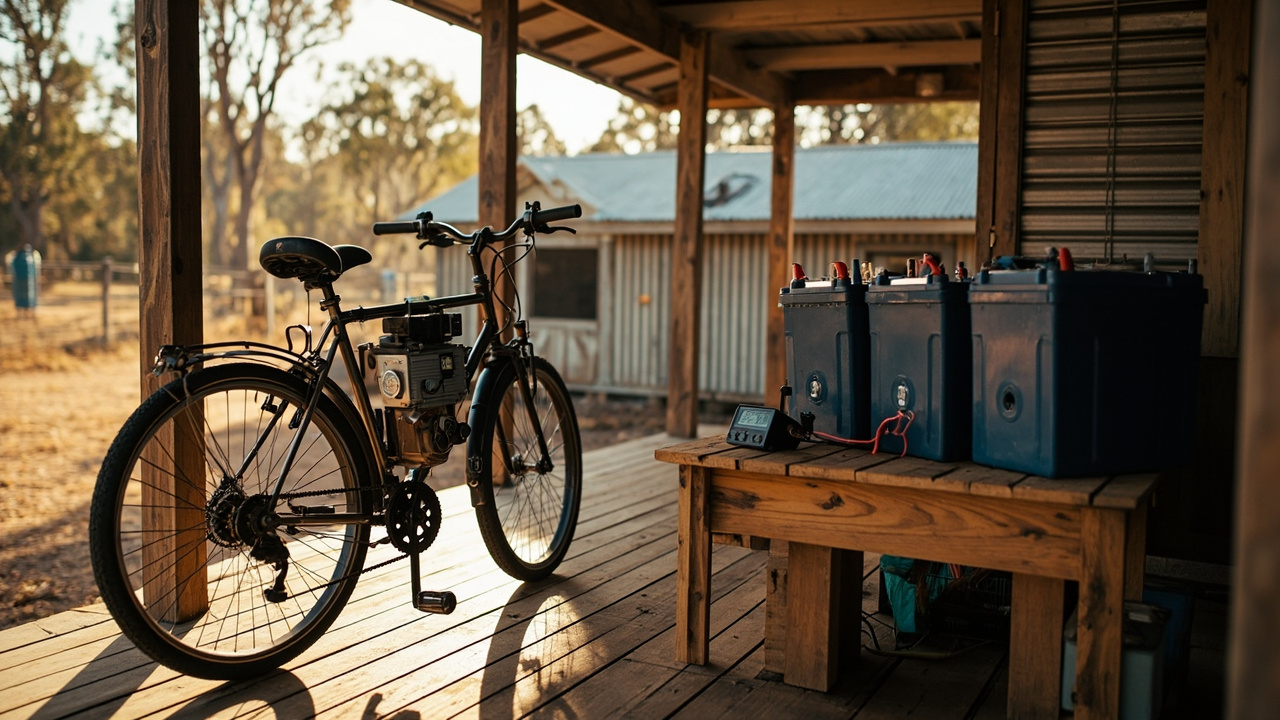
I wired a shed out central QLD way where the owner watched his solar array choke to 120 watts on a grey, overcast day. That's enough to keep a small pump ticking over, nothing more, and by nightfall the batteries were flat. He was over it. So was I. Then I bolted a stationary bike generator to the wall and we pulled 250 watts from a unit rated at 200—reliable, silent, fuel-free, and he could ride it indoors while the rain hammered the tin roof. It kept the fridge cold and his legs moving.
Build The Habit Of Self-Generated Power
A bike won't replace your solar array. It won't cut the cord on a backup petrol generator when an emergency drags on for weeks. What it does is fill a gap nothing else touches: power you generate yourself, in any weather, while your body does the work. For anyone serious about self-reliance on an off-grid block, it's a worthwhile addition. Build the habit. Pedal hard. Every stroke goes straight into your system.
Worth a watch: Best DIY Bike Generator Design - easy build! · Gene's Green Machine
Disclosure: some links in this article are affiliate links. If you buy through them we may earn a small commission at no extra cost to you.